



Amazon Web Services has become the first cloud provider approved to handle NATO information classified as “Restricted” across all 32 member states. This covers information that cannot be made public because its disclosure could harm NATO’s interests or operations. While it is the alliance’s lowest level of classified information, the approval gives AWS an opportunity to expand further into the defense market.
Individual NATO countries can still require their own approvals and additional security checks. However, they no longer need to start the entire assessment process from scratch. A common NATO security assessment could make it faster to launch new projects.
That matters because militaries are becoming increasingly dependent on data. Command systems, intelligence and artificial intelligence all require significant computing power. At the same time, military information is subject to much stricter security requirements than data handled by most commercial customers.
AWS already has a significant infrastructure footprint across NATO countries. Amazon operates cloud infrastructure in 15 NATO member states, including seven countries in continental Europe. For customers that need to control where their data is stored, that can be an important advantage.
The next question is whether AWS can turn that advantage into contracts. The approval itself will not increase Amazon’s revenue. It could, however, shorten the path from initial discussions with a customer to actually putting a service into operation. For large military and government projects, the time required to meet security requirements can be an important factor.
Amazon has been building its presence in the public sector and defense market for years. Competition, however, remains intense. Microsoft and other major cloud providers are pursuing many of the same contracts. Security, data location, individual national requirements and compatibility with existing systems will all play a role in which provider wins business.
Europe will be particularly important. NATO countries are increasing defense spending, and some of that money is going toward digital systems, data analysis and artificial intelligence. That is creating greater demand for infrastructure capable of processing large volumes of sensitive information.
Amazon is also developing the AWS European Sovereign Cloud, designed to give European customers greater control over their data and infrastructure. That could become important for projects where data location and operational independence matter just as much as computing capacity.
What happens next will matter most. Investors will be watching for new deployments, contracts and revenue growth. If NATO countries begin using AWS more widely for information subject to security restrictions, it would show that Amazon is successfully turning its regulatory and infrastructure advantages into a larger share of the defense market.
For AWS, the approval opens the door to a market where barriers to entry are high, but contracts can be large and long-term. The next wave of deployments will show whether that opportunity translates into meaningful business growth.
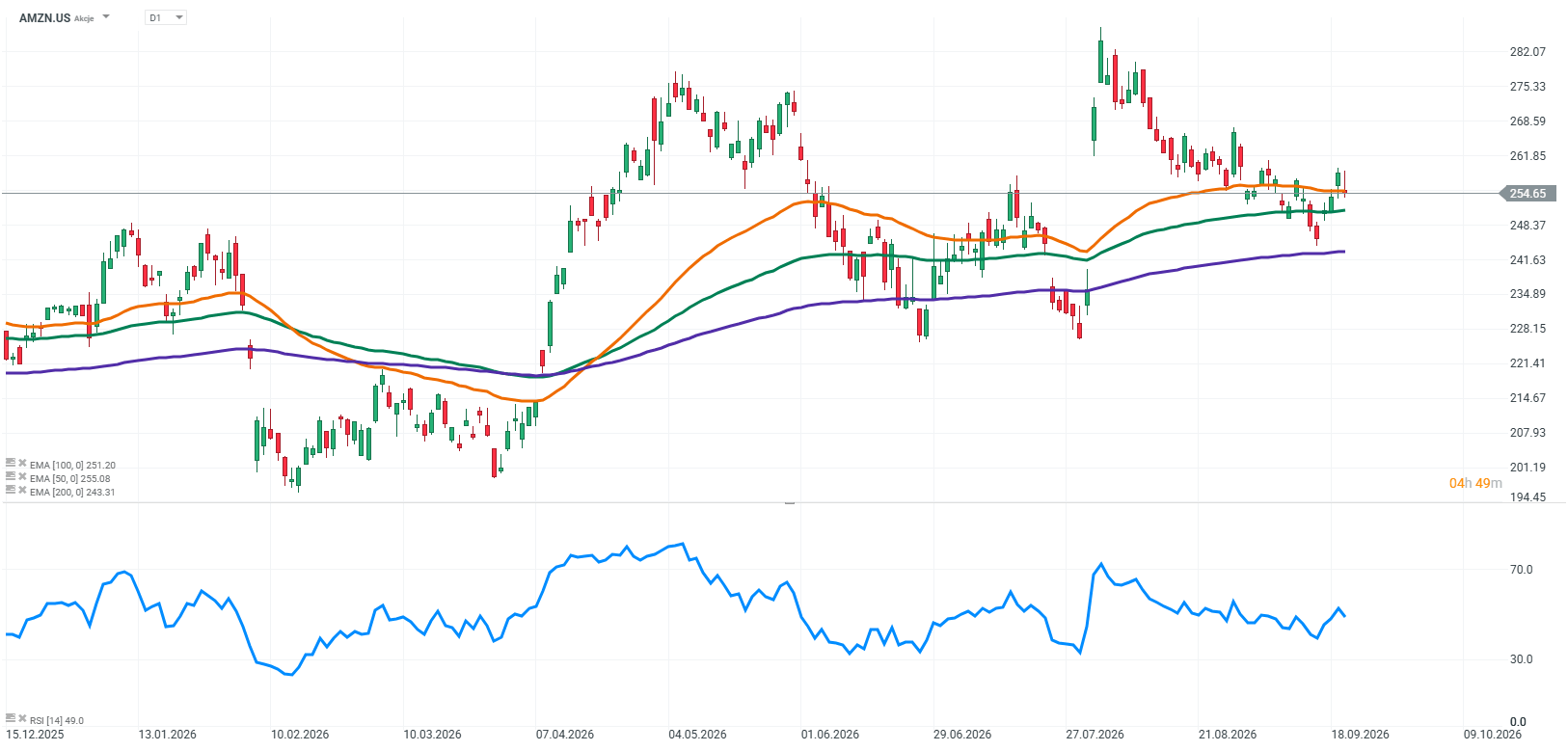
Source: XTB Research



🖥️Chart of the Day - US100: Is the KOSPI crash a foretaste of Nasdaq's troubles?



Daily Summary: Investors Concerns Rise Ahead of Earnings Season


US OPEN: Wall Street under pressure from oil and semiconductors

Morning Wrap: Oil cheaper despite attacks on Saudi Arabia, markets await CPI (12.10.2026)