


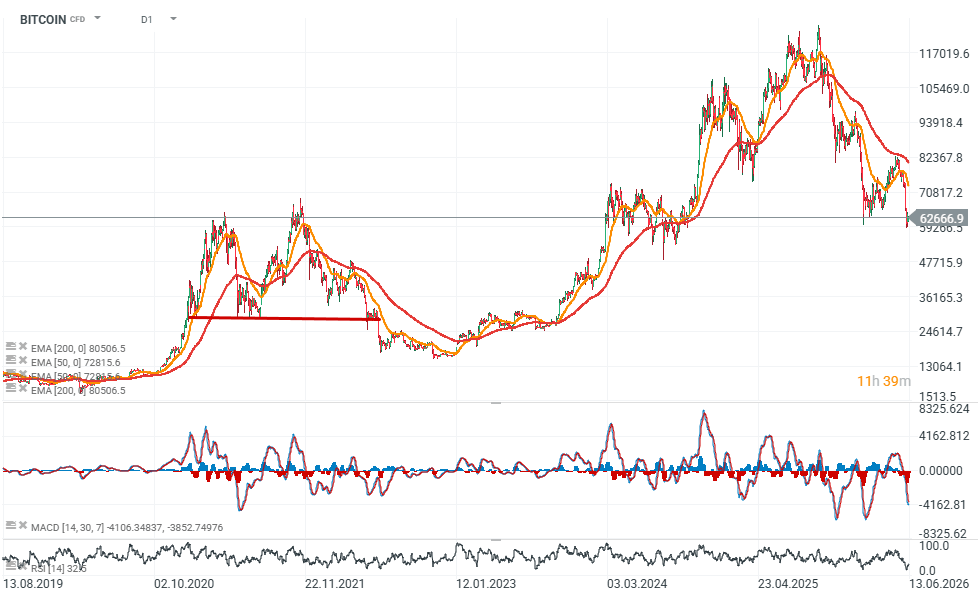
Bitcoin is making a tentative recovery attempt today, gaining nearly 3% around 90 minutes ahead of the release of U.S. Producer Price Index (PPI) data. Cryptocurrencies found some breathing room following yesterday’s U.S. CPI report, which offered investors at least temporary relief after core CPI rose by 0.2% month-over-month, below the 0.3% consensus forecast.
Interestingly, Bitcoin showed little correlation with Wall Street, where equities closed broadly lower yesterday. Despite sharp declines in the Nasdaq 100, the cryptocurrency managed to rebound toward the $63,000 level. If today’s PPI data comes in in line with or below expectations, Bitcoin may be able to extend its recovery.
On the other hand, a stronger-than-expected increase in producer prices could undermine the somewhat dovish and reassuring inflation picture created by yesterday’s CPI release. In that scenario, Bitcoin could struggle to regain bullish momentum, particularly against the backdrop of elevated bond yields and a still-strengthening U.S. dollar.
Bitcoin (D1 timeframe)
Source: xStation5


🔼 EURUSD continues to rebound


Chart of the Day: NATGAS - Are there chances for a seasonal rebound amid warm weather?


Oil gains as U.S. crude inventories fall


U.S. indices attempt to rebound after recent losses