


Lula hands the finance ministry to a banker. USDBRL falls from 6.00 to 5.53.
The Brazilian real is rebounding after the appointment of a new finance minister. President Luiz Inácio Lula da Silva confirmed on Thursday evening that Luiz Carlos Trabuco, a 75-year-old Bradesco veteran, will lead the ministry from January. Bradesco is the country’s second-largest private bank. The market read the move as a signal that the government intends to maintain fiscal discipline. The real is up more than 4.5% today, its biggest gain since 5 October. The São Paulo stock index rose about 6%.
The reaction is all the stronger because investors sold Brazilian assets after the October election. They had been counting on a win by Flávio Bolsonaro, who promised spending cuts. Confidence in a more cautious fiscal policy returned after the Lower House approved a plan to curb spending and raise revenue. Many investors thought the plan was too timid, but noted that it is a step in the right direction.
USDBRL (D1)
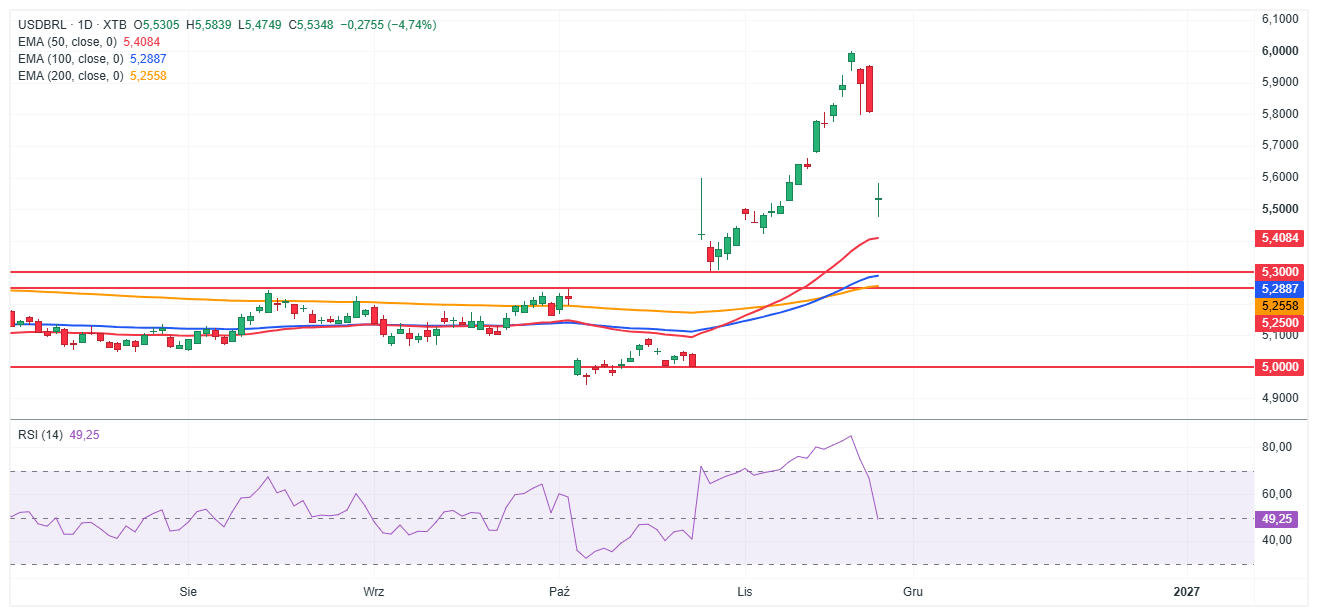
On the USDBRL (D1) chart, the election shows up as a clear price gap. After the result of the vote, the pair opened on Monday, 26 October, at around 5.60, after trading near 5.00 before. Over the following weeks the dollar gradually strengthened, reaching around 6.00 reais at the end of November. That is a rise of about 20% since the election. Today that trend has reversed. The pair fell to around 5.53, almost fully erasing the real’s weakness of the past two weeks.
The market remains cautious. Trabuco’s appointment does not solve the budget’s structural problems. Gross public debt stands at 82.9% of GDP, and the Selic rate is 13.75%. Some Workers’ Party politicians openly question the choice of Trabuco. His predecessor in a similar role under Dilma Rousseff, Joaquim Levy, left after less than a year amid resistance from his own camp.


Three Markets to Watch Next Week (27.11.2026)


Market Wrap: Markets Extend the Holiday Rebound


Surprisingly low inflation in France❗ Price pressures are clearly easing, GDP is down📉


Economic Calendar: Inflation in Europe surprises to the downside (27.11.2026)