


- ISM services index fell to 54.5 in October, recording its slowest expansion in 3 months.
- Prices paid sub-index rose to 73.0, signaling persistent inflationary pressure in the US services sector.
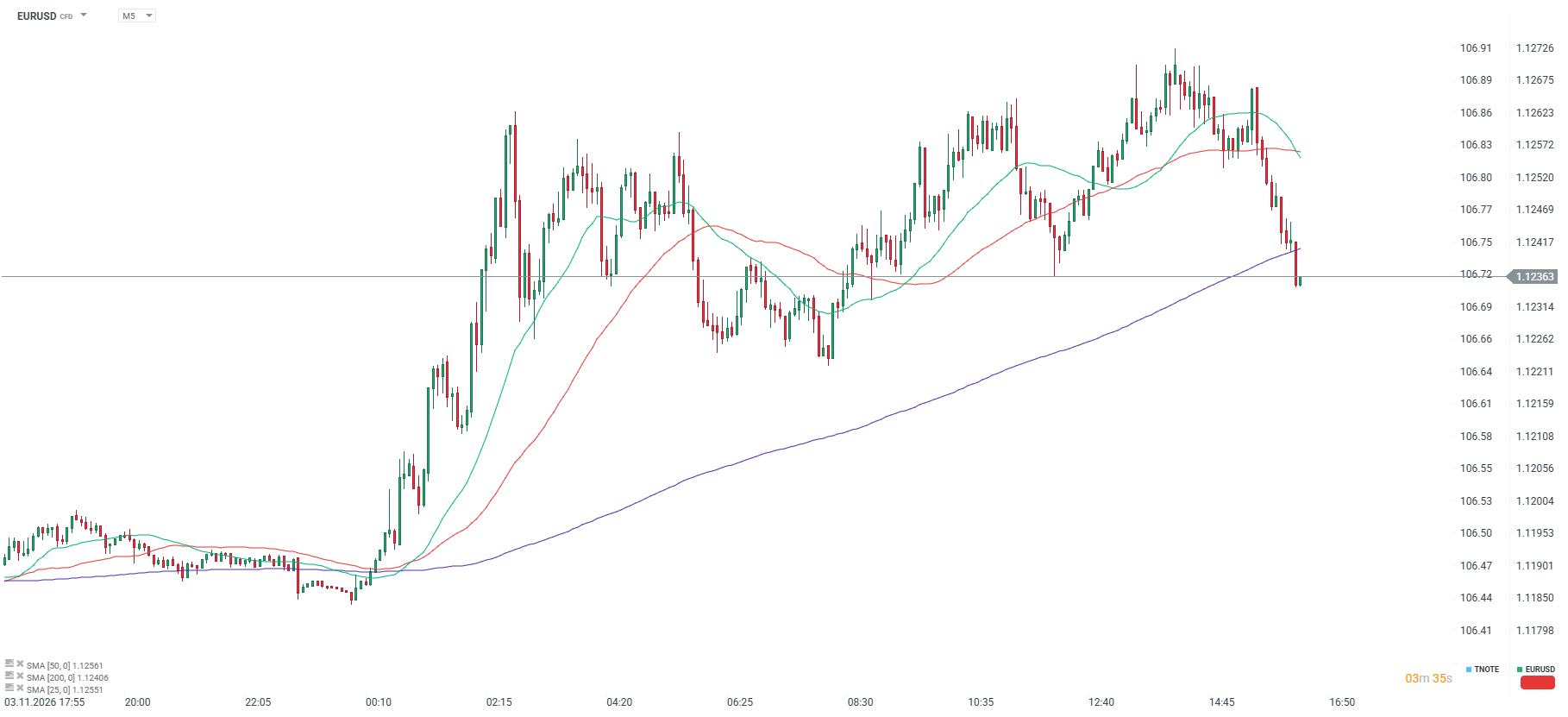
- EURUSD dropped to 1.1236 as strong cost data limited the appetite for dollar sell-offs.

- ISM services index fell to 54.5 in October, recording its slowest expansion in 3 months.
- Prices paid sub-index rose to 73.0, signaling persistent inflationary pressure in the US services sector.
- EURUSD dropped to 1.1236 as strong cost data limited the appetite for dollar sell-offs.
The US services sector recorded its slowest expansion in three months in October, with companies increasingly feeling rising costs and delivery delays. It is worth noting that there is a divergence between the manufacturing and services sectors. However, both sectors still point to expansion.
- ISM services index fell by 0.4 pts to 54.5 (expected 54.8–54.9)
- New orders fell to 55.9 from 59.8 in September, which is the lowest level in four months, though still clearly in growth territory
- Prices paid sub-index came in at 73.0. This is the second highest reading since mid-2022, despite a drop from 74.0
- Supplier delivery times lengthened the most since April
- Services employment surprised to the upside, at 51.4 vs 50.1 in the previous month, the highest since February, which along with a strong ADP bodes well ahead of Friday's NFP report
- 15 out of 18 industries reported growth (vs 13 in September), while construction and healthcare registered contraction
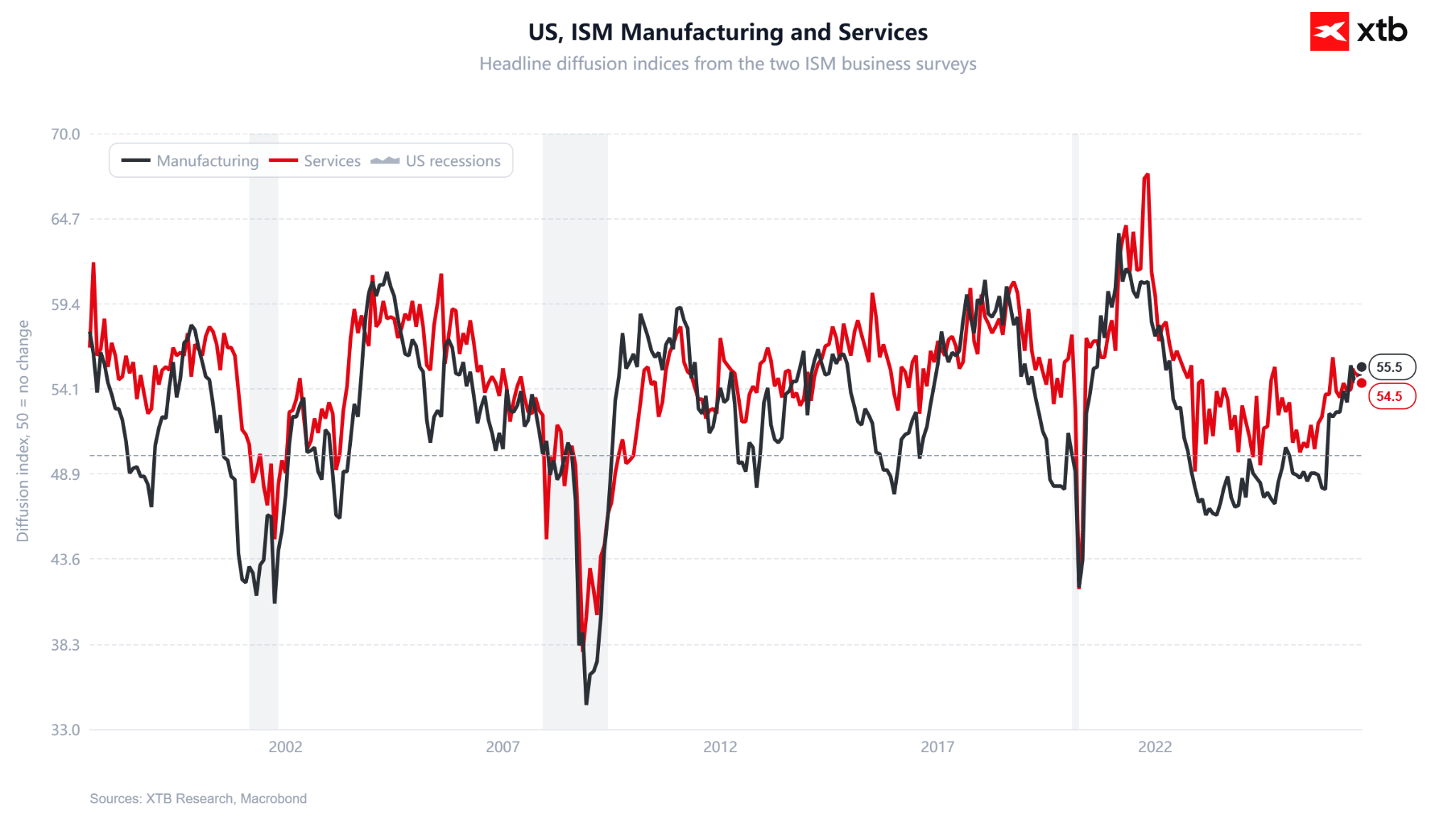
ISM head Steve Miller points out that tariffs and higher fuel costs remain the most frequently cited problems in supply chains, and many companies signal that they have not yet fully passed cost increases on to customers, predicting further price pressure unless the situation in the oil market and trade normalizes. Additionally, this is an important signal for the Federal Reserve, which despite prospects for a calm energy situation, may still plan regular rate hikes.
Despite the slowdown in the headline index, the data does not look like a warning sign for the economy: demand remains solid, order backlogs are the highest since 2022, and the services labor market visibly accelerated. This fits into the "higher inflation with still resilient growth" narrative that the Fed has been emphasizing for weeks.
The reaction in the FX market is visible, though moderate. EURUSD continues the pullback initiated at the open of the European session, dropping from morning highs near 1.1268 to the current 1.1236. The pair is giving back part of its post-election gains, and a higher-than-expected ISM prices paid reading—suggesting that US inflationary pressure is not weakening as fast as hoped—limits the appetite for further dollar sell-offs ahead of Friday's labor market report.


BREAKING: US Labor Market Stronger Than Expected. ADP Report Surprises Ahead of Government Data


Market Wrap: European Stocks Rise Following US Elections


Spain Is Back on Its Feet 🚀 Trump's Nemesis Makes a Comeback After the Midterm Elections 📈


BREAKING: Democrats take both chambers of Congress🗽