



Latest data from the Energy Information Administration (EIA) indicates a massive surge in crude inventories, far exceeding market forecasts:
-
Crude Oil Inventories: +15.99m bbl (Expected: +1.2m bbl)
-
Gasoline Inventories: -1.01m bbl (Expected: -0.6m bbl)
-
Distillate Inventories: +0.25m bbl (Expected: -1.9m bbl)
-
Cushing Inventories: +0.88m bbl
-
Refinery Utilization: fell by 2.4 percentage points (Expected: +0.5 percentage points)
-
US Crude Production: steady at approximately 13.5m bpd (-33k bpd)
While inventories are returning to levels seen last year, they remain significantly below the 5-year average. Nevertheless, current trends are beginning to confirm that the market is indeed facing a substantial oversupply.
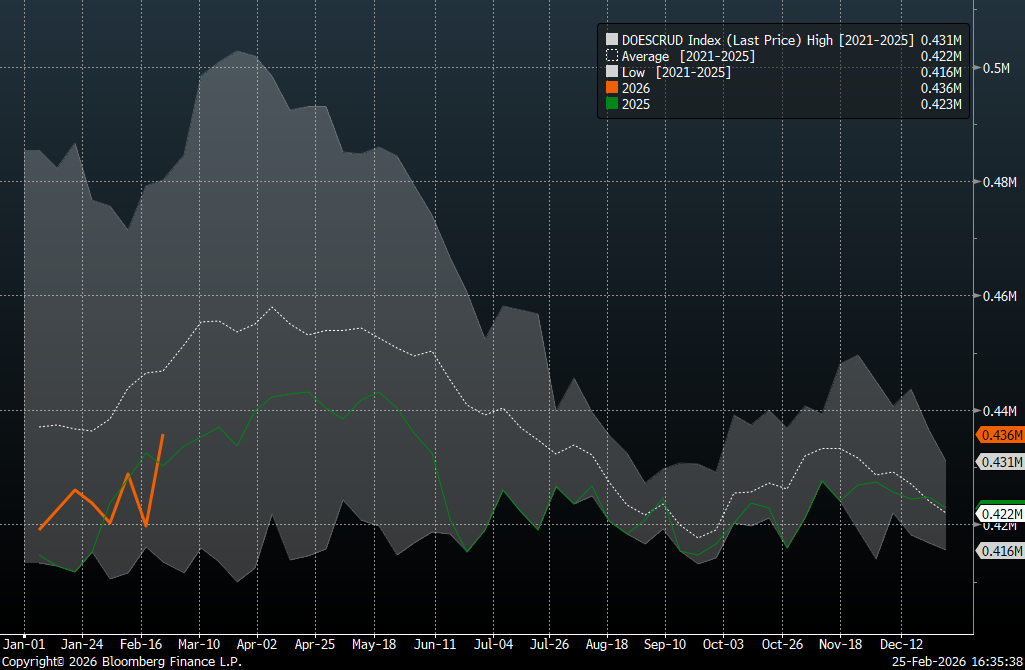
Crude inventories are rebounding sharply in line with seasonality. Source: Bloomberg Finance LP, XTB
Market Commentary: Iran Tensions vs. the Specter of Global Oversupply
The oil market is currently suspended between a geopolitical risk premium and hard data pointing to oversupply. It is estimated that the geopolitical premium currently accounts for between $3 and $10 per barrel.
On one hand, Donald Trump’s rhetoric toward Iran has sharpened. The President accused Tehran of resuming "sinister" nuclear ambitions, fueling fears of a blockade of the Strait of Hormuz—through which 20% of the world’s oil flows—and a potential price spike above $100. Markets are anxiously awaiting Thursday's talks, while US forces in the region remain on high alert. Notably, however, during his State of the Union address, Trump indicated a preference for reaching a deal with Iran, while maintaining that he would not allow the country to pursue nuclear weapons.
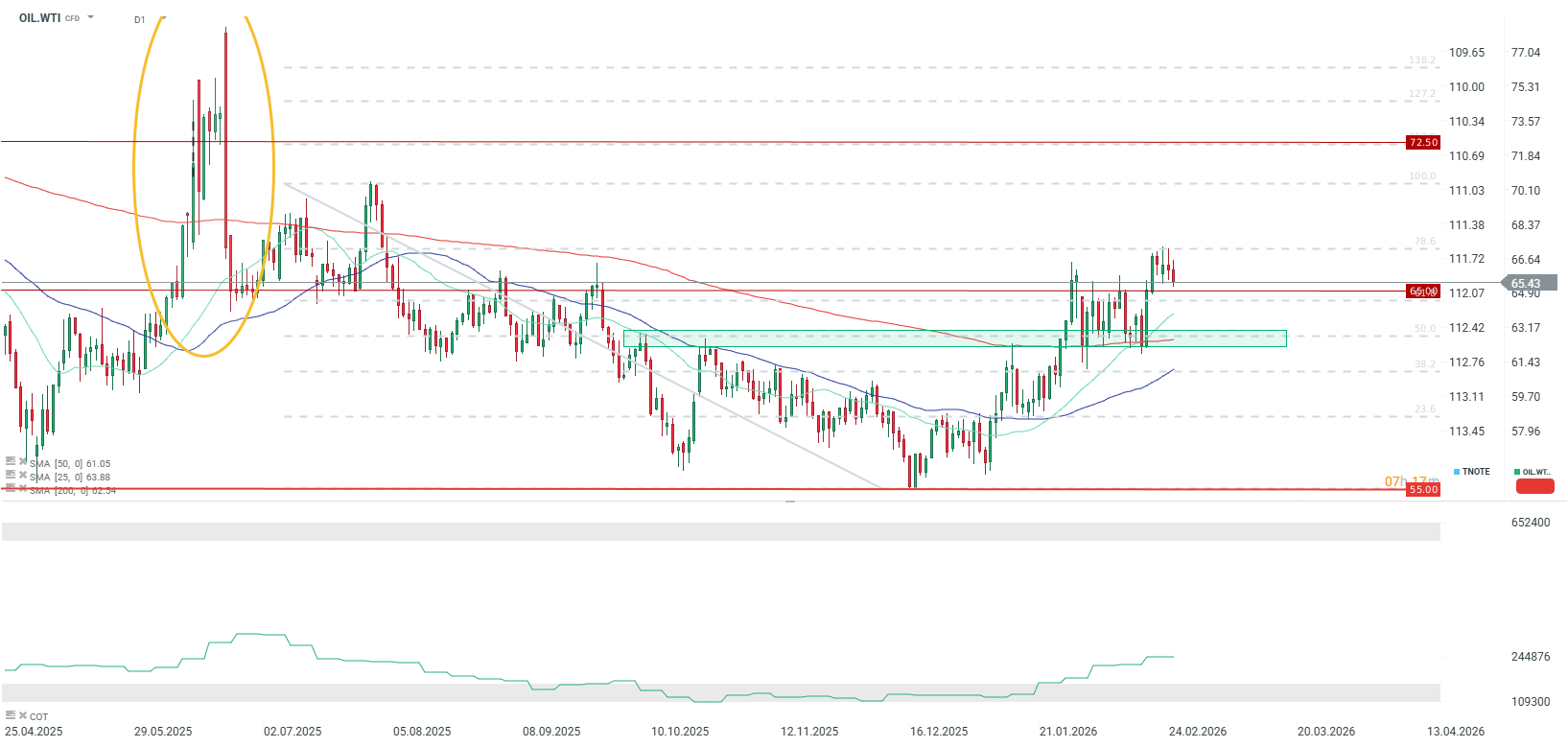
On the other hand, physical market fundamentals continue to weaken. Today’s EIA report, showing a build of nearly 16 million barrels, is a "bearish" signal confirming global oversupply. Russia and Iran are already aggressively slashing prices (offering China discounts of $11–$12 per barrel) to offload excess crude. Furthermore, the fading "Net Zero" narrative in global leadership communications is giving way to policies focused on increasing production. In the medium term, this may keep WTI prices in check (currently around $66), provided that an open military conflict does not erupt.


🔼 EURUSD continues to rebound


Chart of the Day: NATGAS - Are there chances for a seasonal rebound amid warm weather?


Morning Briefing: Warsh's silence on interest rates. AI debt fears cooled sentiment, but a rebound is visible


Oil gains as U.S. crude inventories fall