



Oil report key takeaways:
- Crude Oil Inventories: -6.088 million barrels
- Consensus: -4.461 million barrels
- Previous reading: -8.263 million barrels
- Gasoline Inventories: +2.064 million barrels
- Consensus: -0.578 million barrels
- Distillate Inventories: +3.064 million barrels
- Consensus: -0.505 million barrels
The private API report signaled a smaller decline in oil (-765k) and increases in petroleum products (gasoline +1238k, distillates +1447k). EIA data confirmed this direction, but on a much larger scale.
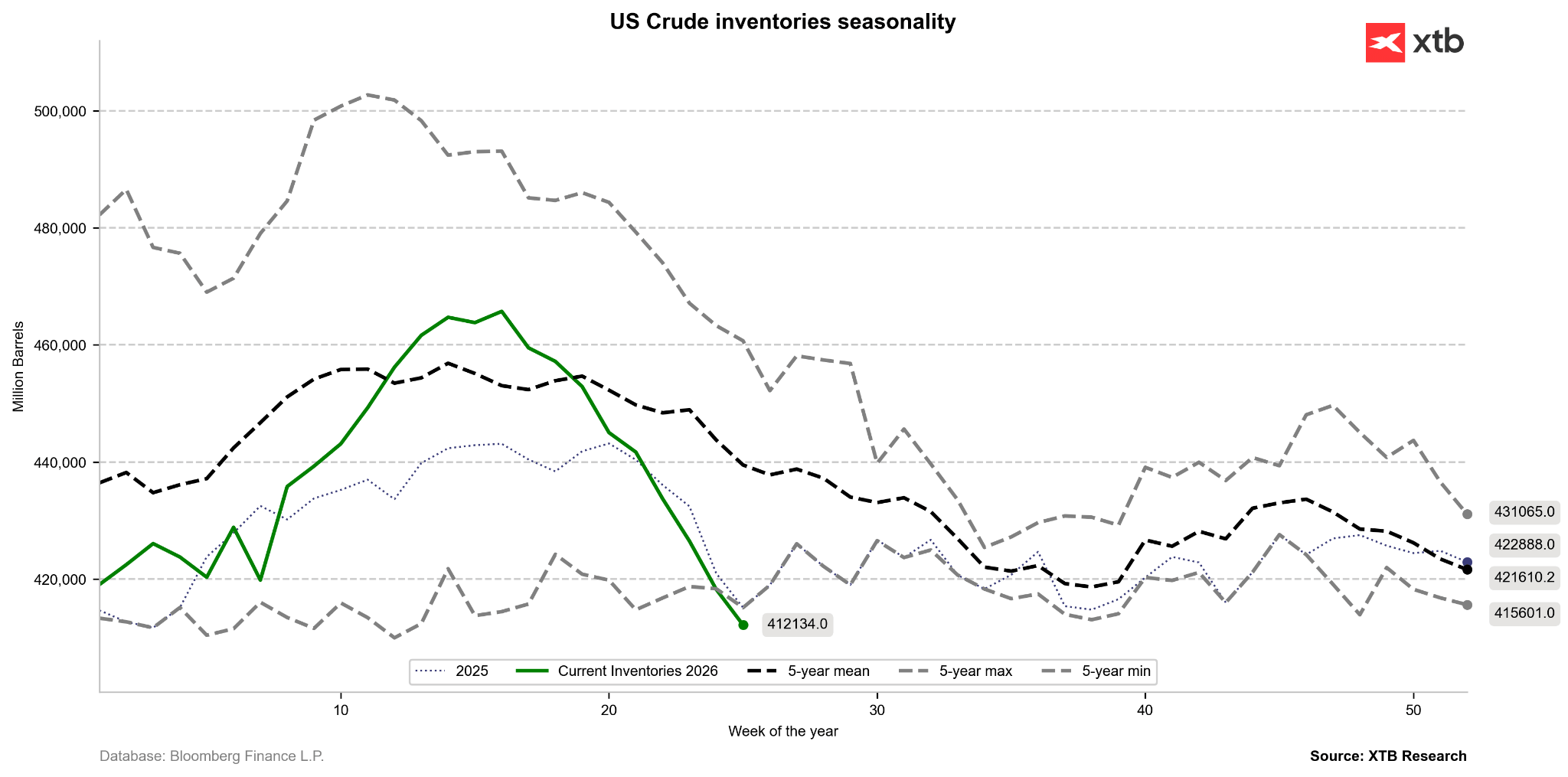 Oil inventories are falling below the 5-year minimum. The scale of the declines in recent weeks is huge, but with the Strait of Hormuz likely to open soon, we should see the situation normalize. Source: Bloomberg Finance LP, XTB
Seasonality and long-term trends
- Steady downward trend since spring: Looking at the bigger picture, since April, persistent and distinct declines in crude oil inventories have been visible in the US. This is a typical phenomenon for this time of year, related to preparations for the summer travel season (the so-called driving season), when refineries operate at full capacity.
- No impact on prices: Interestingly, this cyclical shrinking supply of raw material in US warehouses has made little impression on financial markets for a long time and does not translate into lasting increases in oil prices.
Commentary: The devil is in the details
At first glance, the report headline looks very "bullish." After all, oil inventories shrank more than the market expected (down more than 6 million barrels). However, the investors' reaction should be cautious.
Why is this report not so optimistic for oil prices after all? Refineries are processing oil at an impressive pace (hence the deep decline in crude inventories), and we are also seeing elevated levels of exports due to still-high prices and the fulfillment of previously concluded contracts. However, it is worth noting that an interesting situation is emerging in finished fuel inventories. After many weeks of declines, gasoline and distillate inventories rose by a total of more than 5 million barrels, while the market expected declines in both cases.
This means that the final product is piling up in warehouses faster than consumers can use it. This data structure suggests weaker internal demand in the US and effectively neutralizes the positive tone of the sharp decline in crude oil inventories.
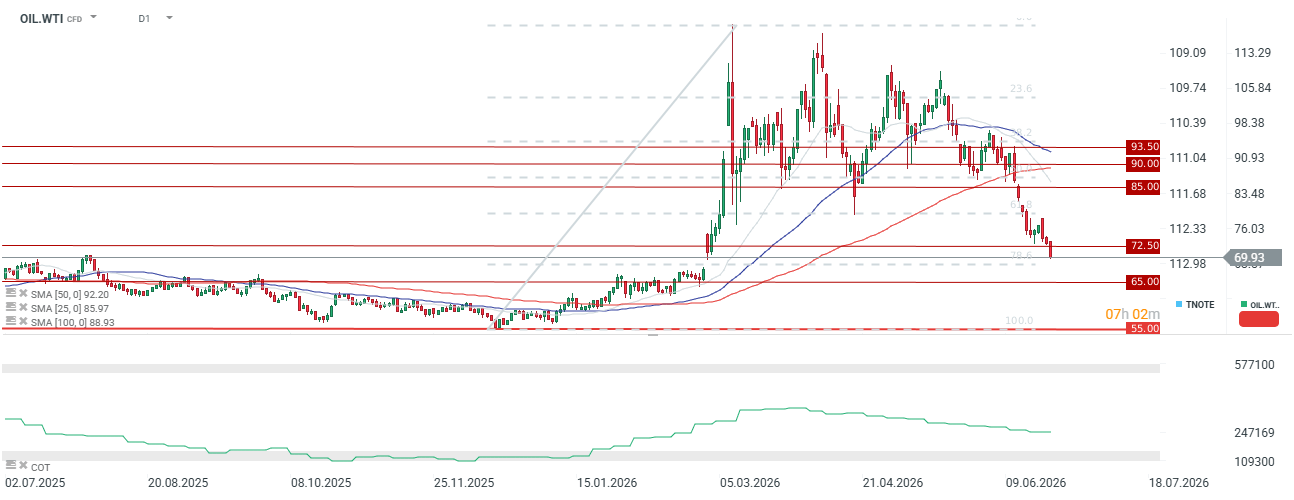 The price of WTI oil is falling below 70 USD per barrel and testing the lows from the first session after the start of the conflict in the Middle East. The market has clearly returned to price normality, although the situation in the physical oil market remains tense, especially considering the continued release of strategic reserves. Source: xStation5
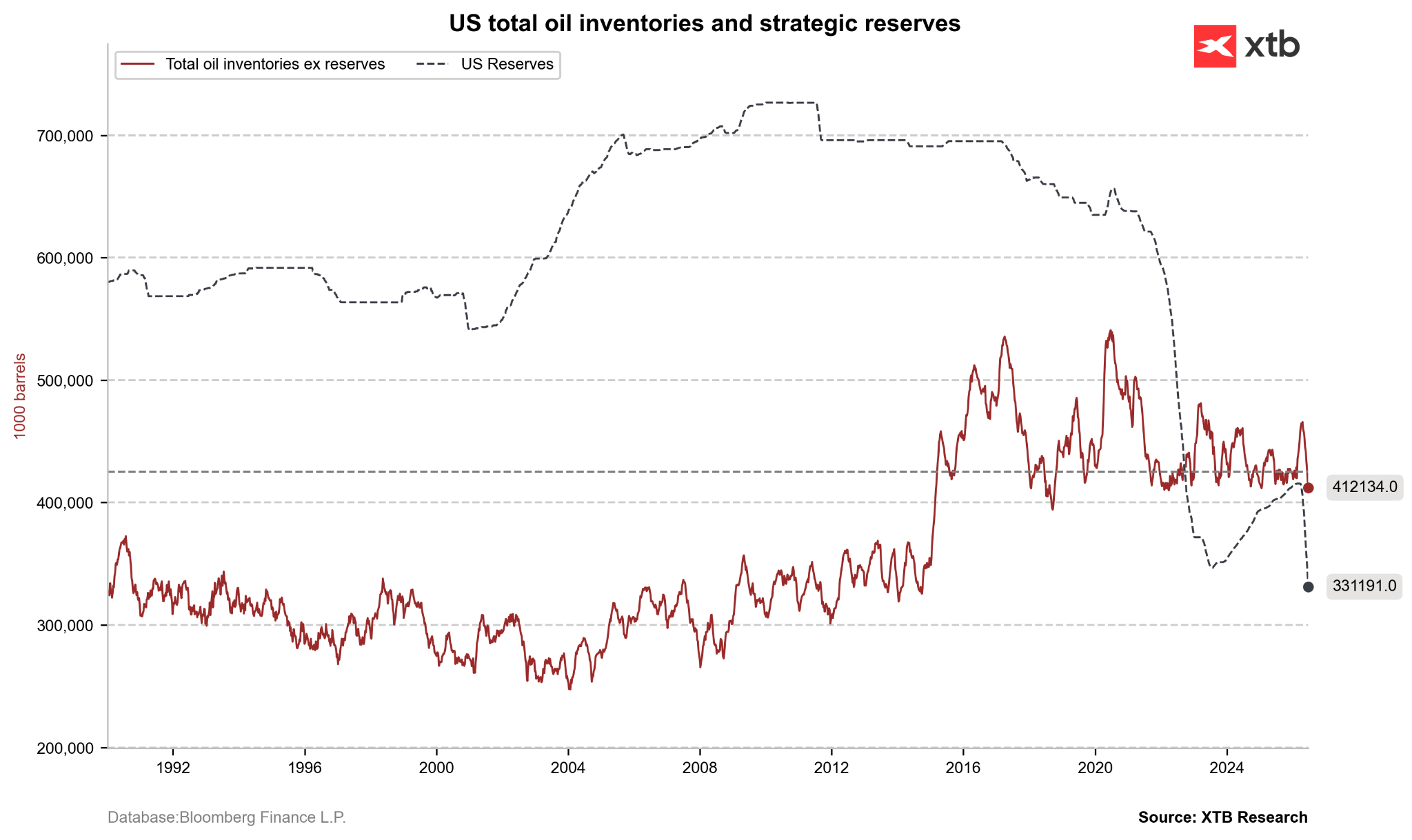 US oil reserves are falling to their lowest levels since the 1980s and are already nearly 100 million barrels lower than before the conflict. Source: Bloomberg Finance LP, XTB



Daily Summary: Trump and OpenAI keep the market on a roller coaster💡



U.S. attacks on Iran suspended 💥


Market Wrap: A 4% surge in oil prices weighs on indices (08.10.2026)

EURUSD falls below 1.12 amid hawkish Fed's Waller remarks