



University of Michigan Consumer Sentiment Index (December):
-
Consumer Sentiment: 52.9 (Expectations: 53.3; Previous: 51)
-
Current Conditions: 50.4 (Expectations: 50.7; Previous: 50.7)
-
Future Expectations: 54.6 (Expectations: 55; Previous: 55)
-
Inflation Expectations – 1 Year: 4.2% (Expectations: 4.1%; Previous: 4.5%)
-
Inflation Expectations – 5 Years: 3.2% (Expectations: 3.2%; Previous: 3.4%)
Why the Data Matters
The University of Michigan Consumer Sentiment Index measures consumer confidence and expectations about the U.S. economy. These readings are important because consumer spending accounts for the majority of U.S. GDP, so shifts in sentiment can directly affect economic growth. Additionally, the data influences financial markets, including stocks, bonds, and currencies, as investor decisions often react to changes in consumer confidence. Finally, inflation expectations derived from these surveys can provide insight into potential Federal Reserve policy moves.
University of Michigan Consumer Sentiment – Results
Consumer sentiment in the U.S. came in at 52.9, slightly below the expected 53.3 but up from 51 in November. Current Conditions were 50.4 (vs. 50.7 expected), and Future Expectations reached 54.6 (vs. 55 expected), indicating moderate optimism with some caution about the economic outlook. Inflation expectations were 4.2% for one year (vs. 4.1% expected; previously 4.5%) and 3.2% for five years (in line with forecasts; previously 3.4%), suggesting slightly elevated near-term inflation but moderate long-term expectations.
Overall, the data points to moderately positive consumer sentiment, slightly below expectations, which could be neutral to mildly negative for the U.S. dollar and the retail sector.
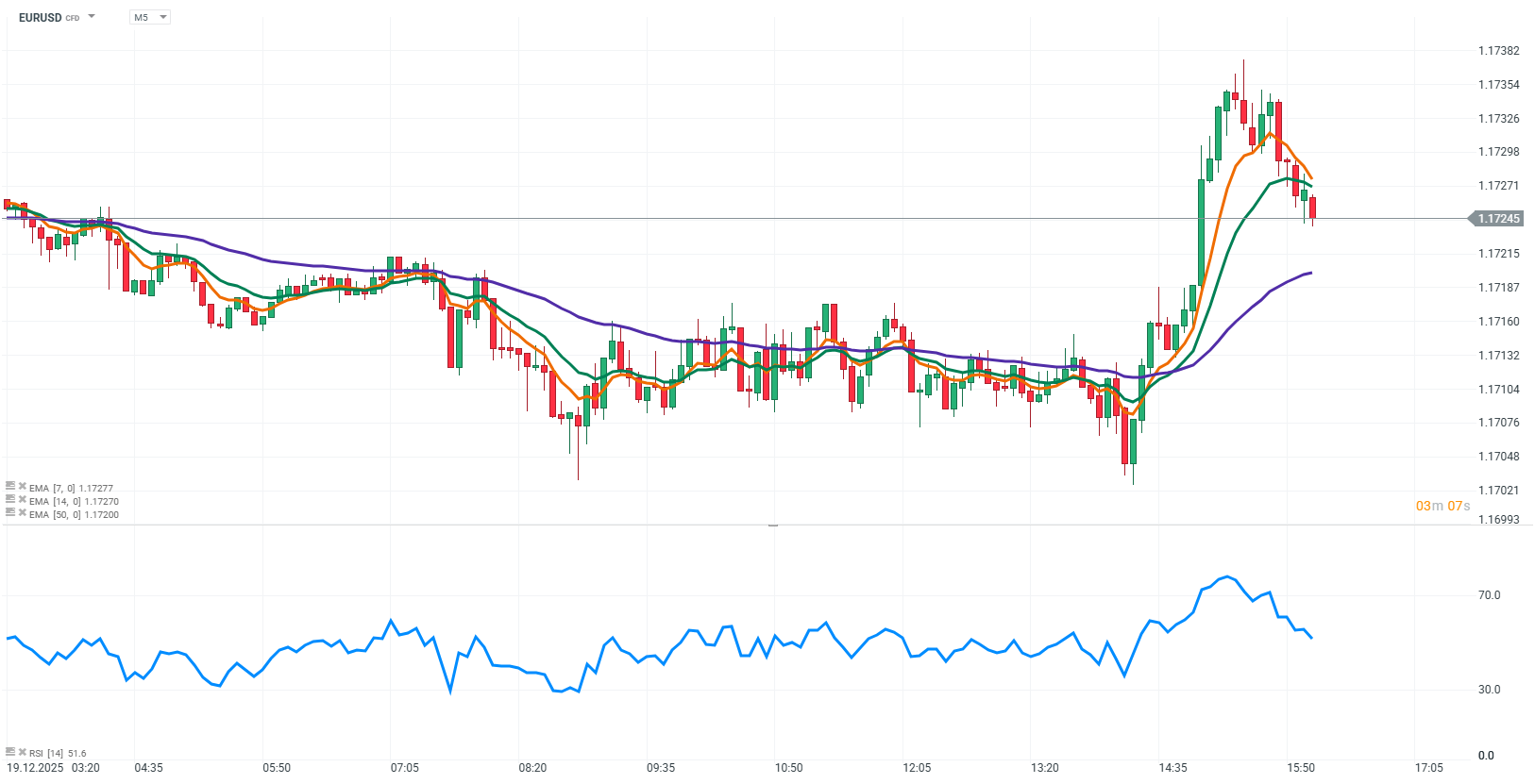
Source: xStation5



Three markets to watch next week (23.10.2026)



Daily Summary: Oil at five-month highs, indices under pressure (23.10.2026)

US Open: Further declines on Wall Street, Brent above 111 USD, AI correction continues (14.10.2026)

BREAKING: France slows down, Germany holds on. Euro falls below 1.12