



14:30 CET, United States, GDP and PCE reports:
-
US GDP QoQ Advance Actual 1.5% (Forecast 2%, Previous 2.1%)
-
US Core PCE Price Index YoY Actual 3.3% (Forecast 3.3%, Previous 3.4%)
-
US Core PCE Price Index MoM Actual 0.1% (Forecast 0.2%, Previous 0.3%)
-
US Real Personal Consumption MoM Actual 0.3% (Forecast 0.4%, Previous 0.3%, Revised 0.4%)
In the second quarter of 2026, the US economy grew at a slower pace than expected, expanding by 1.5% on an annualised basis, as the Iran war weighed on confidence in the world’s largest economy. According to the BEA report, the slowdown was driven mainly by a decline in exports and government spending, as well as weaker business investment. Personal consumption also fell short of expectations, with US consumers continuing to feel the pressure from elevated fuel prices. The Core PCE numbers, Fed's prefered inflation measure, slightly missed the expectations (the monthly reading came in lower than expected, poitning to a milder, short-term inflationary pressure).
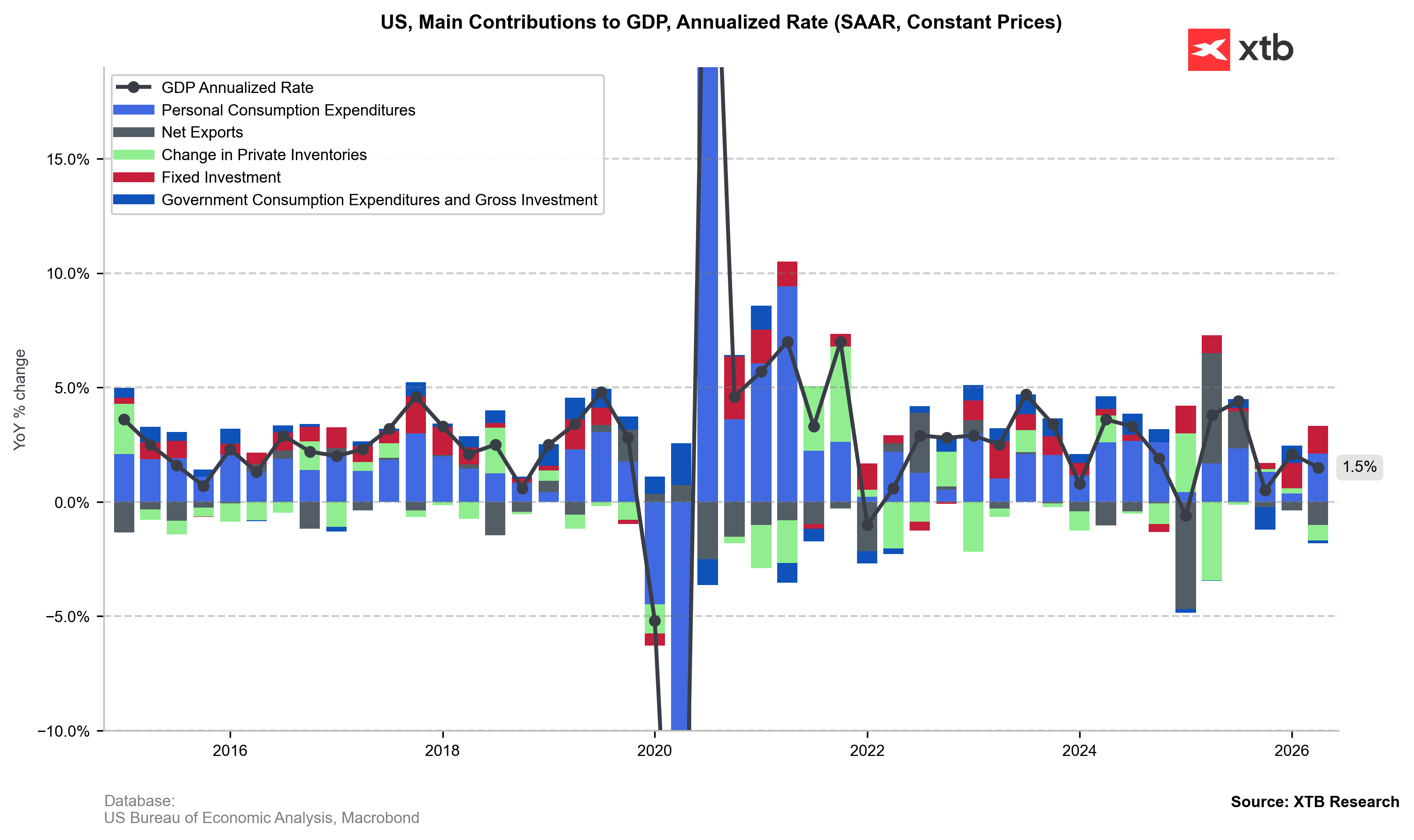
Private consumption still remains the backbone of the US GDP. Source: Macrobond, XTB Research
Technical Analysis: EURUSD (M30)
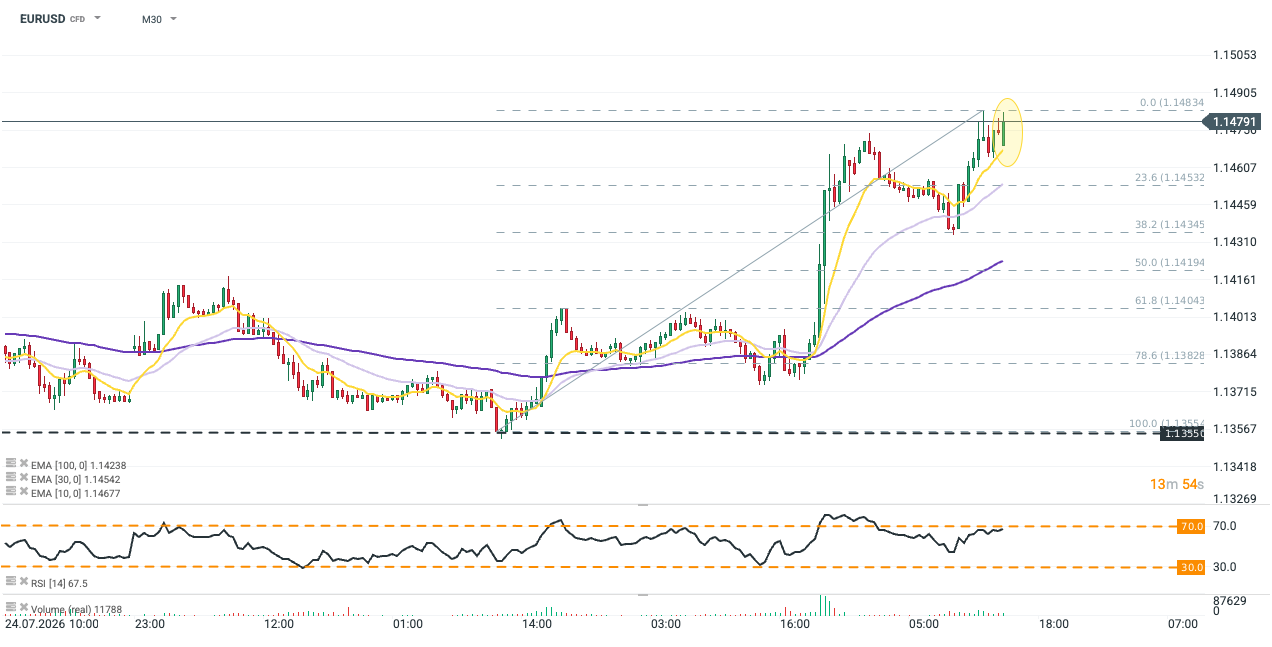
After an initial period of inertia, the most-traded currency pair resumed trading above its 10-period exponential moving average (EMA10, yellow), riding the post-Fed bullish wave.
EURUSD is currently testing the key resistance level around 1.1480 for the first time in two weeks. However, the bulls may struggle to push the pair towards the psychological 1.1500 level, as the short-term RSI remains close to overbought territory.
Holding above the 1.1450 mark, which aligns with both the 30-period EMA (light purple) and the 23.6% Fibonacci retracement level, will be crucial for maintaining the post-FOMC gains.
Source: xStation5



US Open: Further declines on Wall Street, Brent above 111 USD, AI correction continues (14.10.2026)


BREAKING: France slows down, Germany holds on. Euro falls below 1.12


Chart of the Day: Is USDJPY running out of road? Inflation forces the BoJ to act, but the Fed could spoil the Yen’s rally


Macro Calendar: Preliminary PMI Readings and Earnings Ahead