



- Yesterday, during a press conference, US general Dan Cain cited data showing that the frequency of missile strikes launched from Iran has fallen by around 85% compared with the first day of the war. Earlier, China was among the countries pressuring Iran regarding Hormuz, as a disruption to shipping would represent a major economic blow to its economy.
- At the moment, navigation through the Strait of Hormuz is not fully safe. Yesterday there were reports of a drone attack on an oil tanker, while Iran’s military unit, the IRGC, announced that the strait had been closed. Information on the matter remains highly dynamic, but it is certain that the risk premium for transport through the Strait of Hormuz, the Red Sea and the Bab al-Mandab Strait will persist for some time — even if the US Navy provides escorts for vessels. Energy markets will likely still need time to return to conditions seen before the outbreak of the war.
The S&P 500 index futures contract (US500) reacted with a sharp rally to these reports, in a sense finding “confirmation” of hopes for a gradual de-escalation of the conflict — if not through diplomatic means, then through military developments that could limit Iran’s ability to continue retaliatory actions and strikes in the region.
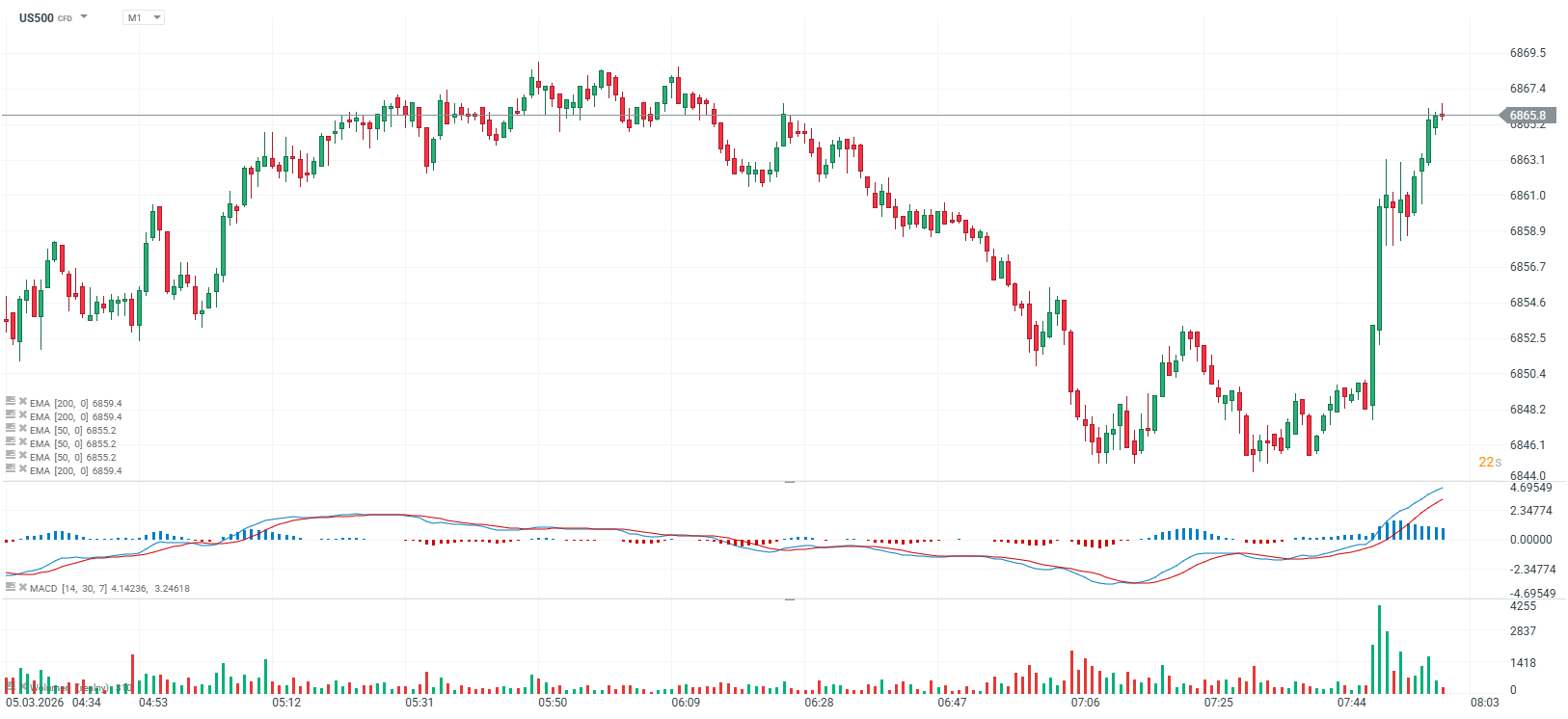
Source: xStation5



Chart of the Day: US100 (Nasdaq 100). Rebound in AI trade vs. weakening technical picture



📈Morning Brefieng: AI sector rebound collides with still-expensive oil (20.10.2026)
Wall Street rebounds🚨



Market Wrap: Rebound in China and Falling Oil Prices, France Leads EU Declines