



ICE cocoa futures (COCOA) rallied more than 60% from early June, while prices in London reached their highest level since September 2025 before turning lower. Futures are down another 3.5% today, falling below $6,000 per tonne. The rally over recent months primarily reflected concerns about supply from West Africa, but the overall picture remains mixed. Excessive rainfall encourages disease, yet moist soil makes it easier to apply fertiliser and gives some growers grounds for optimism, while cocoa inventories remain relatively high.
Cocoa inventories are rising across global markets
- The ongoing sell-off comes against a backdrop of ample physical supply and rising warehouse inventories. ICE-monitored stocks exceeded 3.41 million bags in the latest reading, reaching a two-year high.
- Weather conditions will be crucial in determining the final size of the harvest. In recent weeks, the projected global supply surplus for the 2026/27 season has narrowed to around 25,000 tonnes, according to the average of estimates compiled by Bloomberg.
- Cocoa market tracking firms StoneX and Hedgepoint Global Markets have also recently lowered their surplus forecasts for the season. The relatively small surplus (though still a surplus) leaves a somewhat thinner cushion against any further deterioration in harvests, even with healthy inventories.
How is production in Africa shaping up?
Preliminary estimates put Ivory Coast’s main crop at 1.55 million to 1.6 million tonnes, broadly in line with the previous year. This refers to the larger of the season’s two harvests, rather than full-year production; a clearer picture should emerge in November. Inventories accumulated during the earlier recovery in production and weakening demand continue to limit the risk of shortages. High prices have prompted consumers to cut back on purchases and some chocolate manufacturers to change their recipes.
- Cocoa production in Ivory Coast could fall by around 20% to 1.75 million tonnes, according to a late-August survey of five traders and crop assessors. Ghana’s output is forecast to decline by 13%; together, the two countries account for more than half of global production.
- A disease that blackens cocoa pods and causes them to rot is spreading in Ghana, while some growers cannot afford sufficient crop protection products.
- Cameroon’s regulator expects production to remain close to last year’s level, but farmers report mounting problems with diseases and pests. Meanwhile, Nigeria’s output is forecast to fall by 2.4% to 288,000 tonnes. Growers point to drought followed by flooding and strong winds, which destroyed trees and knocked off developing pods.
- This year’s strong El Niño could further intensify the dry harmattan winds, which typically arrive in the region around November. This would mark a shift from excessive moisture to conditions that could threaten the final stages of the main harvest.
- Cameroon’s regulator expects production to remain close to last year’s level, but farmers report mounting problems with diseases and pests. High prices for crop protection products are encouraging sales of less effective counterfeit alternatives.
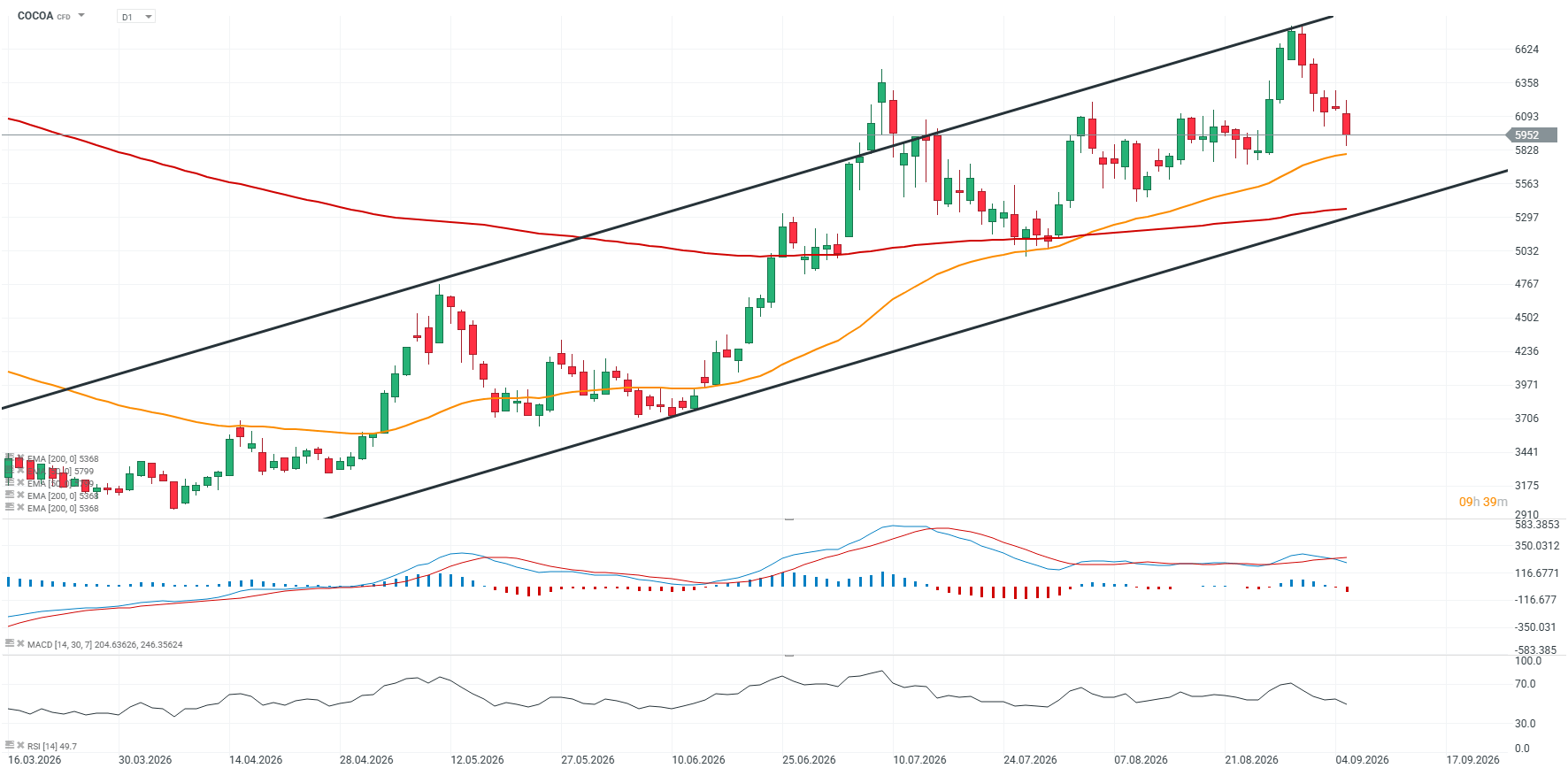
COCOA chart (D1 timeframe)
Further inventory growth could weigh on COCOA futures in the short term, even as the supply outlook for the 2026/27 season remains uncertain. From a technical perspective, the contract has broken above its 200- and 50-session moving averages. Despite the pullback, it remains above both and is trading roughly in the middle of its price channel.
Source: xStation5
CoT positioning: Are funds reducing their net short exposure to cocoa?
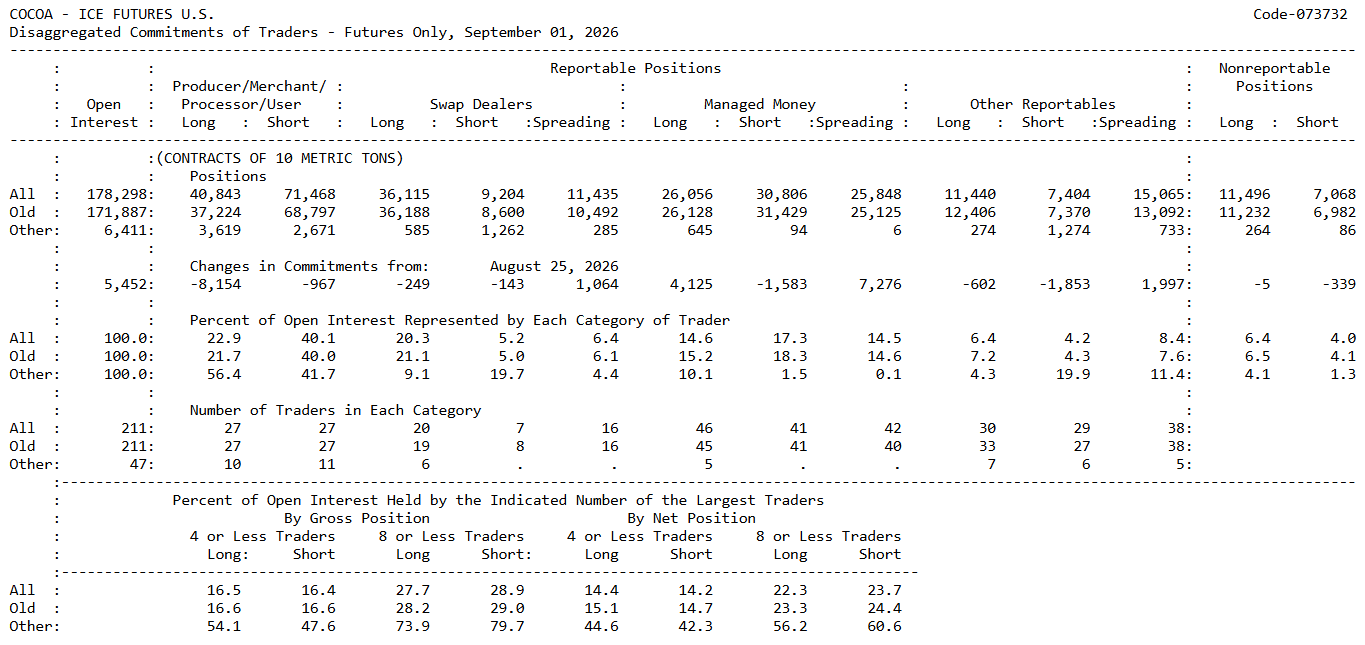
Large speculators (the Managed Money category) remain net short cocoa futures but have significantly reduced their bearish positioning. Their net position stood at −4,750 contracts, compared with −10,458 a week earlier, representing a reduction in net short exposure of approximately 54.6%. Long positions increased by 4,125 contracts to 26,056, while short positions fell by 1,583 to 30,806. This points to a shift towards a more bullish stance among funds, although they still hold more short positions than longs.
- Commercials, meaning large physical market participants (producers, merchants, processors, etc.), excluding swap dealers, became more net short, with their net position falling to −30,625 contracts from −23,438. However, this was driven by an 8,154-contract reduction in longs rather than an increase in shorts, which also declined by 967. This therefore does not indicate aggressive opening of new bearish positions, but primarily a reduction in long positions. Positioning in this category is linked to hedging physical market activity and should not be treated as an unambiguous forecast of price direction.
- In summary, physical cocoa market participants are primarily reducing longs rather than increasing shorts. Their net short exposure increased not because they added short positions, but because they reduced their long positions much more substantially. This is an important distinction between unwinding longs and opening new bets on falling prices.
- One possible interpretation is that cocoa buyers are reducing their hedges against rising prices. However, this does not necessarily mean they expect prices to rise or fall: their purchasing needs may have changed, or earlier hedges may no longer be necessary.
- Open interest increased by 5,452 contracts to 178,298, or approximately 3.2% week on week. At the same time, Managed Money spread positions increased by 7,276 contracts, so the rise in market participation does not exclusively reflect new directional bets. The report shows positioning as of September 1, 2026, and changes relative to August 25, so it cannot confirm whether funds increased their net short exposure again during the September 8 sell-off.
Source: CFTC, CoT


RBA turns increasingly hawkish as markets reprice November rate hike expectations ⚔️



Daily Summary: Buyers Refuse to Give In

US Natural gas extends declines 🔥📉



US OPEN: The wave of AI concerns is building again, oil returns near highs