



Key facts
- Cocoa prices remain under pressure after ICE cocoa inventories climbed to their highest level in two years, reaching 3.28 million bags.
- Cocoa grinding data presented a mixed picture of demand: Europe recorded a 4.6% YoY decline, while North America (+7.7%) and Asia (+25%) delivered stronger-than-expected growth.
- Additional pressure comes from improving supply conditions, including a 30% YoY increase in Nigerian cocoa exports in June and higher arrivals from Ivory Coast.
- Over the medium term, prices continue to receive support from El Niño-related weather risks, which could worsen growing conditions in West Africa and reduce future harvests.
Demand remains uneven, but the sector is beginning to recover
Last week, the market reacted negatively after the European Cocoa Association reported that European cocoa grindings fell 4.6% YoY, marking the weakest second-quarter reading in six years. However, concerns over global demand were partially eased by much stronger data from North America and Asia.
North American cocoa grindings rose 7.7% YoY, despite market expectations for a decline, while Asian grindings surged 25% YoY, significantly exceeding forecasts. Another positive signal came from Barry Callebaut, the world's largest cocoa processor, which reported 5.7% annual sales growth in its fiscal third quarter, the company's first year-over-year increase in more than two years.
Improving supply weighs on prices despite longer-term weather concerns
In recent weeks, the market has received several signals pointing to improving supply conditions. Nigerian cocoa exports increased 30% YoY in June, while cocoa arrivals in Ivory Coast have risen 21% since the start of the current marketing season compared with a year earlier. Meanwhile, ICE-monitored cocoa inventories have climbed to their highest level in two years, adding further downward pressure on prices.
Nevertheless, the outlook for future harvests remains uncertain. Preliminary surveys suggest that Ivory Coast's main 2026/27 cocoa crop could total around 1.8 million tonnes, roughly 18% below the previous season.
In addition, the U.S. Climate Prediction Center believes this year's El Niño could become one of the strongest in more than 75 years, increasing the risk of drought across West Africa and reducing future cocoa yields. As a result, despite near-term pressure from higher inventories and a stronger dollar, the medium-term fundamentals for cocoa remain relatively supportive.
COCOA (D1 chart)
Cocoa prices have fallen by more than 15% from their recent local highs, which pushed the market to $6,650 per tonne, the highest level since the autumn of 2025.
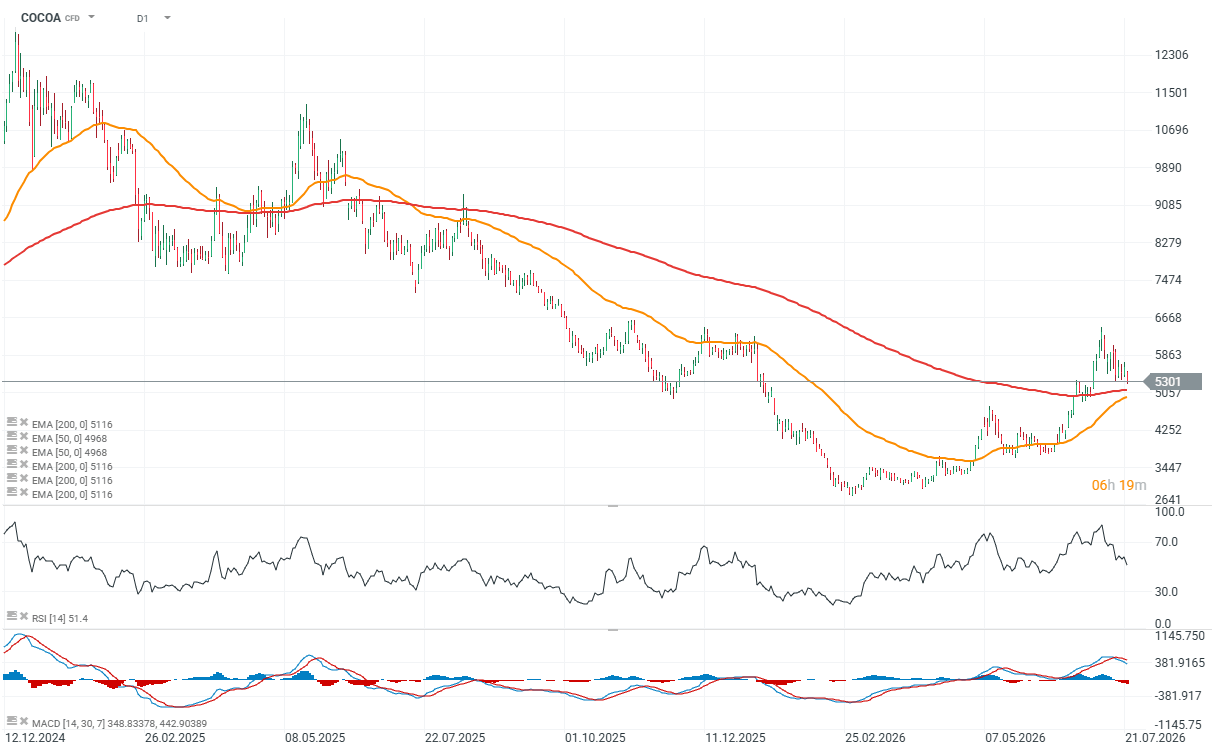
Source: xStation5



Daily Summary: Investors Concerns Rise Ahead of Earnings Season


European gas at its highest level in 3 years🚨


US OPEN: Wall Street under pressure from oil and semiconductors


📊Market Wrap: Europe Rebouns Despite Higher Oil and Dollar (12.10.2026)