



November 3rd is the day of the long-awaited midterm elections in the US. Investors are in relatively high spirits while awaiting the initial exit poll results from the first voting districts. Following several days of dynamic sell-offs (SOXX fell by approximately 10% over three days), the semiconductor sector is rebounding. This is supporting the key tech index, the Nasdaq 100, which is currently up by 1.1%.
Rebound in semiconductors, cooling enthusiasm around Apple and Palantir
The rally across the semiconductor sector included On Semiconductor, which gained around 3% after releasing its Q3 earnings report. The key highlight: sales to data centres surged by 175% year-on-year.
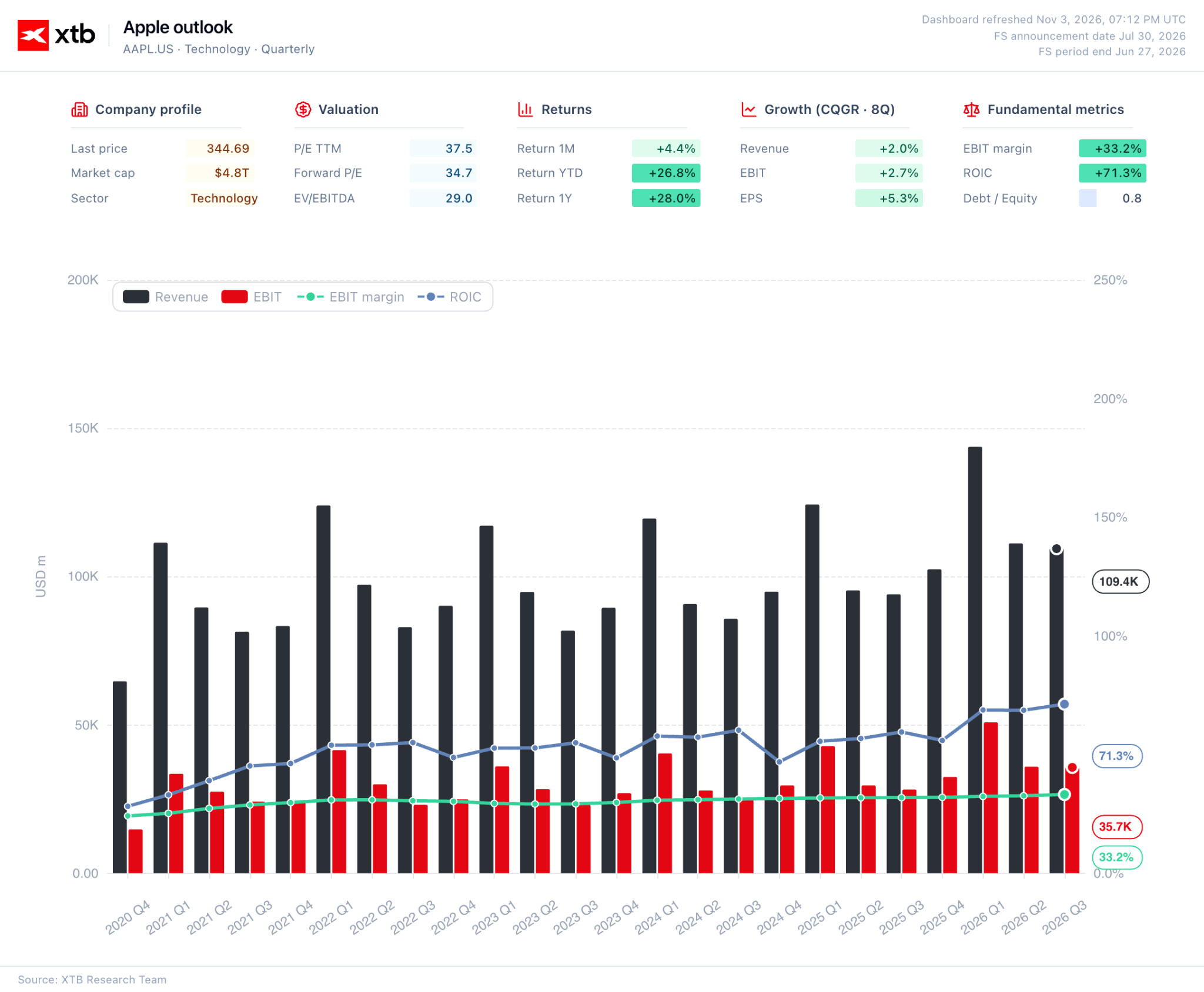
On the losing side among technology indices were Apple (-2%) and Palantir (-1.5%), both of which also published their quarterly reports yesterday. The Cupertino-based company beat expectations on several fronts; however, investors remain concerned about tightening margins and weaker sales in China. Alex Karp's company also posted results that exceeded forecasts (e.g. USD 2.31 billion in revenue, up 96% YoY), but pointed to a noticeable slowdown in sales growth for the coming quarter.
Figure 1: Dashboard for Apple (2020 - 2026)
 Source: XTB Research, 03.11.2026
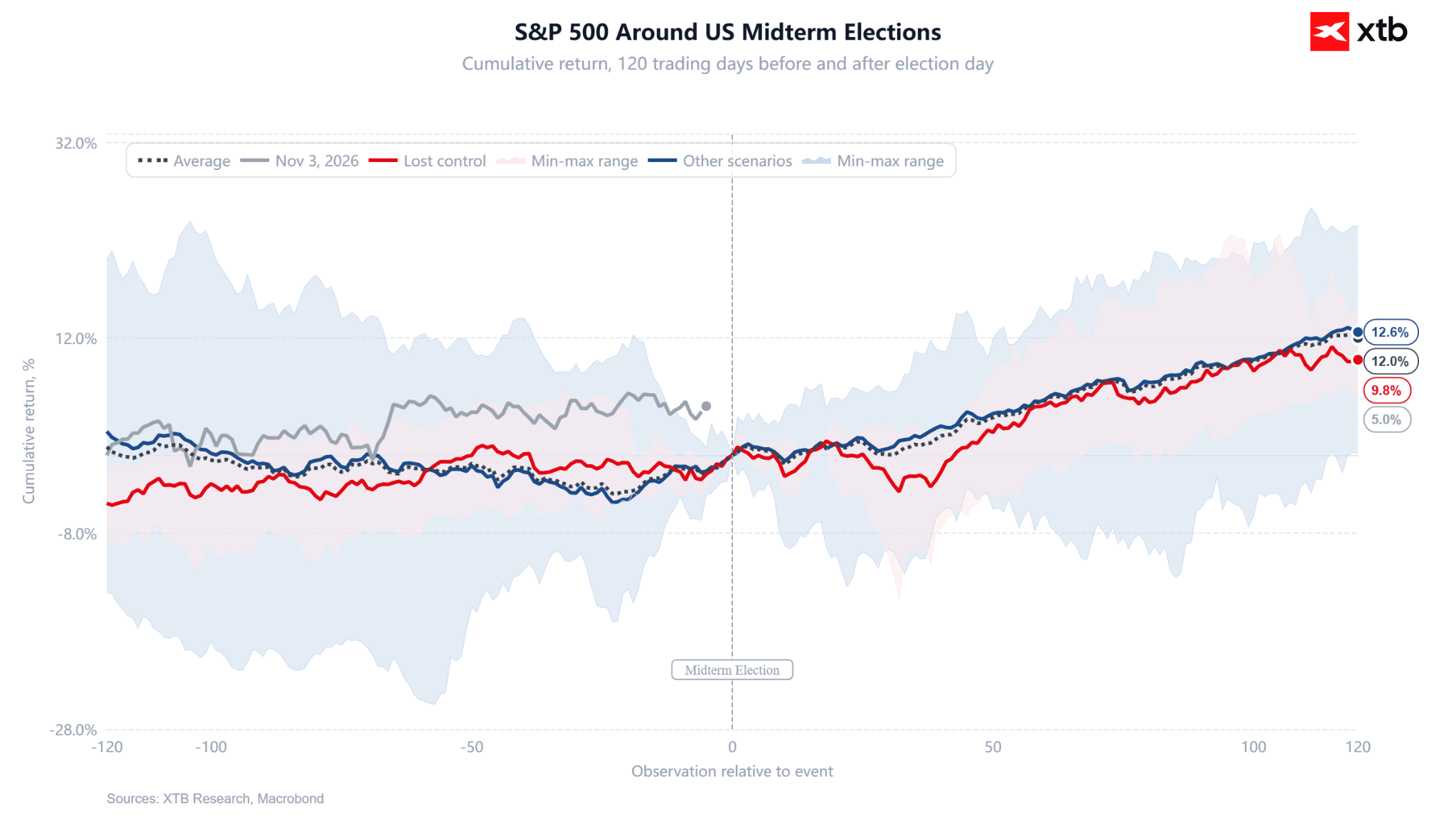
Regarding the indices themselves and the aforementioned midterm elections, the S&P 500 index has not recorded a loss 120 trading days after the close of polling stations in any of the last 19 cycles (i.e. since 1950). However, it is worth noting that when power shifts in Congress, the first 40 trading days following the elections (the period leading up to the end of the year) have often proven to be turbulent.
Figure 2: S&P 500 performance before and after midterm elections (last 19 election cycles)
 Source: XTB Research, 03.11.2026
We will discuss the political and economic links in greater detail together with Michał Stajniak during tonight's election special with XTB, starting at 21:00.
Are negotiations gathering pace?
The most prominent non-technology theme today was the situation surrounding Iran. US forces conducted targeted overnight strikes against objectives on Qeshm Island in the Strait of Hormuz, with President Trump describing them as a "minor attack, not a war". Concurrently, Qatari mediators presented both sides with a new agreement proposal. President Pezeshkian spoke of "greater negotiating flexibility", while Vice President Vance noted "constructive discussions".
At the same time, Tehran rejects US terms regarding its nuclear programme and insists on the lifting of port blockades and the unfreezing of assets.
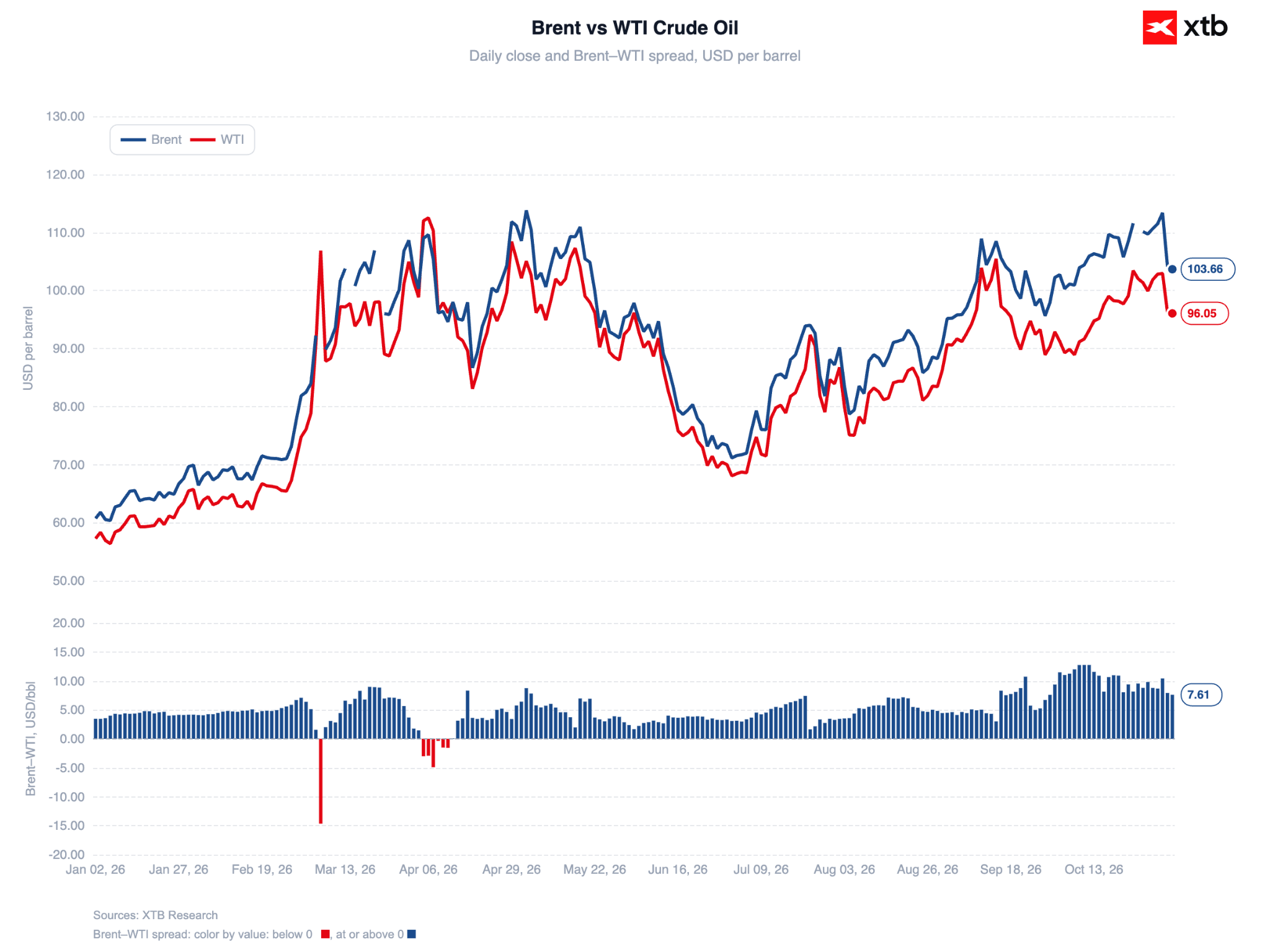
These developments continue to weigh on crude oil prices, with Brent currently trading below USD 103 and WTI hovering near USD 96.
Figure 3: Brent and WTI crude oil (2026)
 Source: XTB Research, 03.11.2026
Modest declines in gold
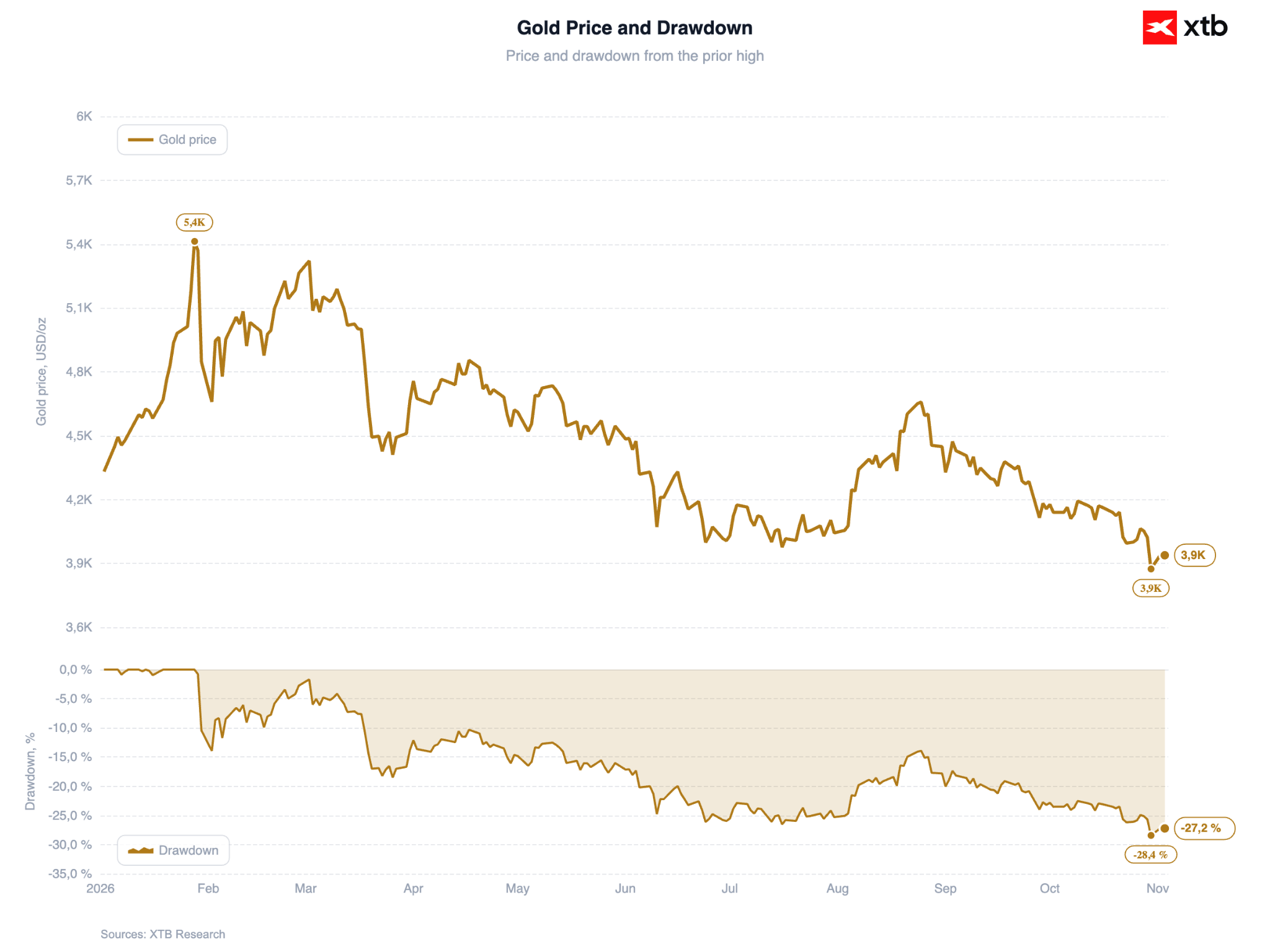
Gold is down by around 0.5% today, trading at approximately USD 3,930 per troy ounce. This can be partly attributed to the release of robust JOLTS data, which pointed to a healthy US labor market and nudged 10-year Treasury yields higher to 4.95%. US job openings rose to 7.52 million in September, comfortably beating expectations (7.16 million), while layoffs dropped to their lowest level in over a year.
Figure 4: Gold (2026)
 Source: XTB Research, 03.11.2026
—
Michał Jóźwiak, Financial Markets Analyst at XTB



US Open: Lower oil prices boost indices, markets await Midterms results (03.11.2026)

Chart of the Day: Brent crude falls despite Trump's words about no desire to negotiate

Economic Calendar - Global series of industrial PMI indicators and tech giants' results

📊Morning Wrap: Oil falls after Qatar talks. China injects liquidity, while the US prepares for elections.