



EURUSD continues its decline from earlier this week, extending losses to nearly 2%. The pair has dropped over 200 pips, starting the week around 1.1750 and now trading below 1.1530.
The losses are driven not only by euro weakness but also by strength in the U.S. dollar. The euro is under pressure mainly due to overall dissapointment and potential economic concerns stemming from the newly reached trade agreement between the EU and the U.S. Meanwhile, the dollar is gaining ground thanks to improved terms of trade and the removal of major risks related to a continued trade war.
It's also worth noting that the Fed will announce its interest rate decision tomorrow, which could either support the dollar further or introduce volatility. If the decision is not unanimous (e.g., if Bowman and Waller vote in favor of a rate cut), it would mark the first lack of consensus in a long time and could undermine Jerome Powell’s leadership stance. However, recent U.S. economic data has been solid. Today, the Atlanta Fed’s GDPNow model showed Q2 GDP growth could reach 2.9%, up from the previous estimate of 2.4%.
There’s also a broad capital outflow from European markets. The Swiss franc, Swedish krona, and several emerging market currencies (including the Polish zloty, Czech koruna, and Hungarian forint) are also losing ground against the dollar. On the other hand, the British pound strengthens on an ultimately lower tariff rate than the EU.
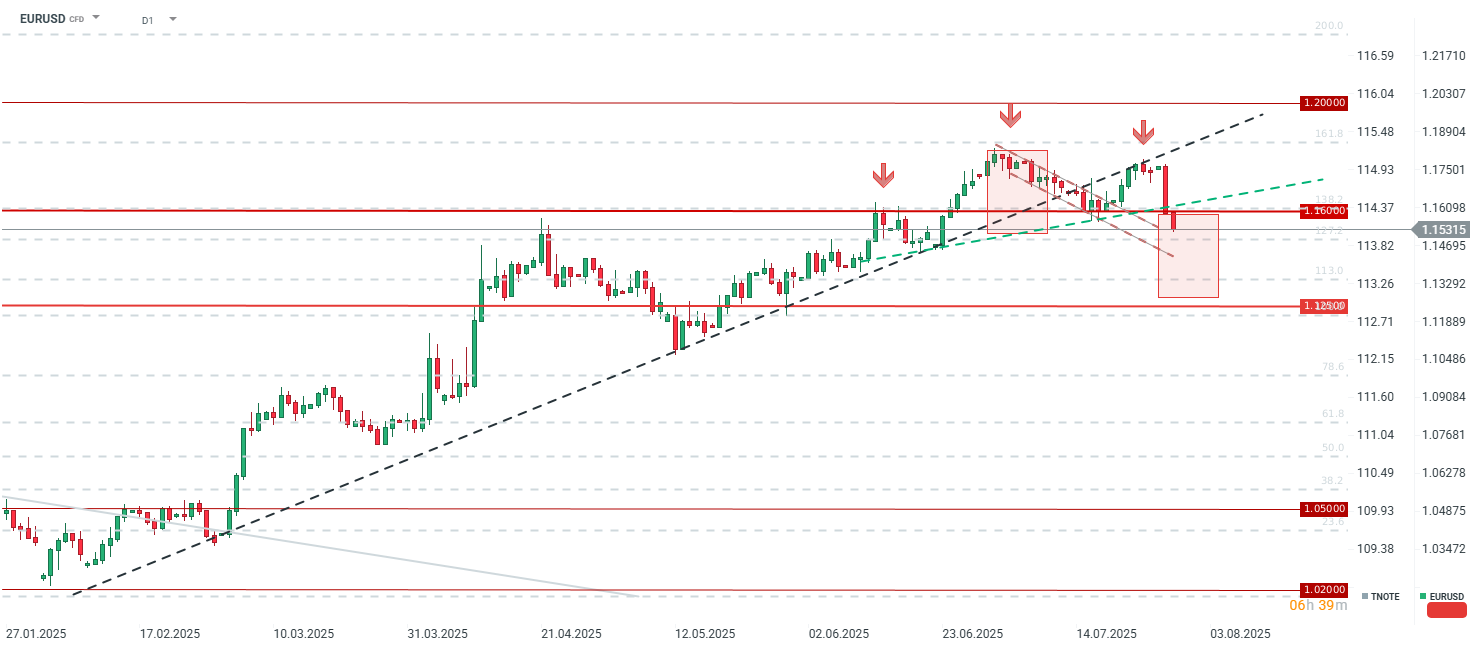
EURUSD is potentially breaking below the neckline of a head-and-shoulders (H&S) pattern, which could suggest a downside target near 1.1280. Notably, the latest CFTC data shows a decline in net long positions on the euro and a reduction in net short positions on the dollar. Source: xStation5



Three Markets to Watch Next Week (09.10.2026)



Daily Summary: A Shallow Rebound Ahead of Earnings Season



US OPEN: Trump de-escalates, OpenAI supports Wall Street sentiment

🔼 Gold gains 1.2%