


Futures on the Nasdaq 100 (US100) and S&P 500 (US500) are down around 0.5% as Brent oil futures rise almost 1.5% above $105.70 per barrel following reports from The Wall Street Journal of a US strike on Iran's Qeshm Island. Shares of Apple and Palantir fell by approximately 2–3% following yesterday's quarterly earnings releases, despite both companies beating analysts' expectations.
Markets will closely monitor the results of the US midterm congressional elections, with the first results expected overnight, starting with Indiana and Kentucky. On the macroeconomic front, today's main events include the US JOLTS job openings report and factory orders data. Pfizer is scheduled to report earnings before the US market opens, while AMD and Arista Networks, two important companies within the artificial intelligence investment theme, will release their results after the closing bell.
Yesterday's Wall Street session was also marked by continued selling pressure on technology stocks, particularly semiconductor manufacturers, despite a sharp decline in oil prices. Although the largest technology companies struggled, most S&P 500 constituents finished the session higher, suggesting that selling pressure was concentrated primarily among the index's largest stocks, while the broader market showed greater resilience.
The Nasdaq 100 extended its losses yesterday and re-entered correction territory, falling 10% from its October peak. Meanwhile, a key semiconductor index lost a cumulative 12% over three sessions, highlighting persistent selling pressure in a sector that had previously been one of the main drivers of the US equity bull market.
According to comments made this morning by a senior Iranian official, mediators are still working to narrow the differences between Tehran and Washington. Iran continues to reject what it considers excessive US demands and insists that its conditions must be met before the Strait of Hormuz can reopen, with nuclear negotiations potentially beginning afterwards. Tehran has also warned that it is prepared to respond forcefully to American military strikes, both within the region and beyond.
The Reserve Bank of Australia (RBA) raised interest rates for the fifth time in 2026, from 4.60% to 4.85%, the highest level since 2008. The decision was in line with market expectations but was not unanimous, with six board members voting for a rate increase and three supporting unchanged rates. RBA Governor Michele Bullock stressed that further monetary tightening was necessary to prevent more serious economic difficulties, while Treasurer Jim Chalmers acknowledged that the decision would place additional pressure on Australian households. Following the announcement, AUDUSD declined, extending its losing streak to a third consecutive session as the Australian dollar weakened against its US counterpart.
In the bond market, longer-dated US Treasuries have outperformed, suggesting stronger demand for debt securities with longer maturities. This may reflect both expectations of easing inflationary pressures following yesterday's decline in oil prices and greater investor caution regarding the outlook for equities.
Signals from Iran remain mixed. Iranian President Masoud Pezeshkian suggested that the country's supreme leader had granted him greater flexibility to pursue peace negotiations. Meanwhile, according to Iranian broadcaster Press TV, the Islamic Revolutionary Guard Corps (IRGC) captured two US MQM-170 drones over Qeshm Island and destroyed what it described as the 55th American MQ-9 drone east of the Strait of Hormuz. These military claims have not been independently verified.
At the same time, Donald Trump expressed optimism about the possibility of reaching an agreement, linking the decline in oil prices to improving diplomatic prospects. The approaching US congressional elections are increasing the significance of geopolitical developments for financial markets. Trump's latest comments suggest that an immediate resumption of military strikes after the elections is not a foregone conclusion.
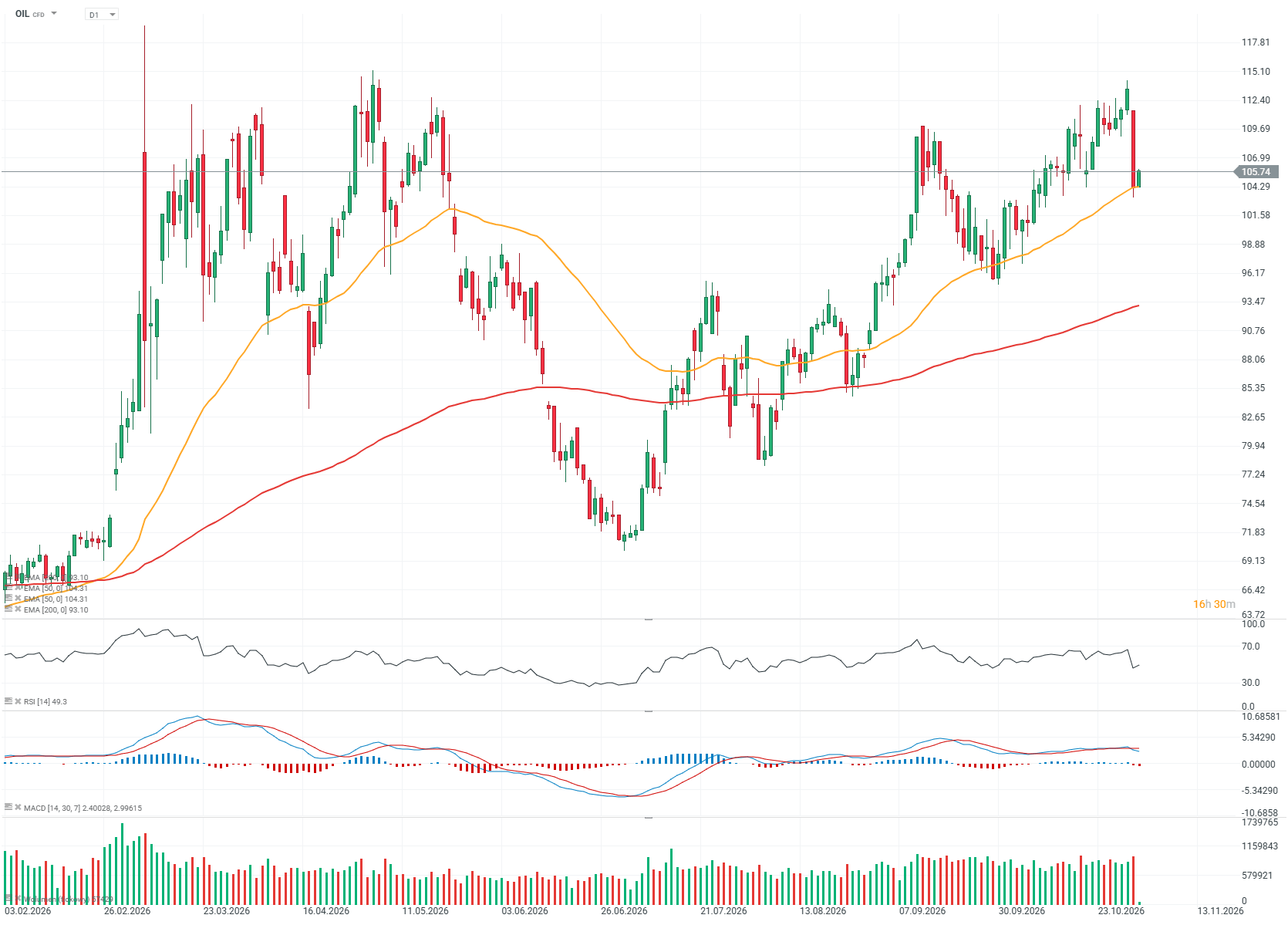
OIL (D1 chart)
Brent crude futures have risen only modestly so far, but the reported US strike on Qeshm Island appears to highlight the substantial differences that remain between Washington and Tehran. It is difficult to imagine such an attack taking place if negotiations were progressing smoothly. Oil prices found support at the 50-period exponential moving average (EMA50, orange line), and the ongoing rebound could theoretically still push Brent above $110 per barrel.
Source: xStation5


Daily Summary: A Rollercoaster Ride in the Commodities Market🚨Oil Drops 7%; Gold Rallies Over 2%💥


🚨Oil and gas in Europe in a panic sell-off


What's next for the S&P 500? 🗽 U.S. Earnings Season Summary

Chart of the Day: Brent crude falls despite Trump's words about no desire to negotiate