



📈 Equities & Companies
-
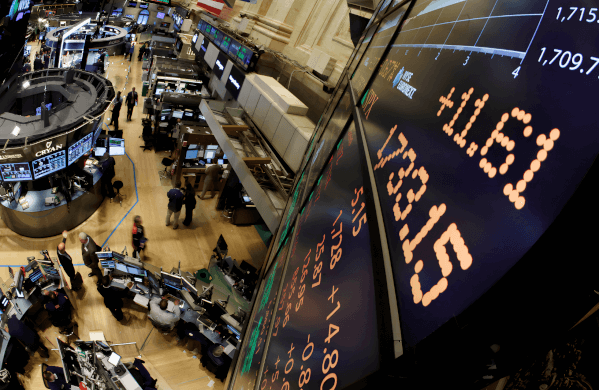
Yesterday's session on Wall Street ended in a mixed mood – the sole winner was the Dow Jones index, which rose 0.3% by the close, while on the other side were the S&P 500 and Nasdaq, ending the session down 0.3% and 0.6% respectively.
-
Today, Thanksgiving is celebrated in the US, and consequently, the American stock market will remain closed.
-
Semiconductor companies came under heavier pressure yesterday, giving back some of the gains made earlier in the week following the announcement of Jensen Huang's return as CEO of Nvidia – Nvidia fell by nearly 4%, Micron by over 4.5%, SanDisk by over 5.5%, and AMD by almost 2%.
-
Nvidia has instructed its manufacturing partners to halt shipments of servers equipped with its AI chips to Malaysia, Singapore, Thailand, and Indonesia due to tightened US export restrictions, as Washington fears Southeast Asian countries are being used as intermediaries allowing Chinese companies access to advanced processors and computing power for artificial intelligence.
-
CoreWeave is raising $4.5 billion in financing backed by a long-term contract with Meta worth $14.2 billion, allowing the company – despite its speculative credit rating – to secure significantly more favorable financing terms thanks to Meta's revenue guarantee.
-
Donald Trump attributes the declines in the US stock market to election results, however, the pressure on markets stems primarily from a sell-off in AI-related companies and concerns over their high valuations, with additional headwinds coming from tensions surrounding Iran and proposals for new tariffs, which could increase business operating costs and fuel inflation.
-
The session on Asian trading floors is proceeding under improving sentiment, with most exchanges gaining – Japan's Nikkei 225 is up 0.8%, and South Korea's KOSPI is gaining around 0.3%.
🏛️ Macroeconomics & Central Banks
-
The second reading of US Q3 GDP indicated economic growth of 4.3% annualized (well above expectations of 3.5%), confirming the resilience of the American economy and consumer strength, while the October core PCE inflation index rose 0.3% month-over-month, with persistent wage pressure further complicating the fight against inflation.
-
The combination of strong economic growth and sticky inflation in the US reinforces expectations for further monetary policy tightening by the Fed – the market is currently nearly fully pricing in a 25 basis point rate hike in December, as well as further moves in the early months of 2027.
-
The latest Beige Book report indicates that the US economy continues to expand at a moderate pace (with growth in activity reported in 8 out of 12 Fed districts), however, rising wage pressures and business operating costs could hinder further disinflation, suggesting high interest rates will be maintained for longer; this supports the US dollar and Treasury yields, but may negatively impact gold and US equity indices.
-
The Bank of Korea raised its interest rate by 25 basis points to 3.25% and signaled the possibility of further tightening – as many as 15 out of 21 member projections assume rates above 3.25%, and the bank also raised its 2027 GDP growth forecast to 4.1% (driven mainly by the semiconductor boom and demand for AI chips), which alongside strong exports and investments increases the risk of inflationary pressure.
-
The Bank of Japan, via hawkish board member Naoki Tamura, is signaling the need to raise interest rates more quickly toward the neutral level estimated at around 2% (compared to the current 1.25%), pointing to inflationary pressure stemming from a weak yen, rising commodity prices, and AI-driven demand, which strengthens expectations for a rate hike as early as December and further moves in 2027.
-
Australia recorded a 12.2% increase in business capital expenditure in Q3, marking the largest jump since 2011 (the commodity boom era), driven by the rapid expansion of data centers and AI infrastructure as well as spending on IT and telecommunications equipment, which bolsters the economic outlook but increases demand for energy, skilled workers, and construction materials, potentially sustaining inflationary pressure.
🛢️ Commodities
-
In the precious metals market, we are seeing a further deepening of the correction – gold is pulling back below $3,600, while silver is approaching the $41 level.
-
Crude oil prices are hovering around the flatline early in the day – Brent crude is trading at $91, while WTI stands at $84.
₿ Crypto Assets
-
The situation looks slightly better in the crypto asset market – Bitcoin is gaining nearly 1% and trading above $60,000, while Ethereum is approaching the $1,700 level.


Daily Summary: Trump's New Tariffs and AI Sector Slowdown Trigger Wall Street Sell-Off



US crude oil inventories rise less than expected. Market eyes Strait of Hormuz and supply surplus

🐻Nasdaq 100 (US100) on the brink of a bear market



US OPEN: AI sector slump and return of inflation push Wall Street toward 7,000 pts