



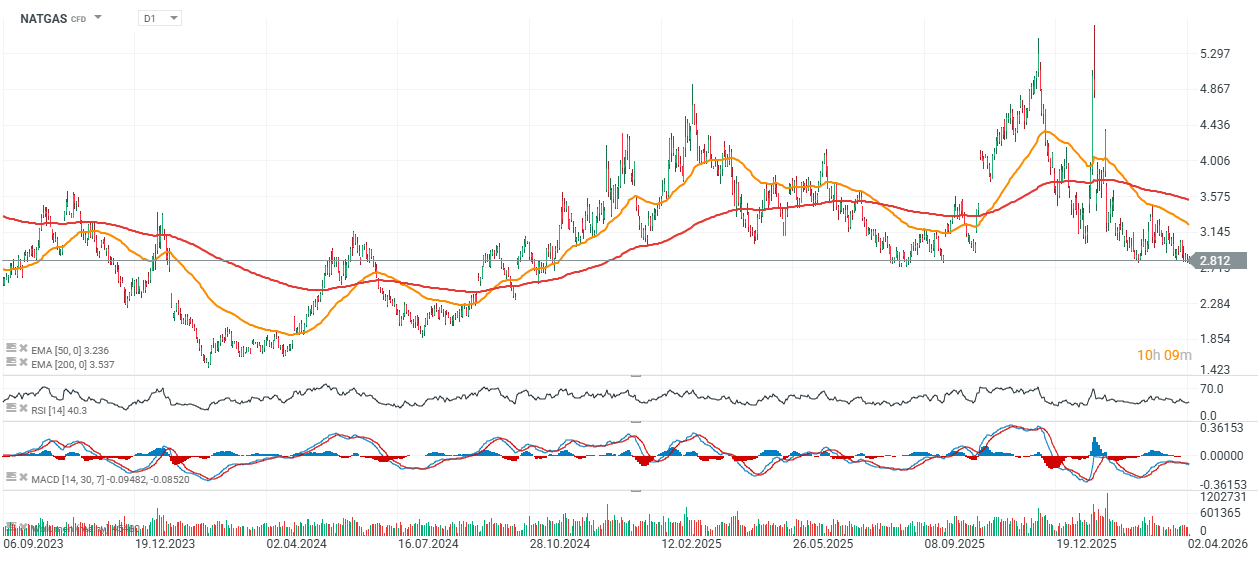
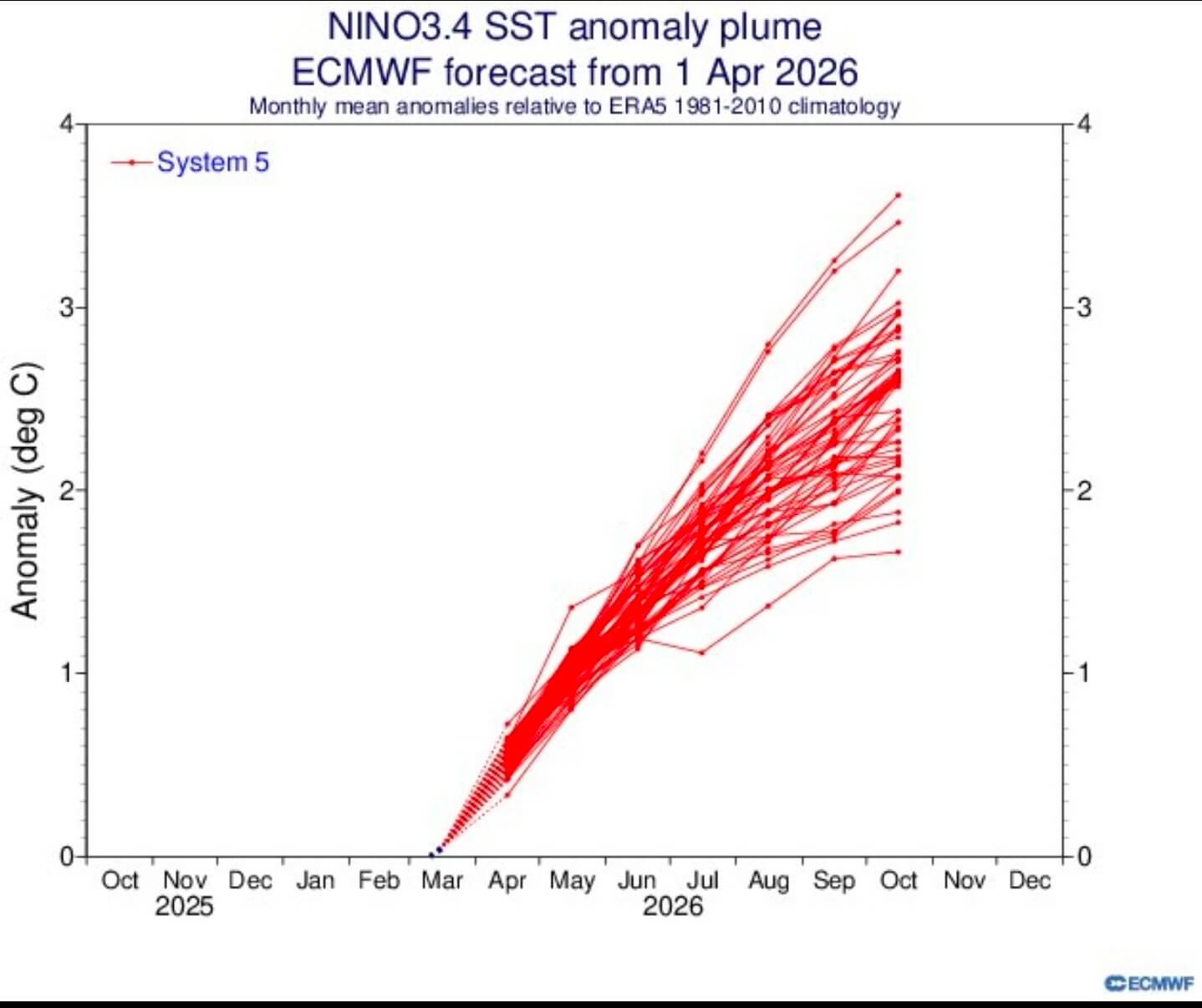
Forecasts point to an exceptionally strong El Niño in 2026, with sea surface temperatures potentially rising by as much as ~2.5°C, placing this episode on par with—or even exceeding—historic events such as 1997–98 and 2015–16. Such a scenario implies significant shifts in global weather patterns, including milder winter conditions and reduced summer temperature volatility in the United States. From a natural gas market perspective, the key implication is higher storage levels and weaker energy demand during the spring–summer period. As a result, the market environment becomes fundamentally bearish for US gas prices, especially given already subdued seasonal demand (limited heating and softer cooling demand).
- Models are nearly unanimous in projecting strong warming in the Niño 3.4 region by autumn 2026, increasing confidence in a very strong El Niño scenario.
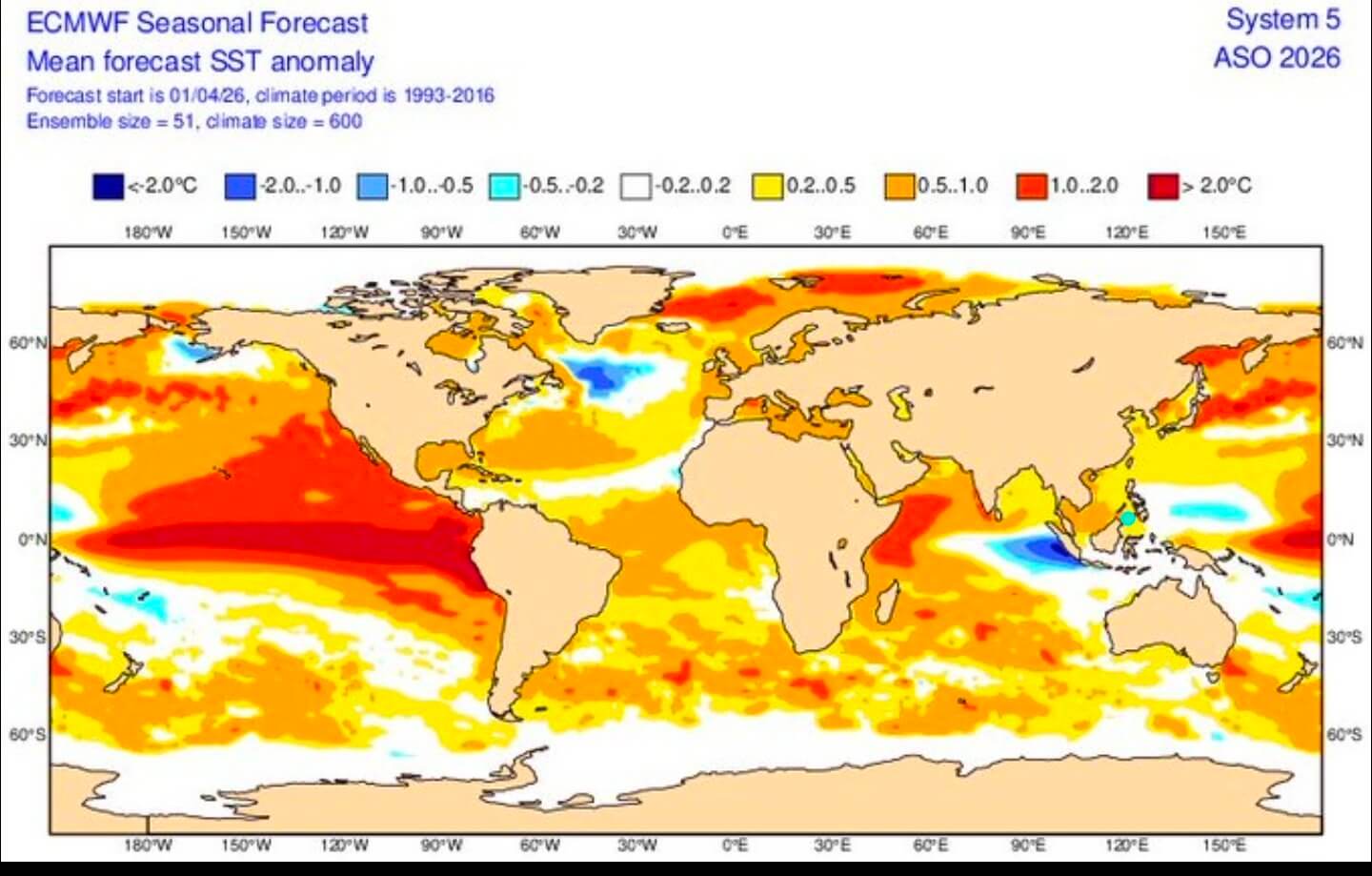
- Sea surface temperature anomalies exceeding +2.0°C across the equatorial Pacific point to a broad and persistent disruption in atmospheric circulation.
- In practice, this translates into a warmer winter in North America, leading to weaker heating demand and higher end-of-season gas storage levels.
- Entering spring with elevated inventories places the gas market in an oversupplied phase, which historically translates into price weakness during the shoulder season.
- During summer months, El Niño tends to limit the frequency and intensity of extreme heat in parts of the US, reducing electricity demand and gas burn in power generation.
- At the same time, it suppresses Atlantic hurricane activity, lowering the risk of supply disruptions in the Gulf of Mexico.
- This reduces the weather risk premium that typically supports gas prices during the summer season.
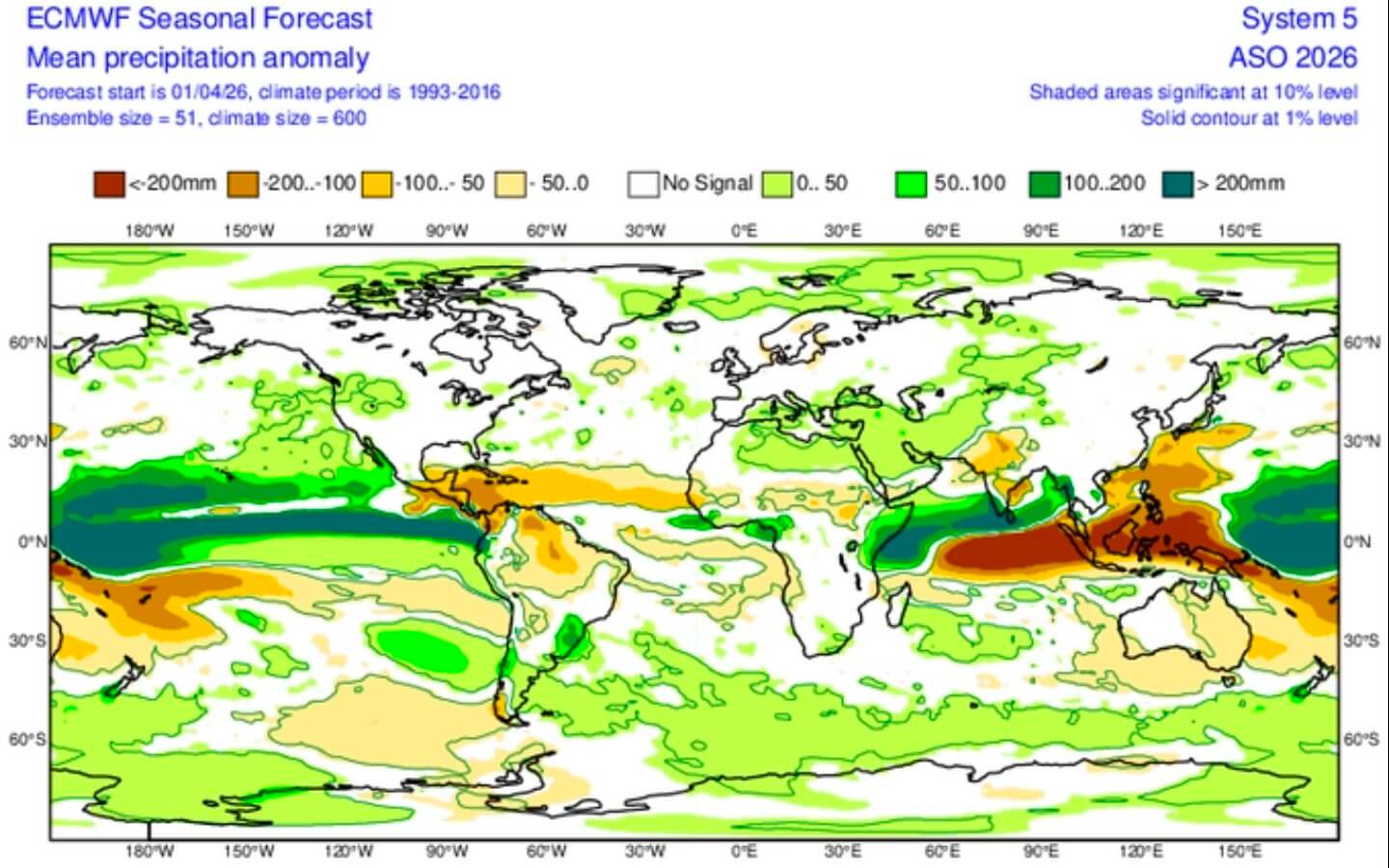
- Strong precipitation anomalies—drought in Indonesia and northern Australia alongside excessive rainfall in the equatorial Pacific—confirm the scale and global reach of the climatic disruption.
- From a valuation standpoint, the pace of storage injections in spring and their deviation from the five-year average remain critical variables.
- In summary, a strong—potentially the strongest in over 140 years—El Niño scenario creates a setup in which US gas prices face limited upside, with the market balance shifting toward oversupply unless offset by strong external demand.
Source: xStation5
Source: ECMWF
Source: ECMWF
Source: ECMWF



Daily Summary: Oil at five-month highs, indices under pressure (23.10.2026)


US Open: Further declines on Wall Street, Brent above 111 USD, AI correction continues (14.10.2026)


Chart of the Day: Is USDJPY running out of road? Inflation forces the BoJ to act, but the Fed could spoil the Yen’s rally



Macro Calendar: Preliminary PMI Readings and Earnings Ahead