


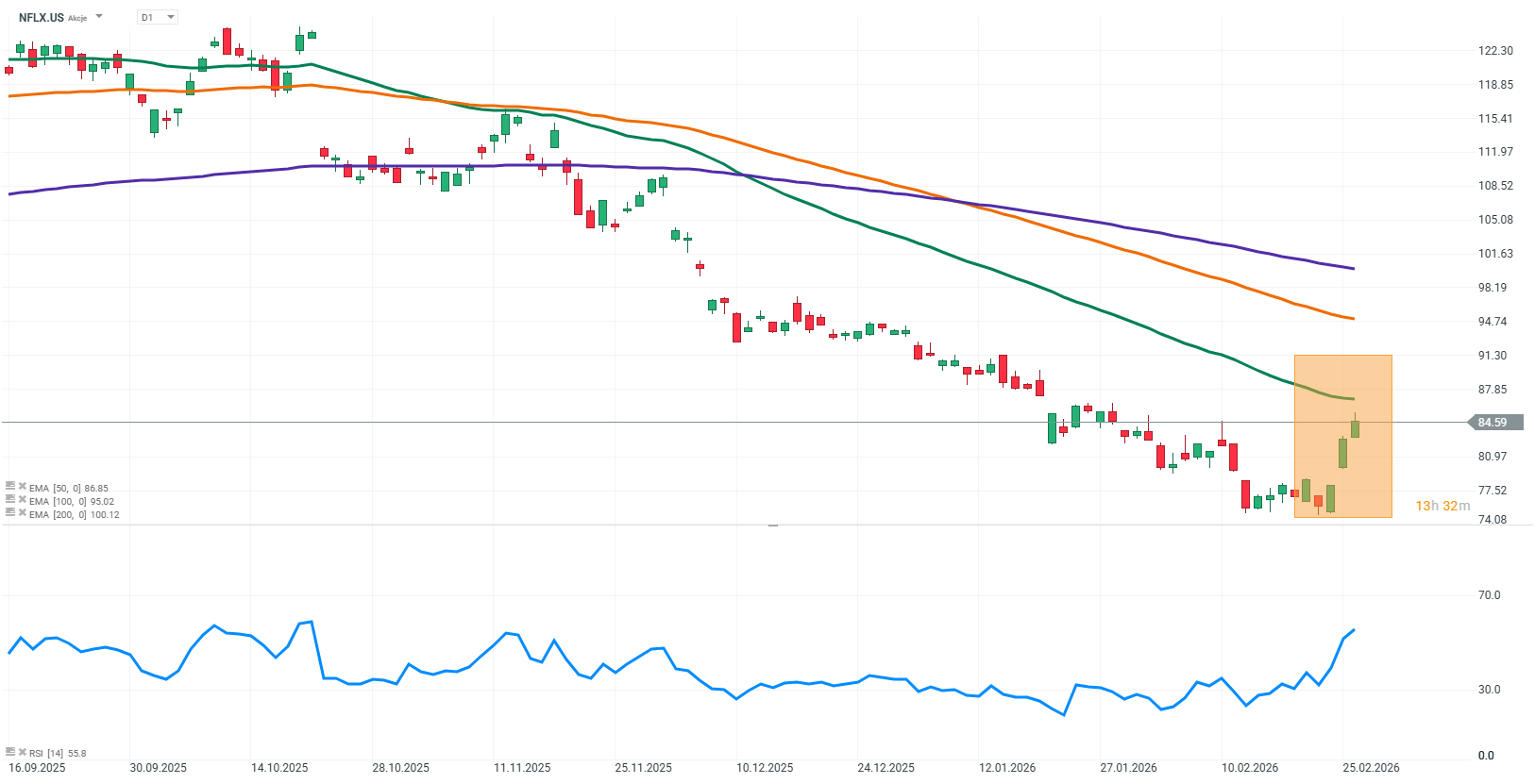
The media market has experienced a true upheaval in recent weeks. The battle for the acquisition of Warner Bros. Discovery between Netflix and Paramount Skydance ended in a way that surprised many observers and highlighted how strategic decisions can shape company value and stock prices. After intense negotiations and several rounds of bidding, Netflix decided to withdraw from the competition, allowing Paramount to take over the entire conglomerate. Netflix’s offer was approximately 27.75 dollars per share, while Paramount proposed a significantly higher amount, reaching around 31 dollars per share. Netflix’s decision had an immediate impact on the market. Netflix’s stock price rose, which investors interpreted as a signal of responsible financial strategy and attention to long-term profitability.
Paramount’s offer covered the entire Warner Bros. Discovery conglomerate, making it more advantageous for shareholders. This creates a new, major player in the media industry capable of competing with the largest companies in content production and streaming distribution. At the same time, the transaction carries significant risks. High debt levels, the need for effective integration of structures, and potential regulatory oversight will require careful management. The success of this integration will be crucial for Paramount’s reputation and financial performance.
For Netflix, the decision to withdraw from bidding primarily ensures financial flexibility and allows the company to focus on developing its own content and technology. Avoiding the risks associated with a very large acquisition enables the company to maintain balance sheet stability and demonstrates to investors that it can make strategic decisions thoughtfully, even under market pressure. Paramount, on the other hand, faces the challenge of effectively managing the new conglomerate, integrating assets, and fulfilling promises to shareholders while monitoring costs and regulatory risks.
Warner Bros. Discovery finds itself at a pivotal moment in its history. On one hand, joining Paramount offers potential for growth and consolidation in the media sector. On the other hand, the company must obtain shareholder and regulatory approval, which could delay the completion of the transaction and introduce an element of uncertainty.
Market reactions show that investors recognize the balance between risk and potential benefits. Netflix has earned a reputation as a company capable of making prudent financial decisions. Paramount has gained an opportunity to strengthen its position in the industry. Warner Bros. Discovery will face integration challenges and the need to adapt to a new owner. The situation demonstrates how complex mergers and acquisitions in the media sector are, how strongly they influence stock value, and how important it is to combine strategic boldness with financial discipline.
Source: xStation5


Market wrap: European indices rebound 🔼 Defence stocks on the rise



TSMC in Talks with Elon Musk Over Terafab


Daily summary 📈 Precious metals and stock indices rebound as Treasury yields fall


US Open: Nasdaq 100 extends losses 🚩 AI stocks under pressure, CoreWeave falls 8%