



Brent crude futures (OIL) have erased nearly all of their intraday gains. The market appears to view Iran’s attacks on Israel as, first and foremost, a one-off event — a message that Tehran itself appeared to signal between the lines. Secondly, Israel has refrained from responding, which investors may interpret as a sign that negotiations between the United States and Iran are genuinely entering a decisive phase.
President Trump reinforced that view today by downplaying the Iranian strikes. As a result, the oil market is largely ignoring the geopolitical standoff in the Middle East, despite increasingly concerning forecasts regarding global inventories. Should the current impasse persist through October 2026, refineries could face significant logistical challenges and disruptions to fuel and refined product production.

Source: Bloomberg, JPMorgan, Kpler, EIA, IEA, OilChem, PAJ, Singapore, JODI
For now, there is little evidence of demand destruction in the oil market, while global economic data continue to appear at least broadly supportive. In the United States, economic growth remains slow but positive, while activity in China’s manufacturing and services sectors remains well above recessionary levels.
Taken together, these factors point to a scenario in which a prolonged closure of the Strait of Hormuz could begin to have a meaningful impact on energy markets after the summer, particularly if no diplomatic solution is reached. Trump also stated yesterday that the United States could consider a commando-style operation in Iran should peace negotiations ultimately fail.
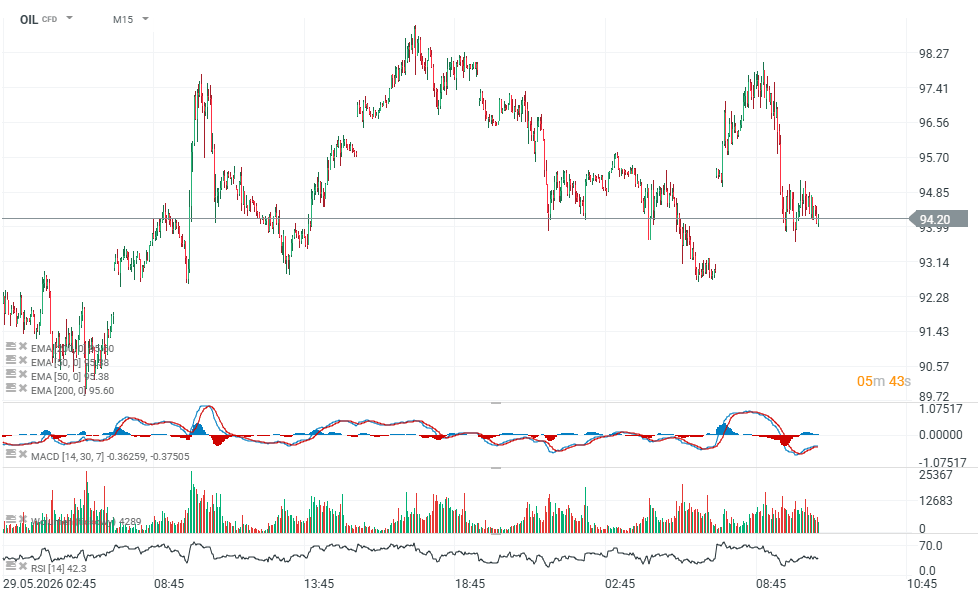
Source: xStation5


Hot inflation data from the US🔥📈 PPI and retail sales are rising!


Nickel market panic 🚩 INSG revises forecast, surplus in 2027?


Market Wrap: Tech Sell-Off Hits Europe, Gold Shines Again


Gold sell-off over? 🔼 Central banks buy the most in nearly two years