



Oil prices erase initial gains driven by a geopolitical premium related to escalating tensions in the Red Sea. It seems that the main drivers of the decline are weaker macroeconomic data from the US economy and softer Chinese PMI, signaling potentially lower global demand.
- OPEC+ delegates have informed that an additional 'monitoring' meeting will take place in early February, which markets may interpret as a warning signal amid an uncertain demand-side situation.
- Iran's deployment of a warship to the Red Sea, the sinking of three militant boats by the US Navy, and further Houthi attacks in the region proved insufficient to support the bulls.
OIL (M30 interval)
Brent prices failed to break above the SMA200 on the M30 interval, and the base scenario remains a downward trend. A potential next bearish impulse could trigger a correction towards the $76 area, looking at previous price reactions.
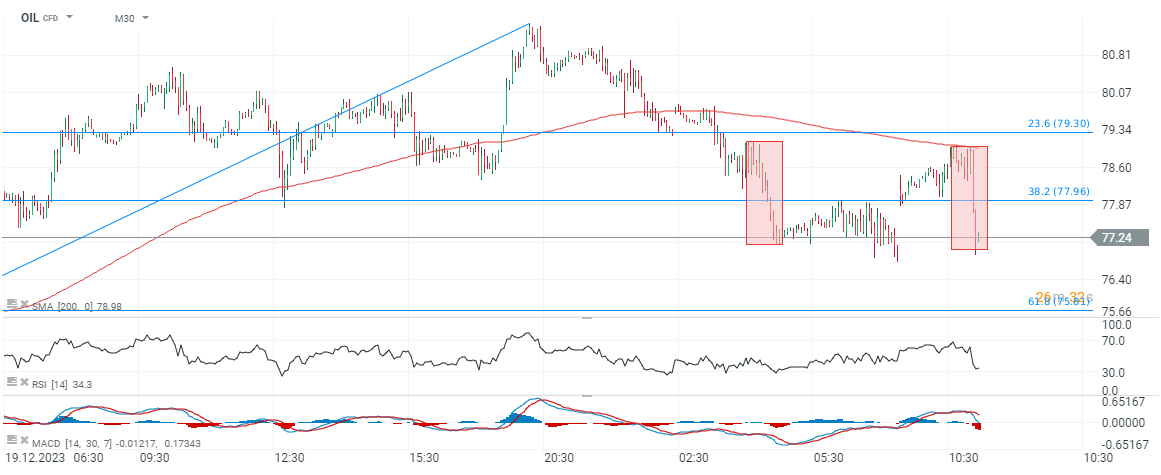
Source: xStation5



Daily Summary: Oil at five-month highs, indices under pressure (23.10.2026)


US Open: Further declines on Wall Street, Brent above 111 USD, AI correction continues (14.10.2026)



Morning Wrap: AI profitability concerns spark market Sell-Off


Daily Summary: Valuations Under Pressure, Capital Moves Away From Technology