



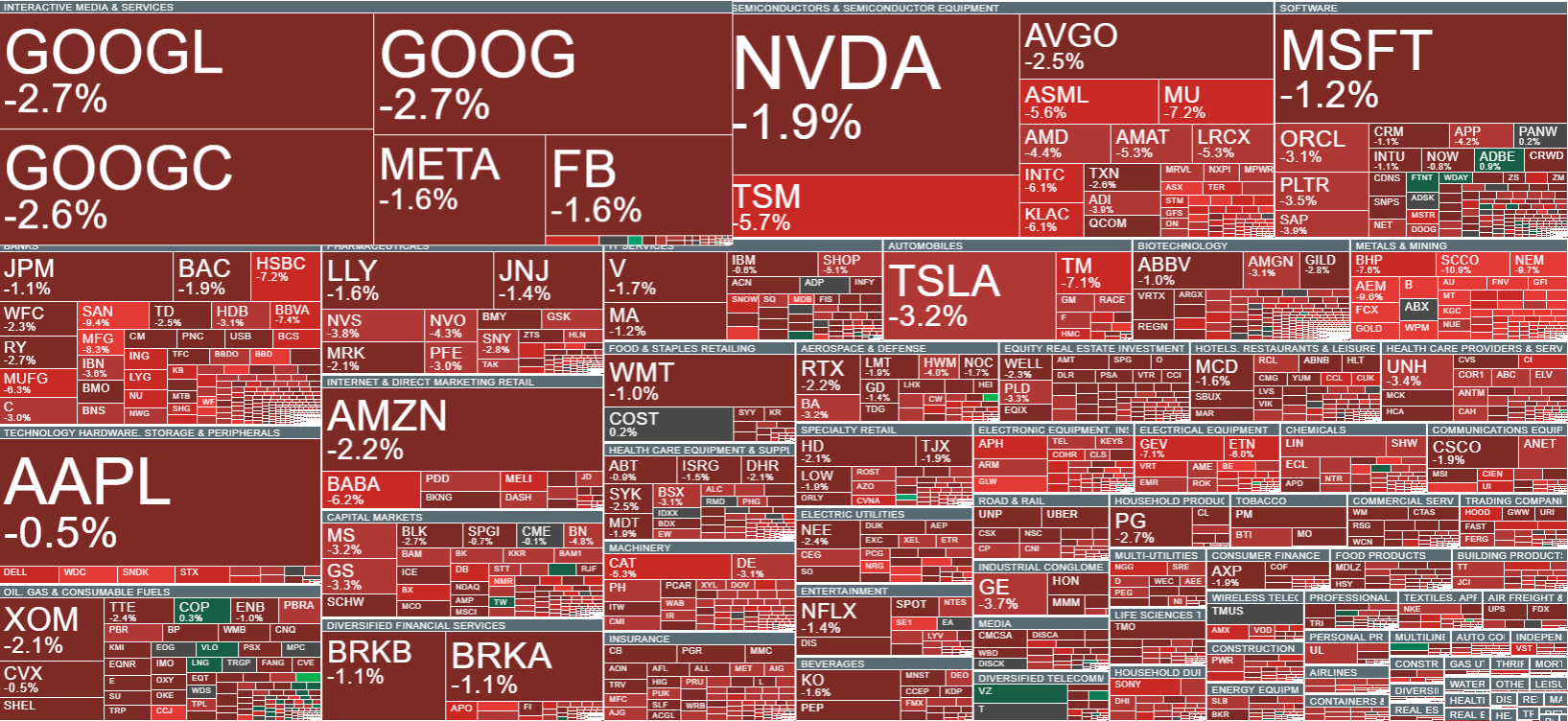
Wall Street starts bleeding after the opening bell, with U.S. indices recording significant losses as investor caution grows amid the escalating conflict in the Persian Gulf. The Dow Jones is down 2.5%, the S&P 500 has fallen 2.4%, and the Nasdaq has declined 2.5%. Markets are increasingly realizing that this conflict may last longer than a few days and is unlikely to remain a short-lived incident, significantly raising uncertainty across trading floors.
Investors are reacting to rising military tensions stemming from exchanges between U.S. and Iranian forces. In particular, the market is factoring in recent drone attacks on American diplomatic facilities in the region, including a strike on the U.S. embassy in Riyadh, as well as a series of attacks on key oil infrastructure in Saudi Arabia and other Gulf countries, which heighten the risk of energy supply disruptions. Adding to the uncertainty, President Donald Trump suggested that operations could last four to five weeks, clearly shifting earlier market expectations of a quick resolution. This combination of events has highlighted the risk of a prolonged escalation, increasing investors’ aversion to risky assets and introducing higher volatility to financial markets.
Capital rotation is visible toward defensive sectors and energy, while companies most sensitive to energy costs and consumer demand, such as airlines and tourism, are under pressure. Rising oil prices, along with increased demand for gold and the U.S. dollar, indicate growing investor interest in safe-haven assets amid mounting uncertainty. Until the conflict shows signs of stabilization and threats to global oil supply chains subside, investor sentiment is likely to remain highly sensitive to any new developments from the region. The market is increasingly pricing in a prolonged conflict scenario, resulting in elevated volatility and cautious investment decisions.
Source: xStation5
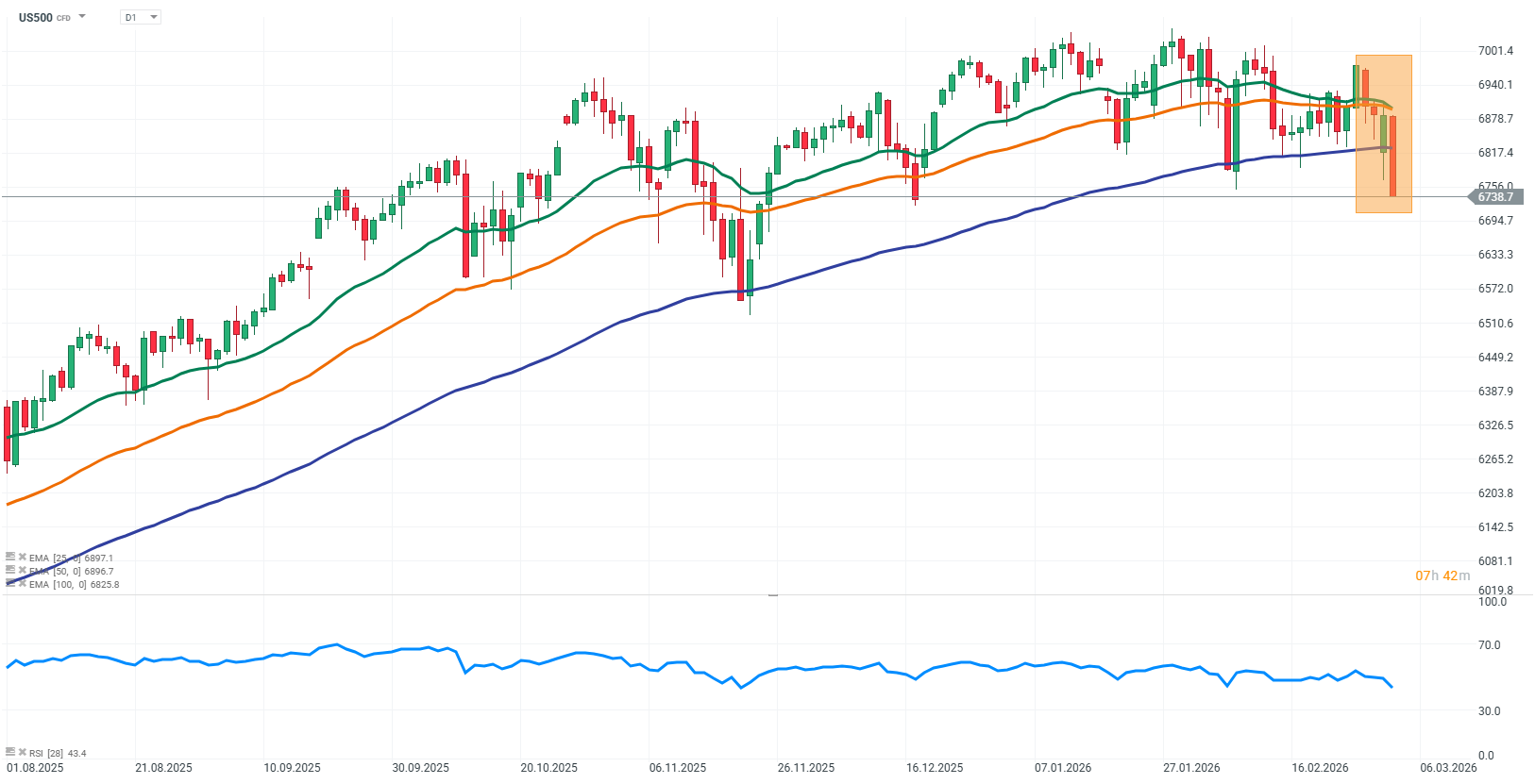
US500 (S&P 500) futures are falling in response to the escalating conflict in the Persian Gulf, with fear increasingly dominating the market amid rising regional tensions. Recent drone attacks on U.S. diplomatic facilities, along with strikes on key oil infrastructure in Saudi Arabia and other Gulf states, have intensified concerns about disruptions to global energy supplies and potential oil price increases.
Source: xStation5
Company news:
- Nvidia (NVDA.US) shares are falling following sharp declines in Asian markets triggered by escalating U.S.–Iran tensions. Nvidia is underperforming most of the “Magnificent Seven” stocks, as U.S. authorities are considering restrictions on the number of AI accelerators the semiconductor giant can export to individual Chinese companies. As a result, the entire semiconductor and technology sector is under pressure, with shares in this segment falling due to geopolitical uncertainty and potential consequences of the Middle East conflict.
- Credo Technology (CRDO.US) shares are declining, despite the telecom equipment company reporting third-quarter results in line with preliminary forecasts released in February. Market reaction suggests that investors expected stronger results, and simply meeting prior estimates was not enough to prevent the stock from falling.
- MongoDB (MDB.US) shares are plunging after the database software company issued revenue and adjusted earnings guidance for the full year and first quarter that fell short of analysts’ expectations. Despite solid financial results, investors focused on softer near-term forecasts, which put significant downward pressure on the stock.


Netflix Preview. It needs to prove it can still surprise


Chart of the Day: US100 (Nasdaq 100). Rebound in AI trade vs. weakening technical picture


Macro Calendar - UK Labor Market, ZEW Sentiment, and Wall Street Giants' Reports



📈Morning Brefieng: AI sector rebound collides with still-expensive oil (20.10.2026)