


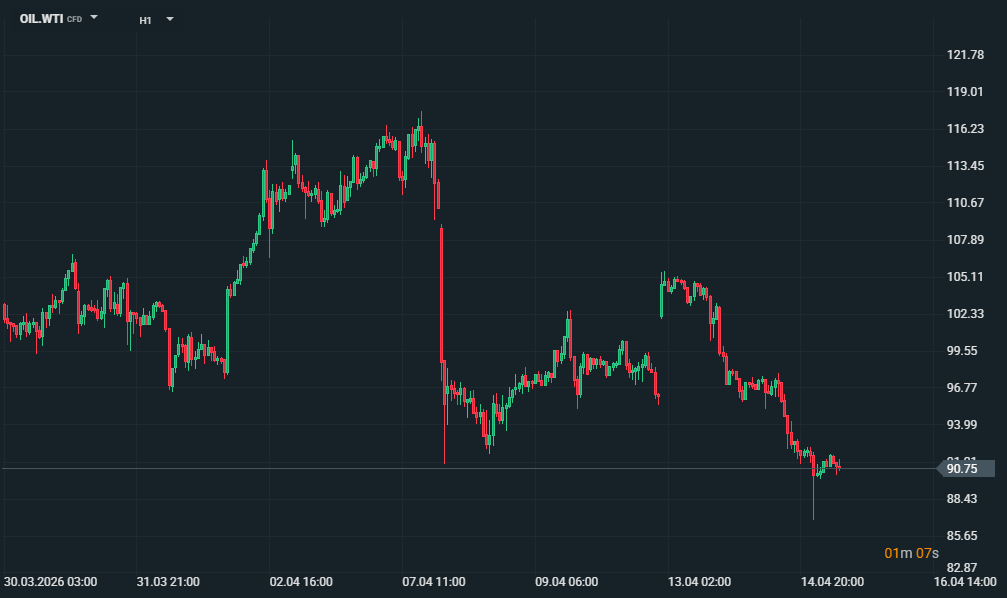
- Oil declines: Brent 94.30 USD, WTI 90.80 USD – fading risk premium
- Markets are pricing progress ahead of the next round of US–Iran talks (Thursday)
- Trump signals a quick resolution; no need to extend the truce
- Vance points to a “grand bargain” and negotiation progress
- Over 100 tankers heading to the US indicate supply reorganization
- The Strait of Hormuz remains a key risk for global energy flows

- Oil declines: Brent 94.30 USD, WTI 90.80 USD – fading risk premium
- Markets are pricing progress ahead of the next round of US–Iran talks (Thursday)
- Trump signals a quick resolution; no need to extend the truce
- Vance points to a “grand bargain” and negotiation progress
- Over 100 tankers heading to the US indicate supply reorganization
- The Strait of Hormuz remains a key risk for global energy flows
The oil market is pricing in an increasing probability of a truce between the US and Iran. The geopolitical risk premium is gradually fading. Brent has fallen to 94.30 USD, and WTI to 90.80 USD, approaching the lowest levels in several weeks. This move reflects growing market conviction that a diplomatic solution is possible.
Markets have clearly shifted into an “agreement optimism” mode ahead of another round of US–Iran talks scheduled for later this week. President Trump is reinforcing this narrative, stating that the conflict is “very close to over” and suggesting that extending the ceasefire may not be necessary. Vice President Vance highlighted “significant progress” and outlined a potential “grand bargain,” involving Iran’s economic reintegration in exchange for nuclear concessions. This marks a clear contrast to the breakdown in talks over the previous weekend.
Market behavior over the past two days confirms this optimism. Equities have rebounded strongly, with US indices once again approaching all-time highs, while demand for safe-haven assets has weakened. At the same time, the energy market is reacting most directly — oil prices have declined significantly from recent highs, with WTI down more than 22% from its peak. Despite this, the situation remains fragile: flows through the Strait of Hormuz are still significantly constrained, and any disruption or breakdown in negotiations could quickly reverse the current trend. The fact that more than 100 empty tankers are heading toward the US suggests a reorganization of supply rather than a full normalization of the market.
Despite improving sentiment, markets remain caught between optimism and structural uncertainty. A potential agreement could gradually reduce the geopolitical risk premium, but key issues — particularly regarding nuclear commitments and long-term regional influence — remain unresolved. For now, oil remains the most sensitive barometer of sentiment: it declines on positive headlines but remains vulnerable to sharp rebounds in case of negative developments.



Daily Summary: Oil at five-month highs, indices under pressure (23.10.2026)


US Open: Further declines on Wall Street, Brent above 111 USD, AI correction continues (14.10.2026)


Chart of the Day: Is USDJPY running out of road? Inflation forces the BoJ to act, but the Fed could spoil the Yen’s rally



Macro Calendar: Preliminary PMI Readings and Earnings Ahead