

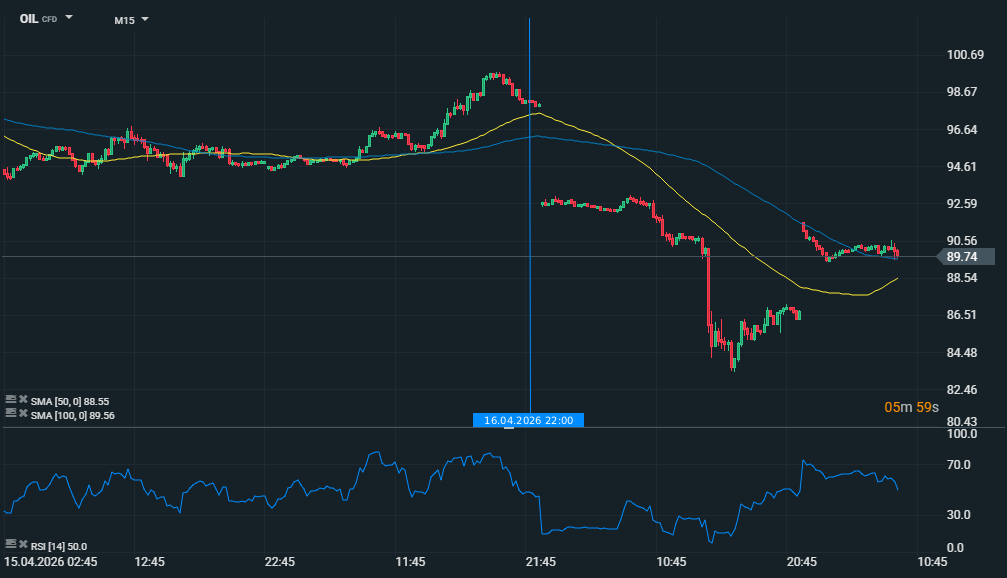
- Oil (OIL) rises 3.50% to 90 USD, WTI up 4.50% to 87 USD
- Strong price increase after new attacks on commercial vessels in the Strait of Hormuz
- Iran announced a renewed closure of the strait and warned ships against approaching
- US forces seized an Iranian-flagged vessel, increasing escalation risk
- Tehran may not participate in the next round of talks with the US in Pakistan
- The current US–Iran ceasefire expires on Wednesday, with uncertainty over extension
- Traffic through Hormuz remains significantly constrained, sustaining pressure on global energy supply
- The UAE is considering financial support from the US amid risks to oil exports and dollar flows

- Oil (OIL) rises 3.50% to 90 USD, WTI up 4.50% to 87 USD
- Strong price increase after new attacks on commercial vessels in the Strait of Hormuz
- Iran announced a renewed closure of the strait and warned ships against approaching
- US forces seized an Iranian-flagged vessel, increasing escalation risk
- Tehran may not participate in the next round of talks with the US in Pakistan
- The current US–Iran ceasefire expires on Wednesday, with uncertainty over extension
- Traffic through Hormuz remains significantly constrained, sustaining pressure on global energy supply
- The UAE is considering financial support from the US amid risks to oil exports and dollar flows
Oil prices are rebounding after the weekend, with (OIL) up 3.50% to 90 USD, while WTI is gaining 4.50% to 87 USD. Market concerns have returned, and the risk of renewed, more serious disruptions in the Middle East has increased. Initially, prices surged much more strongly following attacks on commercial vessels in the Strait of Hormuz, new Iranian threats toward shipping, and the seizure of an Iranian vessel by US forces. Prices later partially pulled back from their intraday highs.
The situation in the Middle East has deteriorated again after a brief period of optimism. Iran has withdrawn earlier signals about reopening the strait, blaming the ongoing US naval blockade, while ceasefire negotiations are becoming increasingly fragile. Tehran suggested it may not participate in the next round of talks in Pakistan, accusing the US of unrealistic demands, and the current two-week ceasefire expires on Wednesday. The lack of clear diplomatic progress and rising military pressure are leading investors to increasingly view the region as a persistent source of geopolitical risk rather than a temporary news-driven shock.
For markets, it is no longer just about rhetoric, but the real impact on energy flows, confidence in maritime transport, and financial stability in the Gulf region. Vessel traffic through Hormuz remains well below normal levels, fuel prices are rising globally, and some governments are beginning to tap reserves or introduce conservation measures. There are also signals that Gulf states are preparing for prolonged disruptions — the UAE is considering financial support measures and even the potential use of alternative currencies in oil trade under stress scenarios. For now, OIL around 90 USD and WTI near 87 USD indicate that the oil market remains tight, although hopes for a resolution to the conflict are still significant.


Daily Summary: Oil at five-month highs, indices under pressure (23.10.2026)


US Open: Further declines on Wall Street, Brent above 111 USD, AI correction continues (14.10.2026)



Morning Wrap: AI profitability concerns spark market Sell-Off


Daily Summary: Valuations Under Pressure, Capital Moves Away From Technology