



Peloton Interactive (PTON.US) soars over 5% despite the announcement that a class action lawsuit has been filed on behalf of Peloton investors. The lawsuit is associated with a tragic death of a child and numerous incidents of injury caused by Peloton’s Tread+ treadmill. The case is currently in the lead plaintiff stage - multiple laws firms announced that investors who purchased the stock between September 11, 2020 and May 5, 2021 may contact appropriate attorneys in the US.
Interestingly, the Peloton stock bounced off shortly after the company decided to recall its treadmills on May 5. The price has recovered since then and even returned above the 50-day moving average (green line). Shares tested the 200-day moving average once, but bulls were unable to push the price higher. The local peak from mid-April may actually be the next resistance worth to watch. On the other hand, the area near $93.35 may be the first support in case of any plunge.
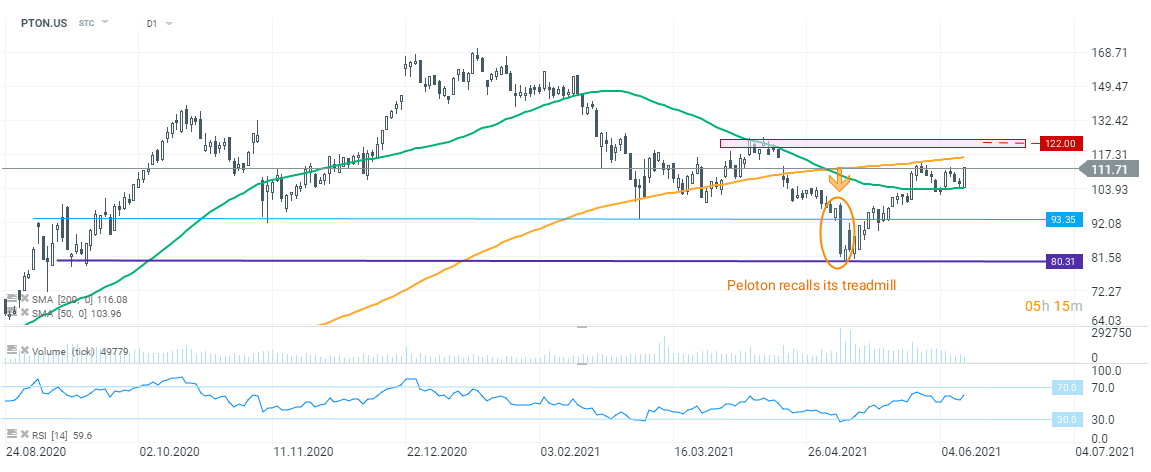 Source: xStation5



Daily Summary: A Shallow Rebound Ahead of Earnings Season


Lumentum: Demand for AI infrastructure exceeds capacity



US OPEN: Trump de-escalates, OpenAI supports Wall Street sentiment


Morning Wrap: OpenAI Revenue Concerns Weigh on Wall Street