


Microsoft is down more than 1% after reports that hedge fund TCI Fund Management significantly reduced its position in the company, cutting its stake from around 10% of the portfolio to roughly 1% by the end of March. The move itself is notable, but the reasoning behind it is even more important. According to reports, TCI founder Christopher Hohn believes the rapid development of AI could become a long term threat to Microsoft’s core products, particularly Office and, to some extent, Azure.
TCI reportedly sold almost its entire position, previously valued at around $8 billion, while simultaneously increasing its exposure to Alphabet. This suggests a capital rotation toward a company the fund sees as better positioned in the evolving AI race. The market interpreted this not as a routine portfolio adjustment, but as a clear signal that perceptions around competitive risks in software and AI are beginning to shift.
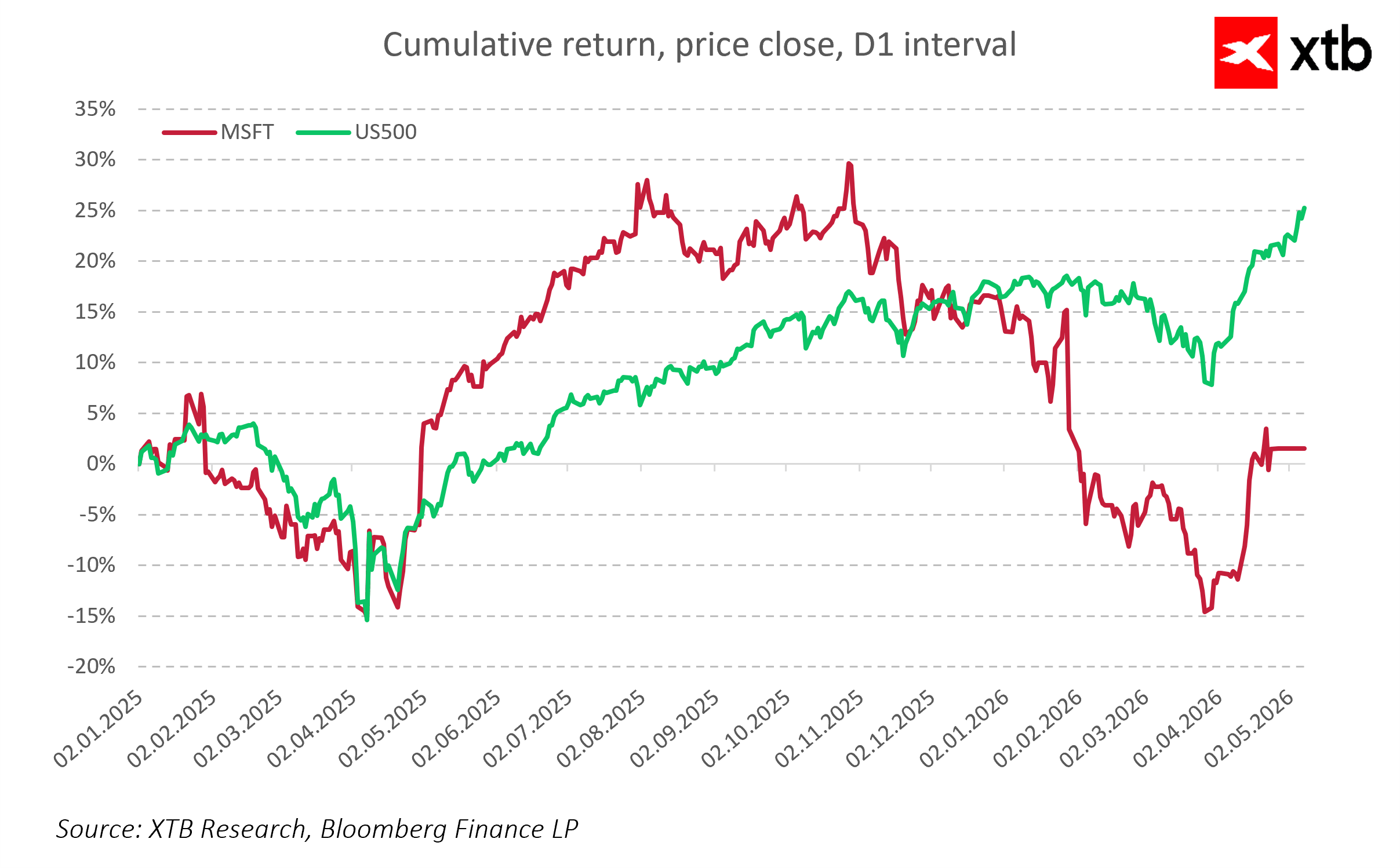
The main concern is that AI models and AI agents could fundamentally change how users interact with software. Microsoft historically dominated because workflows were centered around Word, Excel, Outlook, and the broader Windows ecosystem. However, if more tasks begin moving directly into AI driven interfaces, traditional applications could gradually lose their central role. In that scenario, AI would not only strengthen Microsoft, but also potentially undermine part of its historical competitive advantage.
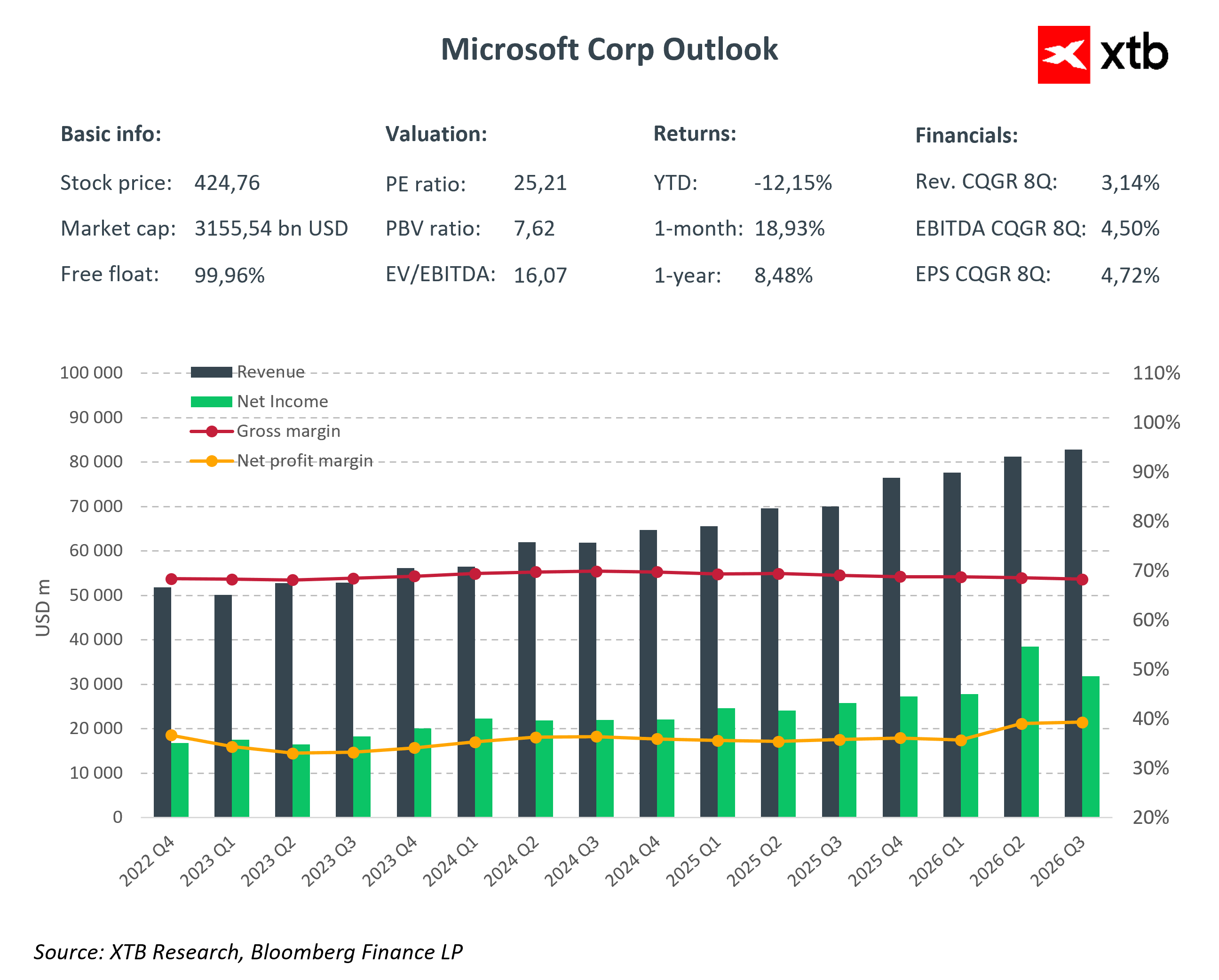
Investors have already started paying closer attention to slower than expected Copilot adoption, massive AI infrastructure spending, and risks tied to data center expansion and rising compute costs. Microsoft is investing tens of billions of dollars into AI, and the key question is whether returns on those investments will arrive quickly enough to sustain current growth rates and profit margins.
At the same time, this does not mean Microsoft’s fundamentals are weak. On the contrary, the company is still viewed as one of the biggest beneficiaries of AI and cloud computing, supported by its enormous enterprise customer base and strong infrastructure position through Azure. The issue is more about valuation and expectations. With spending accelerating so aggressively, investors are becoming far more demanding and want to see faster and clearer monetization of AI.



Three markets to watch next week (23.10.2026)



Daily Summary: Oil at five-month highs, indices under pressure (23.10.2026)

US Open: Further declines on Wall Street, Brent above 111 USD, AI correction continues (14.10.2026)



Morning Wrap: AI profitability concerns spark market Sell-Off