


Shares of energy holding company PG&E (PCG.US) came under heavy pressure following changes to a key California wildfire liability bill. The market had expected stronger legal protections for utilities, but the amended version of Senate Bill 492 does not provide the anticipated safeguards, once again raising concerns over potentially multi-billion-dollar liabilities for PG&E. For now, the issue is sector-wide. Other utility companies such as Edison International and even Sempra are also down before the U.S. market open by around 15% and 4%, respectively, as all three companies are exposed, to varying degrees, to California’s liability framework for wildfire-related damages.
- The main disappointment is the exclusion of Governor Gavin Newsom’s proposal that would have limited insurers’ ability to sue utility companies over wildfire-related damages.
- For PG&E, this is a particularly significant risk given the company’s history. Massive wildfire-related liabilities pushed the company into Chapter 11 bankruptcy protection in 2019.
- PG&E said the bill would improve conditions for wildfire victims, but would not create a sufficiently durable legal framework to attract affordable capital needed for investments in grid safety and reliability.
- Mizuho downgraded PG&E from Outperform to Neutral and cut its price target from $21 to $16. According to the analysts, the bill focuses on victim protection without offering new safeguards for shareholders.
- Morgan Stanley also pointed to potentially significant downside for California utilities in a scenario involving multiple catastrophic wildfires.
- At the same time, the future of the $21 billion California Wildfire Fund, financed by utility shareholders and customers, remains another major concern. Claims related to the January 2025 Eaton Fire could accelerate the depletion of the fund, while there is currently no permanent mechanism for replenishing it.
- From a valuation perspective, the issue is therefore not limited to the potential cost of another wildfire. Regulatory uncertainty increases PG&E’s risk premium, may raise its cost of capital, and makes it more difficult for investors to assess the company’s long-term value.
It is still unclear who will ultimately bear the economic burden of future catastrophic wildfires. Until California creates a durable mechanism to limit and fund this risk, PG&E shares may continue to trade at a structural discount reflecting the possibility of very large future liabilities.
It is also worth stressing that the bill is not yet final law: it must secure a two-thirds majority in both chambers of the legislature before being sent to California Governor Newsom. This means that the final shape of the regulation remains the key short-term catalyst for PG&E shares.
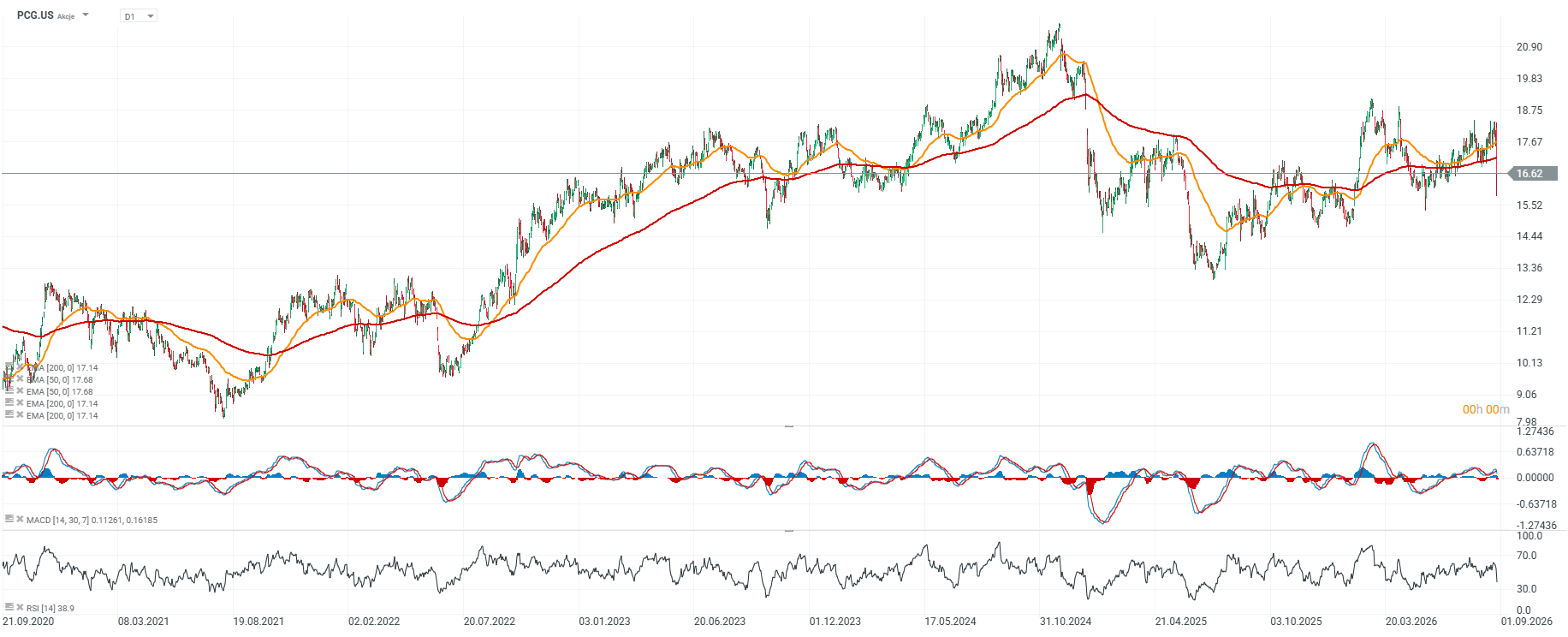
PCG shares (D1 interval)
PG&E shares fell by as much as 18% in premarket trading to around $13 in response to the California State Assembly’s decision. This would mark a drop to levels not seen in the stock since April 2025.
Source: xStation5



Market Wrap: ASML lifts tech sentiment, EU yields pull back


ASML disappoints on revenue but delivers stronger profits and raises guidance 🍳 What’s next for the AI sector?


Daily Summary: Earnings Season Kicks Off on Wall Street Amid Mixed Sentiment


SpaceX Wants to Fly Starship Almost Every Day. Musk’s Business Empire Is Betting on It