


- The Reserve Bank of New Zealand kept its Official Cash Rate unchanged at 2.75%.
- Inflation declined to 3.7% year-on-year in the third quarter, prompting caution from policymakers.
- Further rate hikes remain likely as the central bank monitors rising energy prices.
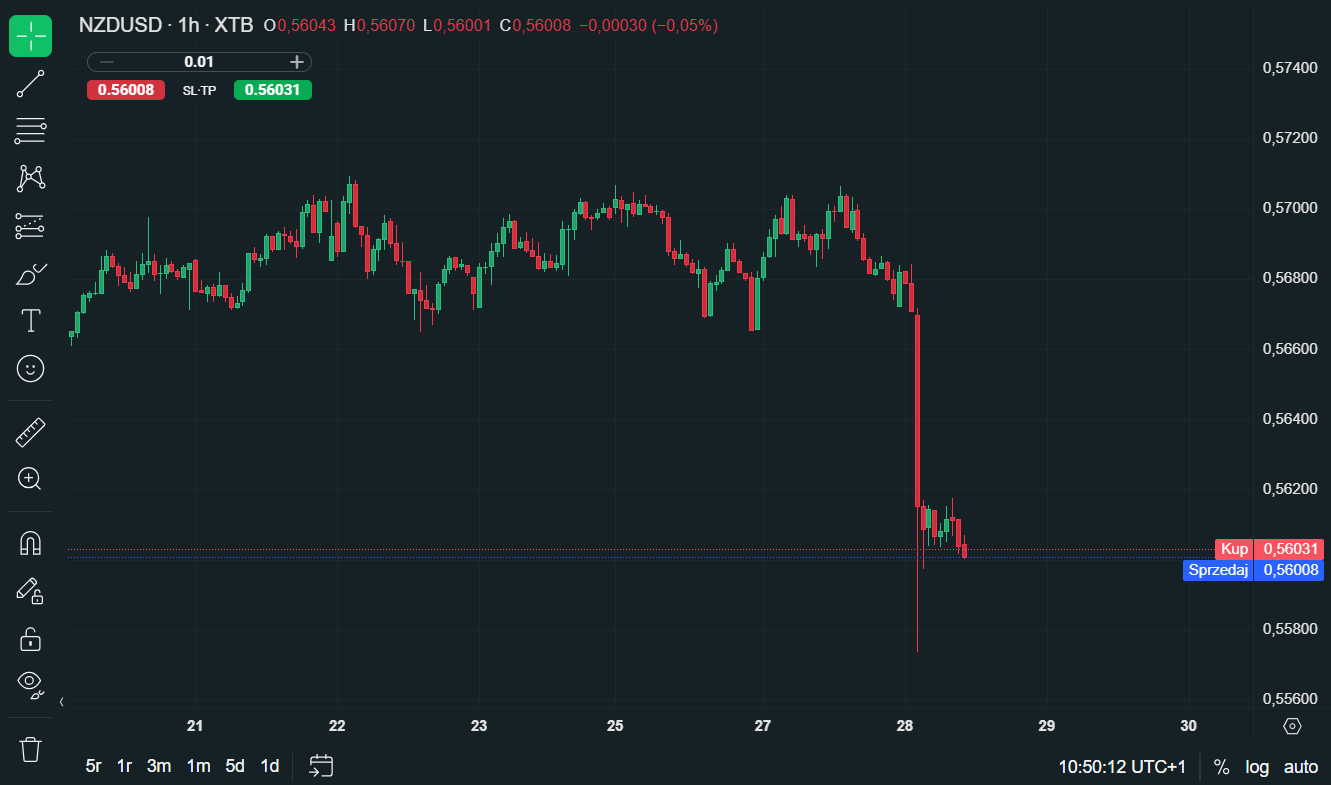
- NZDUSD fell by up to 1.7% following the unexpected monetary policy decision.
The Reserve Bank of New Zealand (RBNZ) unexpectedly kept its Official Cash Rate (OCR) unchanged at 2.75%, despite markets pricing in nearly a 90% probability of a 25 basis point rate hike. The decision passed by a narrow 4–3 vote, highlighting significant divisions within the central bank. All five of New Zealand's largest commercial banks had expected rates to rise to 3.00%. However, the majority of RBNZ policymakers concluded that it would be preferable to wait and assess the full impact of the two previous rate hikes on the economy. Another argument for caution was inflation, which declined from 4.1% to 3.7% YoY in Q3, coming in below the central bank's expectations.
However, the decision does not signal the end of the monetary tightening cycle. The RBNZ forecasts inflation to accelerate again to 4.4% in Q4, mainly due to rising fuel prices and disruptions in global energy markets. At the same time, underlying inflation remains close to the upper end of the 1–3% target range, while price pressures are spreading across a growing number of goods and services. Governor Anna Breman emphasized during the press conference that further rate hikes remain likely and that interest rates may eventually need to move into restrictive territory. However, the central bank is concerned about an excessive slowdown in economic activity, particularly given weak household consumption, subdued employment growth, and rising risks to global financial stability.
Key Takeaways from the Meeting:
- 4–3 vote: Three policymakers favored an immediate rate hike to 3.00%.
- Inflation: CPI declined to 3.7% YoY, but the RBNZ expects it to rebound to 4.4% in Q4.
- Interest rate outlook: Further rate hikes remain likely, with another increase at the December meeting still on the table.
- Risks: Rising energy prices, a weaker NZD, and the possibility of a sharp deterioration in global economic conditions, including a correction in AI-related assets.
The market reaction was sharp, with the New Zealand dollar emerging as the biggest loser. NZDUSD fell by as much as 1.7% during the session (currently down 1.4%), reaching 0.5580. Subsequent hawkish comments from Breman helped the currency recover some of its losses. The divergence in monetary policy expectations was even more evident in AUDNZD, which climbed toward 1.2600. The Australian dollar was also supported by stronger-than-expected underlying inflation data from Australia, which increased the probability of another RBA rate hike in early November.

Economic calendar: key central bank decisions from the Fed and BoC 🔎



Morning wrap (28.10.2026)



Daily Summary: Wall Street Rises Ahead of Tomorrow's Fed Meeting💡



The US100 gets back on track and gains 1%📈