



ServiceNow suffered a crushing sell-off of nearly 25% after releasing its Q3 2026 results. Were the figures and guidance really so terrible as to justify such a large and sudden loss in value?
Earnings
On the surface, the reported data was good, if not very good.
- Revenue grew a solid 20% year over year, reaching USD 4.1bn, slightly above consensus, which hovered around USD 4.095bn.
- Short-term receivables increased by 20% to USD 13.65bn. Meanwhile, long-term receivables rose to USD 29.7bn, up 22% year over year.
- At the same time, the company highlighted an increase in contracts worth more than USD 5m to 19, representing 135% growth.
- Potentially the best piece of news for investors is yet another increase in the AVC forecast, this time to USD 1.7bn versus USD 1bn at the beginning of the year. At the same time, the company revealed that customer usage of AI agents increased 13-fold over the year.
- All of this also allowed the company to raise its FCF margin forecast to 36%.
In light of these results, which number drove the share price down by more than a dozen percent?
The cause was the company’s EPS, which came in at USD 1.00 instead of the expected USD 1.02. Those two cents are far more important to shareholders than it might initially seem.
The CFO attributed the shortfall to lower interest income and higher debt costs following the acquisition of Armis. This means that acquisition financing costs weigh on shareholders even when the acquired businesses meet operational targets.
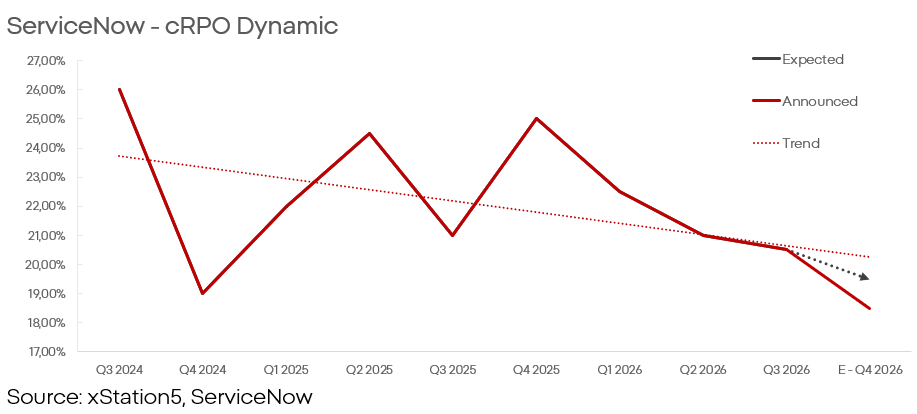
Not all guidance is positive either. Arguably even worse than EPS is forecast for cRPO growth (current remaining performance obligations) was cut for year-end to 18.5%. This is below the market’s minimum expectations of around 19% and signals a potential weakening, if not a breakdown, of operating leverage.
On its own, this signal is not a reason for as much concern as the market reaction suggests. However, a sustained decline in receivables growth relative to revenue would dramatically change the company’s outlook.
Beating the company’s own margin guidance does not mean margins improved year over year. The decline in profitability, even on an adjusted basis, suggests the issue cannot be explained solely by amortization of acquired assets.
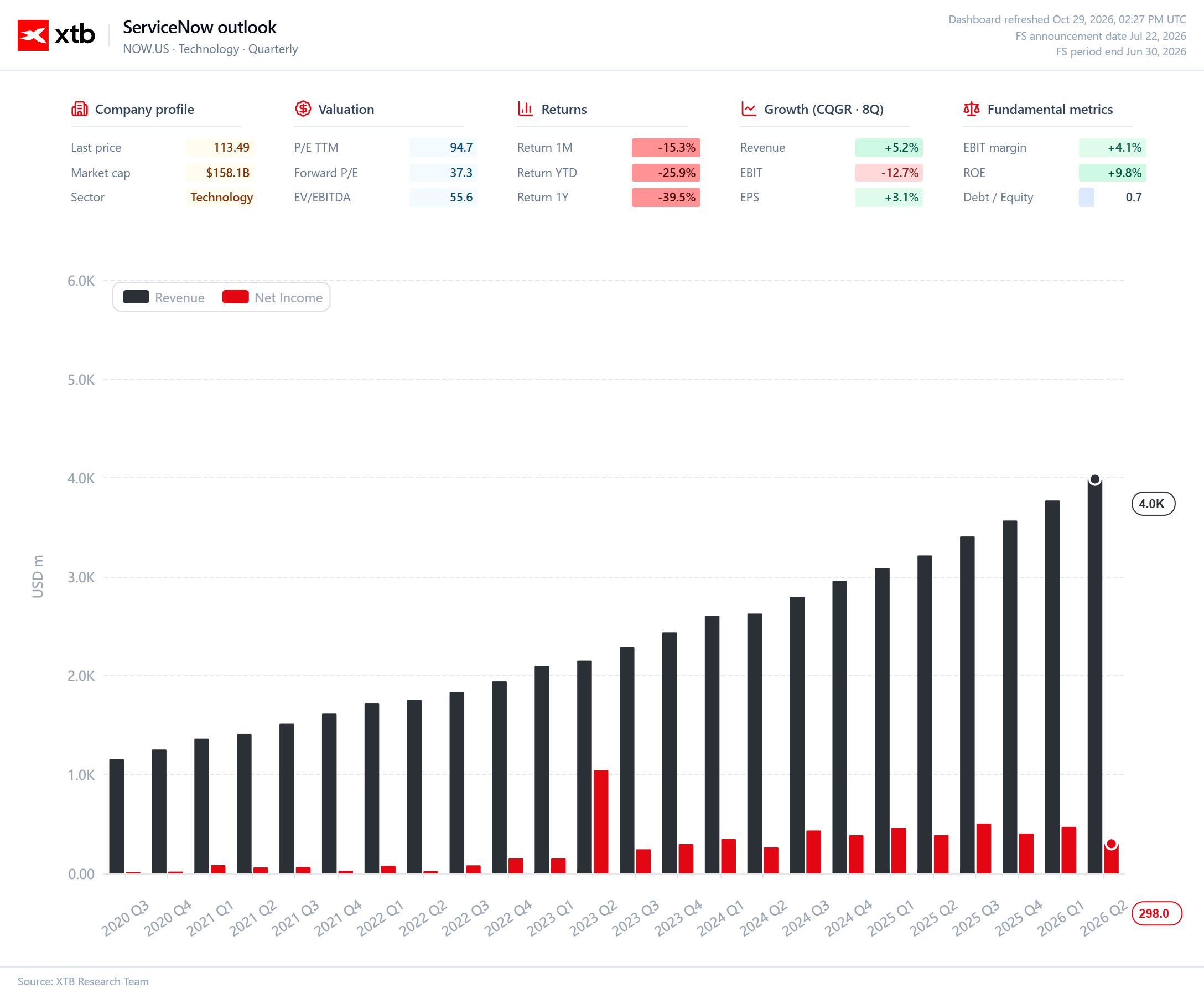
All of this indicates that, in the short- to medium-term, AI monetization will not be as fast or as inexpensive as the market had previously priced in. At the same time, monetization itself may not have as immediate an impact on profitability as earlier guidance implied.
Is the Panic Justified?
While margin compression, both adjusted and reported, is a genuine cause for significant shareholder concern, it is difficult to justify the scale of the stock’s reaction, even after accounting for operating leverage effects.
Management points to earlier renewals pulled into Q3, a larger share of on-premise implementations, and contracts with T4C clauses being excluded from backlog. Implementation support added to agreements shifts part of the value from subscriptions to services.
Growth remains solid by almost every measurable metric, and the customer base is expanding at a very high pace. Monetizing that base is an opportunity for enormous cash flows for the company and shareholders, even if it is moderately delayed.


Microsoft earnings: Cloud growth overshadows CAPEX & FCF questions



Daily Summary: Oracle drives the market higher, dollar weakens following Fed meeting (28.10.2026)


📊Hyperscaler Results: Alphabet and Microsoft. Will results justify giant investments?



Market Wrap: Renewed confidence in AI drives stock market recovery (27.10.2026)