


Flash PMI Readings for May 2026:
Germany:
-
Manufacturing PMI: 49.9 vs 51.0 expected
-
Services PMI: 47.8 vs 47.0 expected
France:
-
Manufacturing PMI: 48.9 vs 52.5 expected
-
Services PMI: 42.9 vs 46.6 expected
Market Commentary
The complete set of May PMI data from the Eurozone's two largest economies paints a highly concerning picture of the economic health on the Old Continent. Although the German services sector managed to slightly beat the market consensus (47.8 points vs. the 47.0 forecast), it remains below the critical 50-point threshold, signaling continued contraction in this segment. The situation in Germany is worsened by the manufacturing sector, which unexpectedly slipped back into contraction territory, dropping to 49.9 points. This could be the result of rising energy costs, which are crucial for the energy-intensive German economy. Germany has been struggling to fully recover since 2022, when it had to stop sourcing cheap Russian gas and pivot to more expensive alternatives from other directions or other energy sources.
The situation in France looks even worse. The manufacturing sector suffered a massive disappointment, reaching just 48.9 points against optimistic market expectations of 52.5 points, which was already supposed to represent a slight decline compared to the previous reading of 42.8 points. However, the real collapse came from the French services index, which dove to a deeply critical level of 42.9 points, drastically missing forecasts (46.6 points).
It is worth emphasizing that the current deterioration in sentiment is global in nature—today's releases from Asia were also very weak. Morning data from the Asia-Pacific region signaled a clear economic slowdown. For instance, in Japan, the Composite PMI slipped to a 5-month low (51.1 points vs. 52.2 points previously), driven by the first stagnation in its services sector in over a year and a weakening influx of new export orders. Similar signs of caution and weakening demand emerged from other Asian markets, raising fears of a globally synchronized economic slowdown.
FX Market Reaction
The weakness of the macroeconomic data from Europe immediately hit the valuation of the common currency. The EURUSD pair is reacting with sharp and dynamic losses to the weak European data. Investors are selling off the euro en masse, and the currency pair's exchange rate is rapidly losing ground, breaking through local support levels. The capital market is revising its expectations for European Central Bank actions, fearing that the Eurozone could slide into a deeper recession.
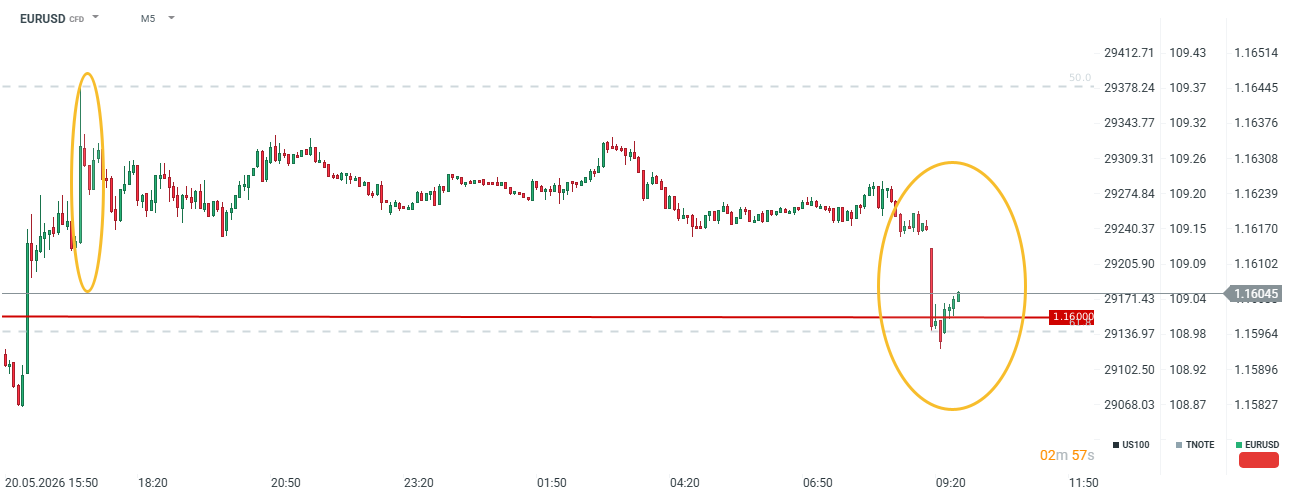 EURUSD briefly drops below 1.16 following the publication of weak PMIs from France and Germany. It is worth noting that yesterday, after positive news emerged regarding potential progress in negotiations between the US and Iran, EURUSD rose significantly. Source: xStation5

U.S. indices attempt to rebound after recent losses


Hot inflation data from the US🔥📈 PPI and retail sales are rising!


Nickel market panic 🚩 INSG revises forecast, surplus in 2027?



Market Wrap: Tech Sell-Off Hits Europe, Gold Shines Again