



- A more durable recovery in crypto markets would likely require lower oil prices and, consequently, greater stability in the Middle East conflict. Such a scenario remains possible, although it is difficult to assess whether its probability is truly as high as suggested by recent US media headlines. Iran’s response to the Axios report appeared relatively cautious and far from enthusiastic.
- On the other hand, if Iran agrees to at least part of the key US demands regarding control over the Strait of Hormuz, freedom of shipping routes, and oversight of nuclear facilities and uranium enrichment, Bitcoin could receive another bullish catalyst. Additional support could come from the improving regulatory backdrop in the United States following the Clarity Act, continued ETF inflows, structural weakness in the US dollar and Treasury yields, and a broader return of momentum into assets negatively correlated with the dollar.
Recently, the dollar had been strengthening mainly on the back of solid macroeconomic data and rising energy prices. If that trend weakens, risk assets such as Bitcoin could benefit significantly. From a technical perspective, the key support zone for Bitcoin remains around $79,000–$80,000, which acted as major resistance for an extended period before turning into support. Lower support levels are located near $75,000–$76,000 and then around $70,000. On the upside, a confirmed breakout above the EMA200 could open the path toward $90,000 and potentially erase the broader bearish impulse that began in January 2026.
Bitcoin (D1 interval)
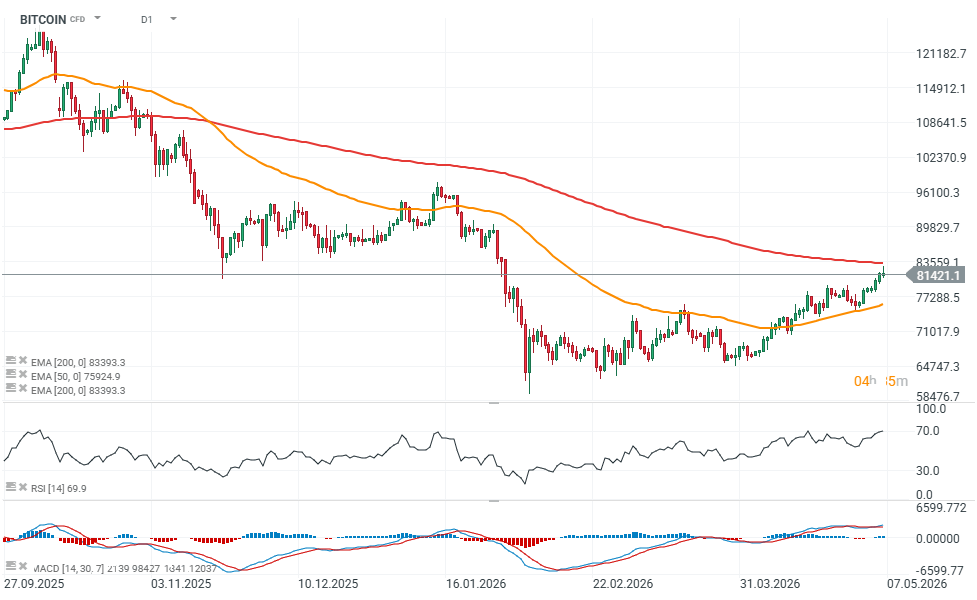
Source: xStation5



Macro Calendar: Preliminary PMI Readings and Earnings Ahead



Morning Wrap: AI profitability concerns spark market Sell-Off



Daily Summary: Valuations Under Pressure, Capital Moves Away From Technology

US OPEN: Earnings misses and rising oil push indexes lower