



D-Wave, Rigetti and Quantinuum have signed final agreements with the US Department of Commerce under which each company will receive up to $100 million to develop quantum technologies. The total value of the current agreements is therefore as much as $300 million. However, this is not the first injection of capital into the sector. In May, the Department of Commerce announced a package worth around $2 billion for nine companies involved in the development of quantum computing. The latest agreements are another step in implementing that programme.
The $100 million allocated to each company is not particularly large when considering the cost of developing entirely new technologies. Advanced research and development teams can spend tens of millions of dollars a month before a product is ready for the market. The $100 million should therefore not be viewed as funding that will suddenly transform the scale of these companies' operations. It is another stage in a long process of developing the technology.
Much more important is the fact that the US government is consistently increasing its involvement in the development of quantum computing. Importantly, it is not relying solely on grants. In exchange for the funding, the Department of Commerce will take minority stakes in the companies. The government is therefore becoming a participant in the sector and is taking on part of the risk associated with developing the technology.
This shows that the United States views quantum computing as a strategically important technology. The government does not want to wait until quantum computing becomes a mature market. Instead, it is already building domestic capabilities, manufacturing capacity and supply chains. The programme announced in May includes not only companies developing quantum computers themselves, but also businesses involved in producing components and infrastructure needed to scale the technology.
In the short term, it is difficult to expect a major impact on the financial results of D-Wave, Rigetti or Quantinuum. Quantum computing remains a technology at a very early stage of development, and the biggest challenge is still to build systems that are sufficiently large, stable, reliable and economically viable to be used on a broad scale.
That is why, even under relatively optimistic assumptions, this market needs to be viewed over a horizon of at least the next decade. Widespread applications of quantum computers may emerge only once the technology moves from its current experimental stage to genuinely useful and scalable systems. It is also possible that this process will take even longer.
This does not mean that today's investments are premature. The biggest technological revolutions often require many years of research and enormous amounts of capital before they begin generating significant revenues. Today's artificial intelligence boom is also the result of decades of development in infrastructure, algorithms and computing power.
Quantum computing could be another such case. If the industry manages to overcome the challenges of scaling and system stability, quantum computers could eventually find applications in pharmaceuticals, chemistry, materials science, energy, finance and cryptography, among other areas. In some of these fields, they could unlock computational capabilities that classical computers cannot provide.
For investors, this means both enormous potential and enormous risk. It is still too early to know which technologies will ultimately prevail or which companies will be able to turn technological progress into a scalable business. The race is only beginning, while the valuations of quantum companies are still largely based on expectations about the future size of the market.
The latest agreements are therefore more important as a strategic signal than as a single financial transaction. The US is once again showing that it wants to strongly support the development of quantum computing and build its own technological advantage in this field.
$100 million will not change the quantum computing market today. The additional billions that could flow into the sector over the coming years might. The most important message from these agreements is therefore that the US government wants to be one of the key investors in a technology that, a decade from now or even later, could become the next major revolution in the technology sector.
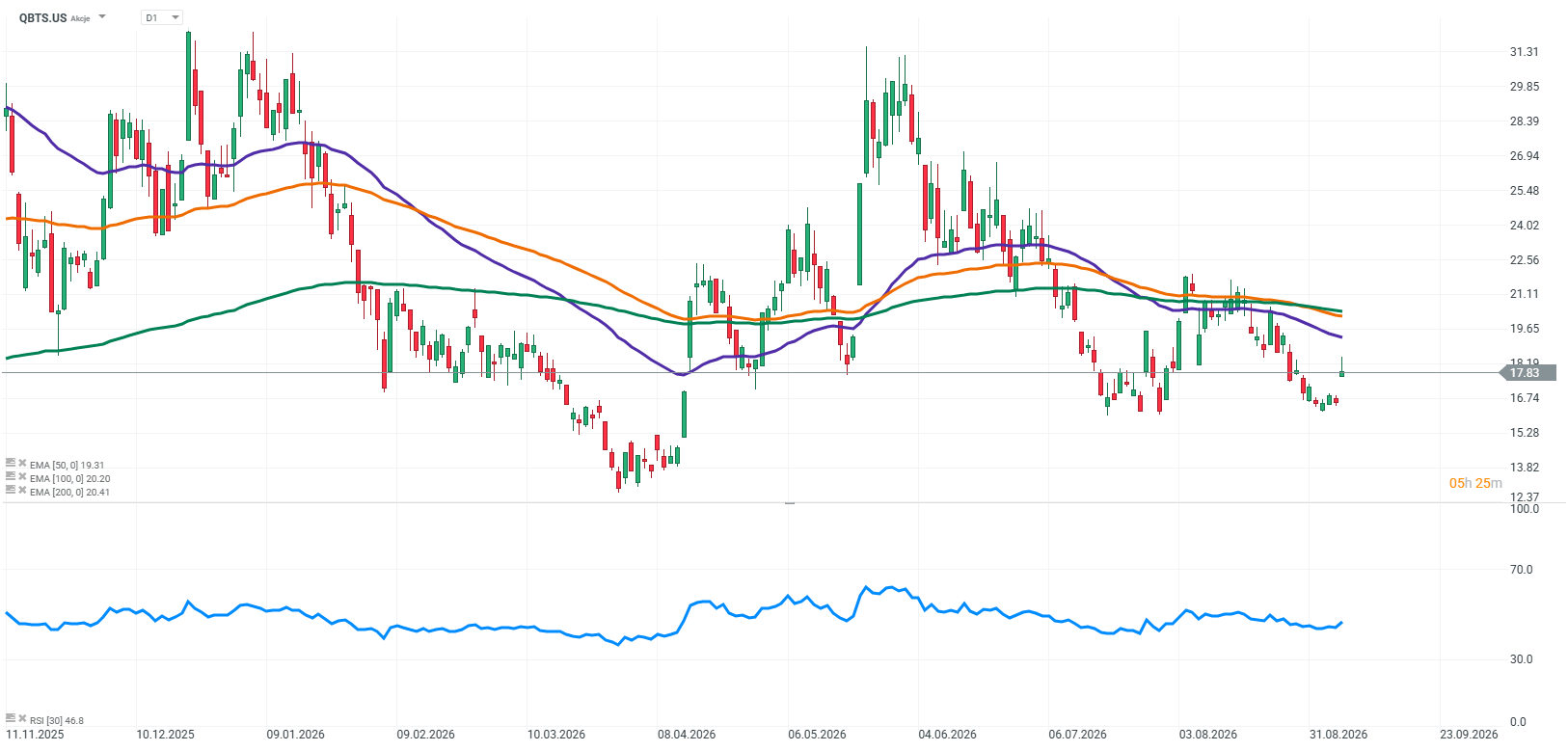
Souce: xStation5
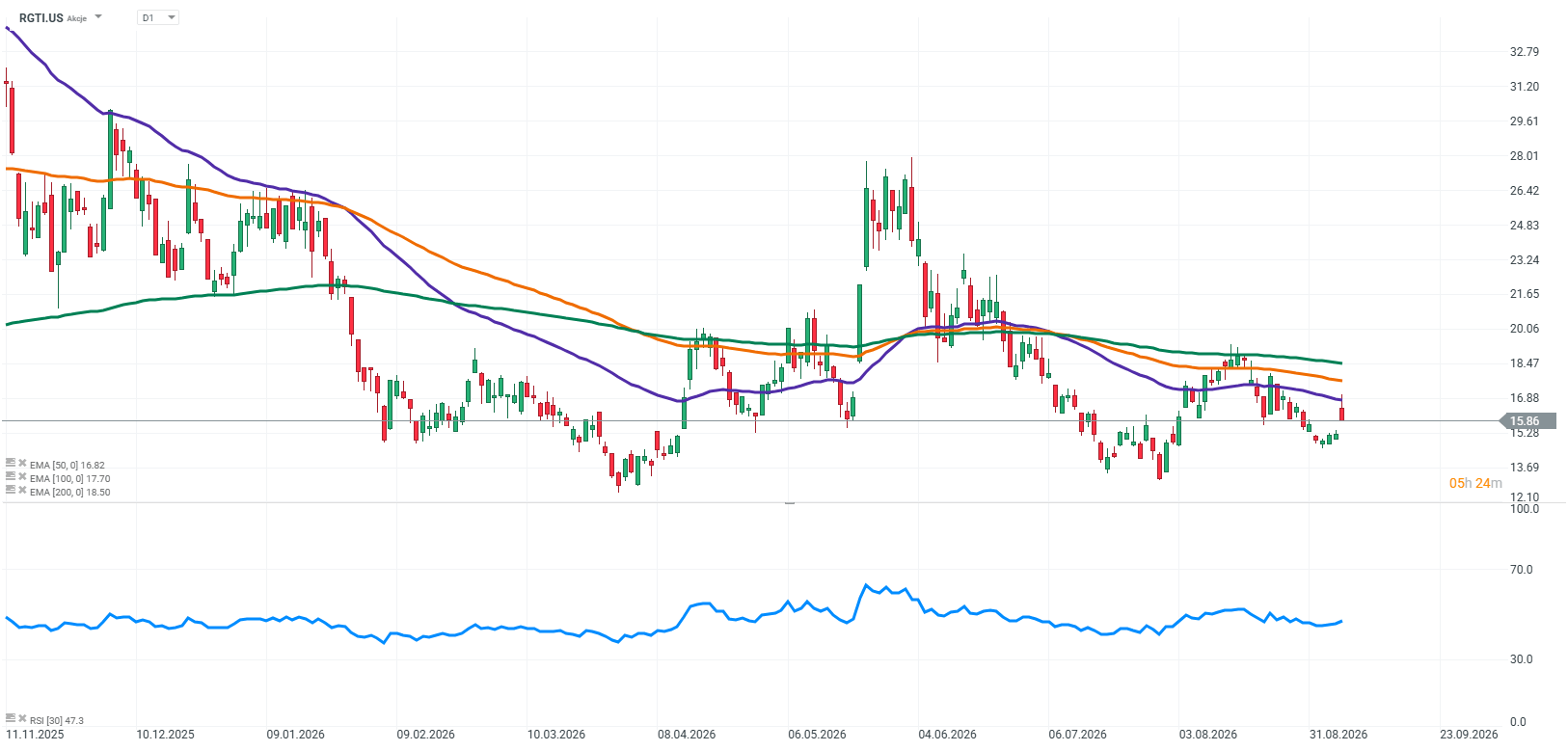
Souce: xStation5


SpaceX Results: Can Starlink Carry the AI Revolution?


Netflix results: An advertising setback



Daily Summary: Buyers Refuse to Give In


CoreWeave: Record Demand Collides with Crushing Costs