


A major escalation of the "Cold War" in the Middle East is currently underway. As reported by Axios and the Israeli station N12, President Donald Trump has officially rejected Iran's proposal to open the Strait of Hormuz, choosing instead a strategy of "maximum strangulation" and preparation for direct military strikes. Although a ceasefire technically remains in place, current communications suggest that a resumption of hostilities is only a matter of time. This is most visible in the oil market; Brent crude has broken above $110 per barrel, and looking at the most active contracts, there is a chance for a record close since the conflict began. It is also worth noting the expiring June contract, which is trading at $118 per barrel and reached as high as $119.4, very close to the March record (though the May contract was the benchmark at that time).
June Brent Contract will probably close at record high. Moreover, December Contract is surpassing recent highs from March. Source: Bloomberg Finance LP
"Short and Powerful Wave of Strikes"
According to the latest reports, the US has prepared a plan for a "short but powerful" wave of strikes against targets inside Iran. Washington's strategy is clear: first, strike the infrastructure, then force Tehran back to the negotiating table on US terms.
In an interview with N12, President Trump did not mince words, comparing Iran's economic situation to a "choking, fattened pig." According to Trump, the naval blockade is more effective than bombs because it has led to the physical overfilling of Iranian storage facilities and pipelines which, as the President claims, "are close to exploding" because the country has nowhere to store unsold crude. Nevertheless, reports have also surfaced suggesting that Iran would likely prefer to dump extracted oil in the desert rather than shut down production at key wells, as the latter could lead to geological changes so severe that restarting production would be impossible.
Friction in Tehran and the Silence of the Supreme Leader
The internal situation in Iran appears extremely tense and fragmented:
-
The Army and Radicals: Reports suggest that the Iranian military is ready for combat and rejects any surrender under the pressure of the blockade.
-
Diplomacy: Iran's Deputy Foreign Minister has publicly declared that the country does not want war, suggesting a last-ditch effort to save the situation.
-
Decision-making Paralysis? Most concerning is the lack of an official statement from Supreme Leader Ali Khamenei. Silence at the highest level during such a critical moment (including inactivity on X and in official media) could signify either preparations for retaliation or a profound decision-making stalemate within the regime.
What Does This Mean for the Oil Market?
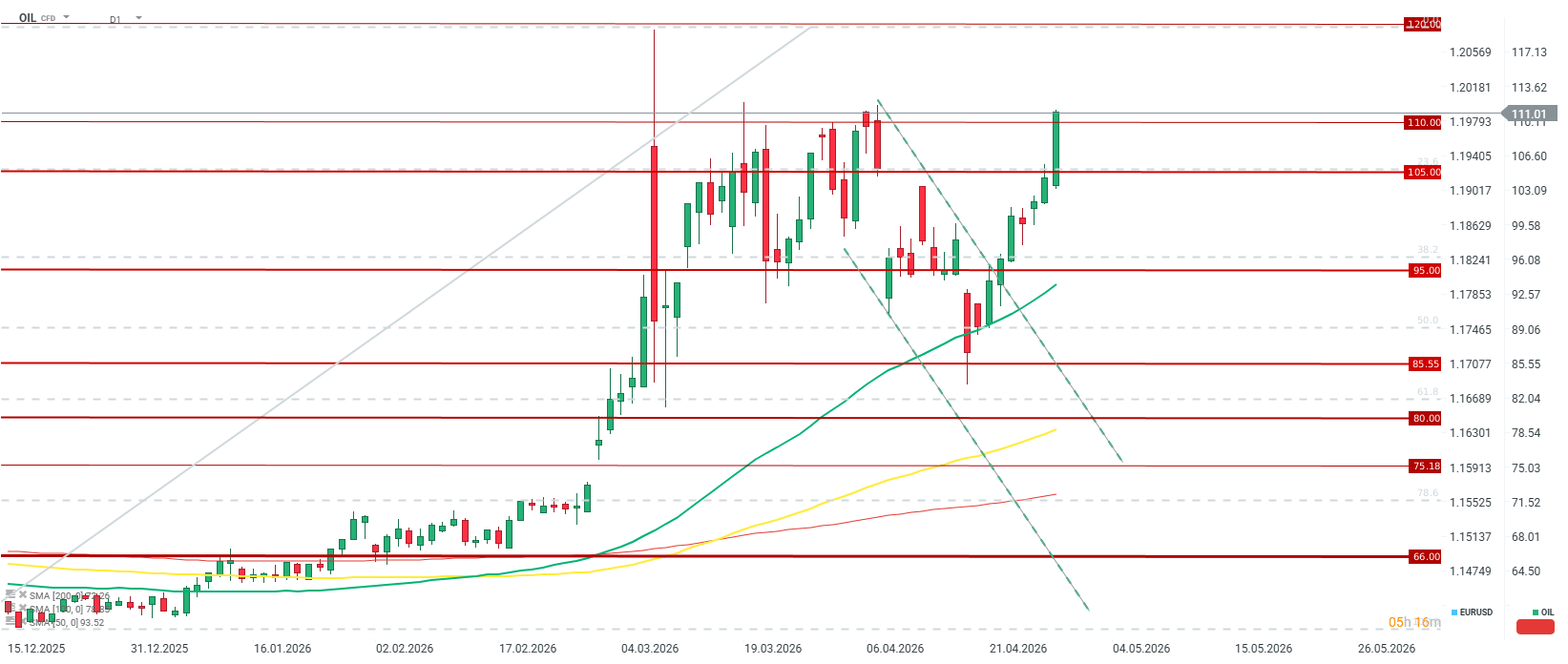
The market reaction was immediate and violent. WTI crude prices rose by nearly $6–$7 during today's session, breaking the $106 per barrel barrier, while Brent is already trading above $111 per barrel. Key takeaways:
1. War Risk Premium Returns with Full Force The market has stopped believing in a diplomatic solution to the Strait of Hormuz crisis. Trump's rejection of the Iranian proposal means that the blockade—through which 20% of global oil consumption flows—will not be lifted anytime soon. Investors are now pricing in the real risk of destruction to Iran’s production infrastructure.
2. Risk of Permanent Damage to Oil Fields Trump's "exploding pipelines" argument has a technical basis. If Iran is forced to abruptly halt extraction due to a lack of storage space, irreversible pressure changes could occur in the oil fields, permanently reducing their future productivity. This is a long-term bullish scenario for prices as it limits global production capacity for years.
3. The US as the "Only Safe Supplier" Today's EIA data showing a massive drop in US inventories (-6.2 million barrels), combined with the blockade of Iran, shows that the global economy is "sucking up" every available barrel from America. If strikes occur, demand for oil from the US and other regions outside the Persian Gulf will rise even further, potentially pushing WTI prices toward $115–$120. US crude oil exports have hit an absolute record of 6 million bpd, reaching new highs alongside refined fuels at 14 million bpd.
4. "Sell the News" or Further Rally? We are currently in the escalation phase. Oil has entered an almost uncharted zone where it has only lingered momentarily during a few past sessions. A close above $111–$112 for Brent and $107 for WTI opens a new field for gains. However, these levels must still be viewed as areas of strong supply, even as oil prices move closer to levels dictated by the physical market. It is also worth noting that speculators are still not heavily present in the oil market.
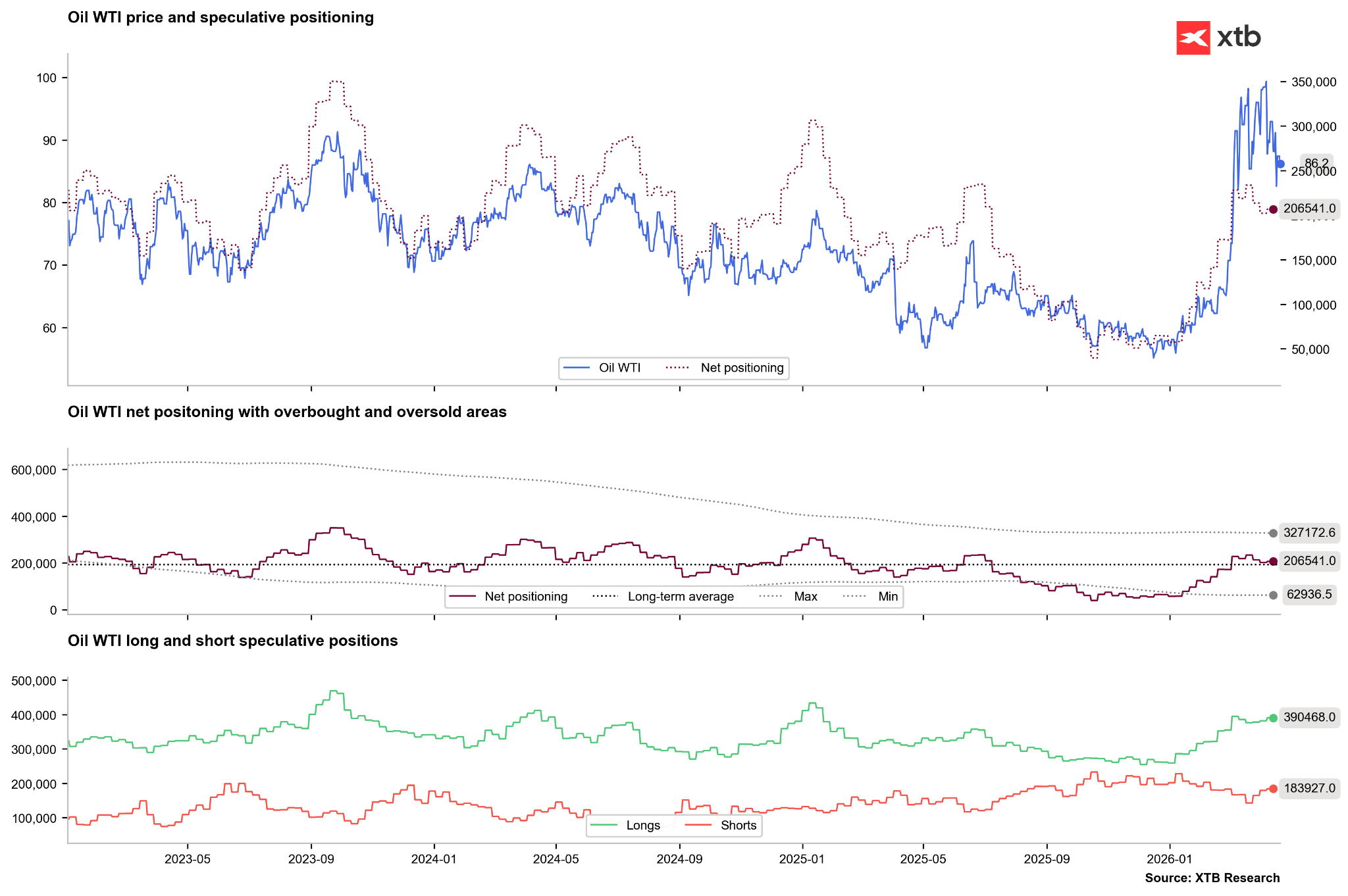 It is difficult to argue that there is currently large speculative engagement in the oil market. Long positions remain elevated, but they were higher in 2023 or 2025. Source: Bloomberg Finance LP, XTB
Summary
The situation is extremely binary. If the US actually strikes, WTI crude could test the $110 level within hours. However, if Khamenei’s silence ends with a sudden concession, we face the risk of a sharp correction toward $100. For now, Trump’s "hawkish" stance is keeping supply in check.



Daily Summary: Valuations Under Pressure, Capital Moves Away From Technology

Market Wrap: "Decent" results are not enough – tech stocks fall further; oil highest since May (22.10.2026)


Daily Summary: SpaceX and the tech sector drive Wall Street, oil retreats sharply below $97

📉NATGAS loses 6% ahead of rollover