



US stock market sentiment remains fragile, as investors attempt to price in a wide range of possible outcomes related to the conflict in the Middle East, while receiving mixed diplomatic signals from Washington. S&P 500 futures are down 0.8%, after earlier swinging between gains and losses, underscoring persistent uncertainty. A lack of de-escalation between the US, Israel and Iran increases recession risks, while a swift agreement could trigger a relief rally. Technology stocks are under notable pressure, with pronounced selling visible across the software sector, weighing on broader equity sentiment.
- US Treasury yields moved higher, with the 2-year yield rising to 3.88% (+3 bps), suggesting limited demand for safe-haven assets despite geopolitical tensions.
- Oil prices climbed back above $90 per barrel, recovering part of earlier losses as markets continue to price in potential supply disruptions in the region.
- The US dollar strengthened by 0.2%, while gold remained relatively stable, pointing to a selective rather than broad-based flight to safety.
- Initial optimism around potential peace talks faded quickly, after Iran denied reports of substantive negotiations with the US, despite earlier comments from Donald Trump.
- Sentiment deteriorated further following reports that Persian Gulf allies may become involved, increasing the risk of broader regional escalation.
- The wide range of possible scenarios is driving elevated volatility across global markets.
- European equities edged up 0.1%, with Puig Brands standing out, surging as much as 17% following reports of takeover talks with Estée Lauder.
- Gold erased earlier gains after Turkey signaled it may use its gold reserves to support its currency.
- Investors remain concerned about lasting economic effects, even if the conflict de-escalates quickly. According to UBS, volatility is likely to remain elevated because:
- oil inventories will need to be rebuilt,
- supply chains may remain disrupted,
- economies will continue to feel second-round effects of the supply shock.
- UBS maintains a defensive positioning in Europe, reducing exposure to cyclical sectors, including banks.
The military conflict in the Middle-East escalates
The military situation remains tense and escalatory: Iran launched overnight attacks on Israeli targets and US bases, Saudi Arabia intercepted drones, Kuwait reported damage to energy infrastructure, sirens were also triggered in Bahrain.
- QatarEnergy declared force majeure on LNG deliveries to Italy, Belgium, South Korea and China, adding to concerns over global energy supply.
- Energy infrastructure in Iran has also been hit, including facilities in Isfahan and a pipeline supplying the Khorramshahr power plant.
- Markets remain on “hyper alert”, with investors awaiting confirmation of formal US–Iran talks that could provide clearer direction.
Charts (xStation5)
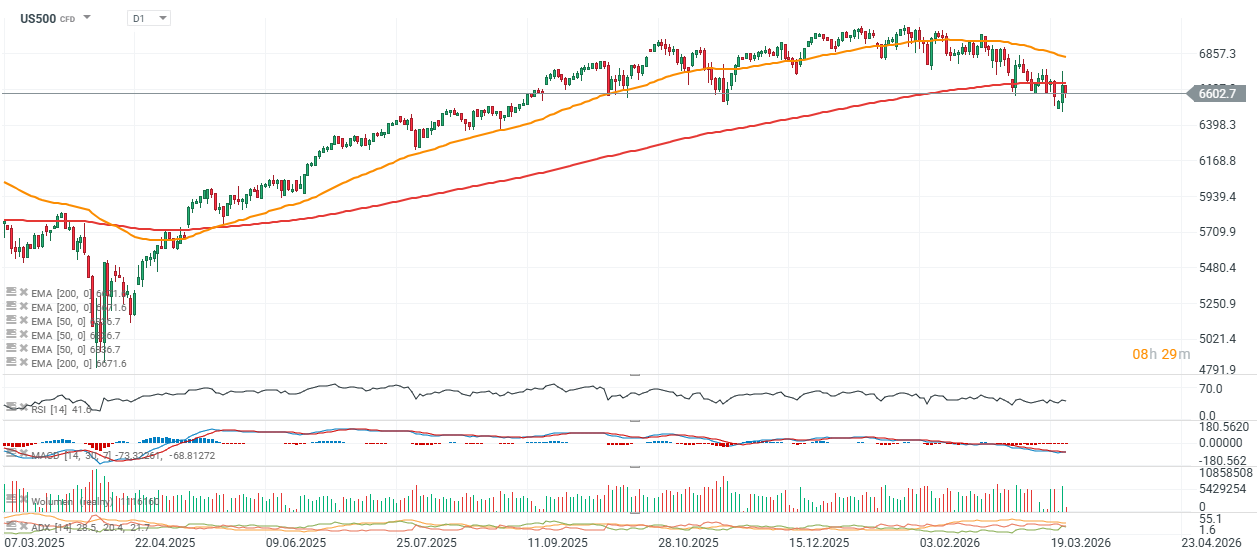
US500 (D1): elevated volatility with downside pressure dominating recent sessions.
Source: xStation5
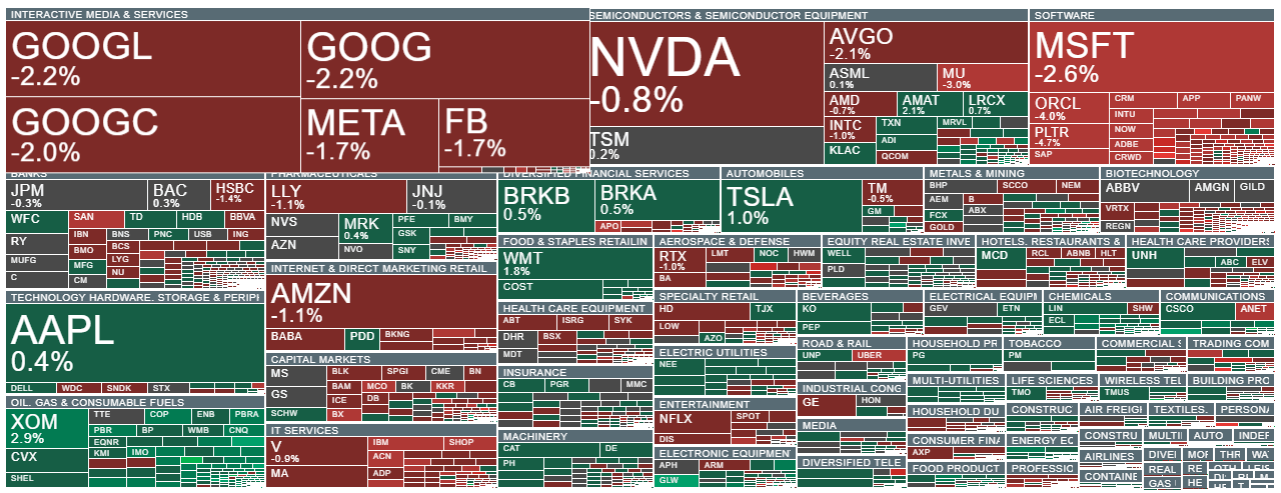
Sector view: oil continues its upward trend, while Microsoft and other IT names extend declines.
Source: xStation5
Corporate news
- US equity futures trimmed earlier losses after the cash open, though volatility remains elevated; S&P 500 contracts were broadly flat.
- Jefferies Financial Group (JEF) gained 9.5% in premarket trading, after the Financial Times reported that Sumitomo Mitsui Financial Group is considering a potential takeover, with investors pricing in a possible acquisition premium.
- JFrog (FROG) rose 2% before the open, following an upgrade from UBS (neutral → buy), with analysts highlighting resilient fundamentals despite recent share price weakness.
- Ralph Lauren (RL) added 1.7% in premarket trading, after Citi upgraded the stock to buy, citing successful brand elevation and improving operational performance.
- Trian Fund Management and General Catalyst Group amended the terms of their definitive agreement to acquire Janus Henderson.
- Ares Strategic Income Fund reported share repurchase requests totaling 11.6% of shares outstanding, significantly above its 5% framework limit.
- Apollo Global Management is limiting redemptions from one of its largest non-traded private credit funds for retail investors amid elevated withdrawal requests.
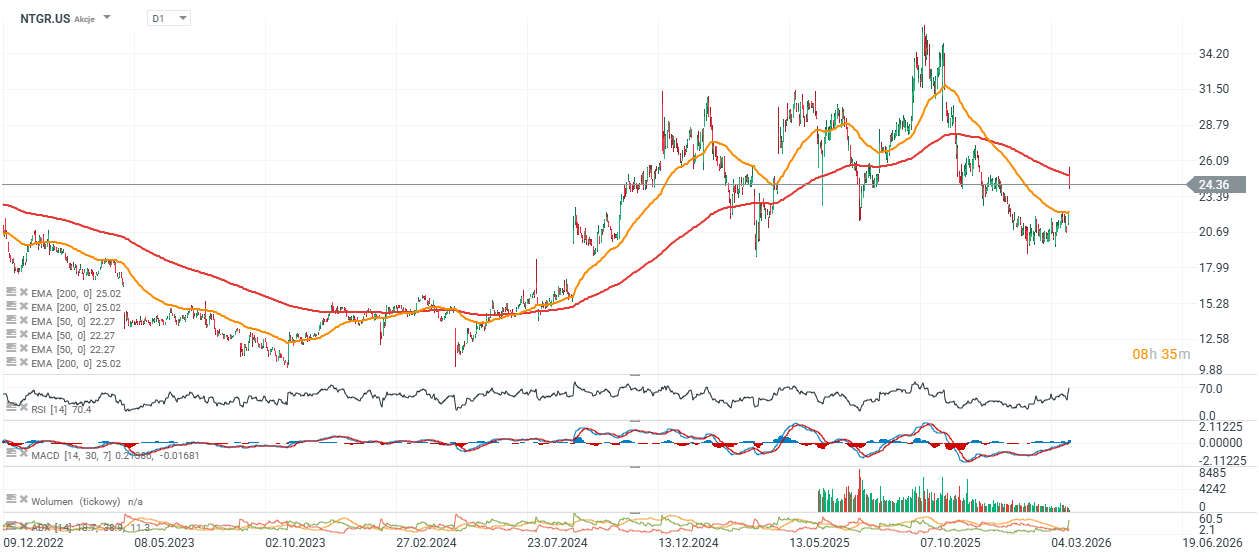
- Netgear (NTGR) surged 16% in premarket trading, after the FCC moved to ban imports of new foreign-made consumer routers, potentially improving the competitive landscape for domestic producers.
Source: xStation5


Three markets to watch next week (23.10.2026)



Daily Summary: Oil at five-month highs, indices under pressure (23.10.2026)

US Open: Further declines on Wall Street, Brent above 111 USD, AI correction continues (14.10.2026)

Chart of the Day: Is USDJPY running out of road? Inflation forces the BoJ to act, but the Fed could spoil the Yen’s rally