

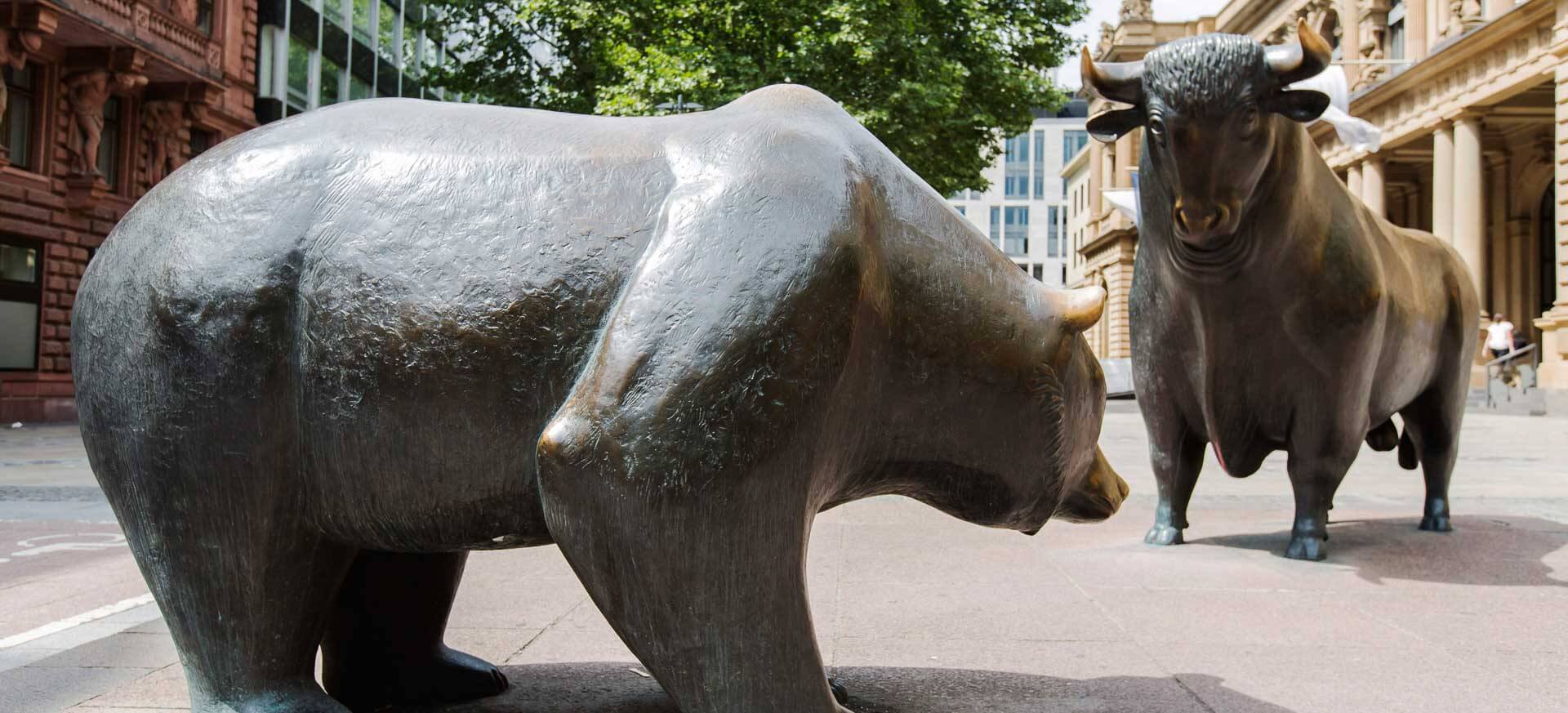

The past few days have provided an interesting answer to a question that has been recurring on Wall Street for months: What, exactly, can halt the bull market? Interest rate hikes? Until recently, the answer seemed obvious. A higher cost of borrowing should curb risk appetite, increase the appeal of bonds, and put pressure on stock prices. Meanwhile, the European Central Bank raised rates, followed by the Federal Reserve. Not only did the indices not start to fall, but they actually began to rise.
In the case of the ECB, this came as no great surprise. The market had long been bracing for a rate hike, and the central bank had consistently emphasized the need to combat inflation. The Fed’s decision was far more intriguing. Even before the meeting, investors were pricing in a nearly 90 percent chance of a rate hike, but there was no certainty. Above all, the market feared pressure from Donald Trump, who had openly called for a more accommodative monetary policy. Ultimately, the Fed raised rates and maintained its independence. The market’s reaction was immediate. Instead of a sell-off, prices rose.
This shows that higher interest rates are not, at this point, a sufficient reason for investors to call an end to the bull market. Of course, more expensive money will, over time, curb risk appetite, increase the cost of financing, and make bonds more attractive. However, the market has already priced in the possibility of another rate hike this year. The much more important question, then, is: what will happen to corporate earnings?
The current bull market, particularly in the technology sector, requires ever-increasing investment. Data centers, semiconductors, energy infrastructure, and the development of AI models require enormous amounts of capital. Companies must continue to increase spending to maintain their pace of growth and meet market expectations. At the same time, rising financing costs will prompt management teams to exercise greater caution when making future investment decisions.
This creates a tension that the market may not yet fully price in. On the one hand, investors expect very rapid revenue and profit growth, particularly among the largest technology companies. On the other hand, meeting these expectations requires further increases in spending. Companies will invest, but they may do so at a slower pace. At current valuations, even a slight disappointment in the pace of growth could carry much greater weight than the mere fact that earnings will continue to rise.
This is where the current bull market may reach its limit. After all, the market doesn’t just need good results. It needs results that exceed expectations, because those expectations largely justify today’s valuations. If earnings continue to grow but at a slower pace than anticipated, and companies simultaneously begin to curb the pace of their investments, investors may start to question the scale of future growth.
This will be particularly important in the case of artificial intelligence. The scale of current investments is enormous, and the market expects them to translate into very rapid growth in revenue and profits. The higher the bar is set, the less room there is for disappointment. Companies may continue to increase revenue, develop technologies, and invest billions of dollars, but if the growth rate turns out to be lower than expected, current valuations will become increasingly difficult to justify.
Therefore, the question of when the current rally will end should not be reduced solely to when the Fed will raise rates again. What will be far more important is whether U.S. companies will deliver results that justify current valuations and whether they will be able to maintain the pace of investment required by the current tech bull market.
The bull market may not be halted by higher interest rates alone, but rather by the moment when market expectations continue to rise faster than corporate earnings. If companies are forced to slow the pace of their investments and their results fail to meet the ever-rising bar, the current bull market will begin to lose its most important fuel. At that point, the problem will no longer be the level of interest rates, but the lack of results needed to justify further gains.

🚩 US100 loses 0.7%

🖥️Chart of the Day - US100: Is the KOSPI crash a foretaste of Nasdaq's troubles?


Economic Calendar - Start of Wall Street Earnings Season, Hawkish RBA, and Middle East Tensions (13.10.2026)



Morning Wrap: Tech Crash in Asia and Hawkish Central Banks in the Shadow of an Oil Shock (13.10.2026)