


The Bank of Japan followed in the footsteps of the Federal Reserve today, raising interest rates by 25 bps to the highest level in 31 years (the benchmark rate at 1.25%).
Figure 1: BoJ Interest Rate and Core CPI Inflation in Japan (1995 - 2026)
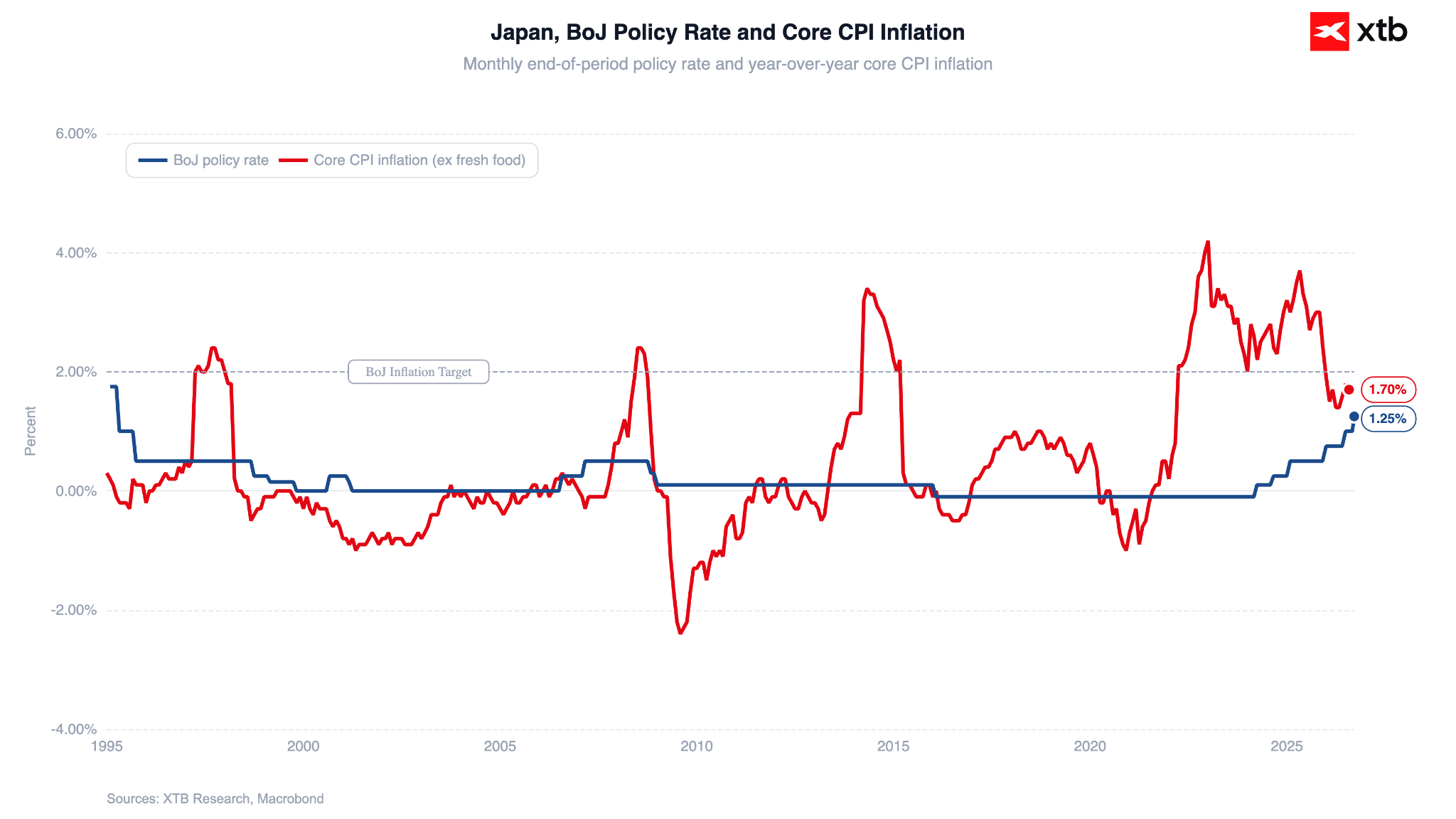 Source: XTB Research, 18.09.2026
In contrast to the dollar, which gained ground after the FOMC meeting, the yen is today surrendering some of the gains it accumulated over recent weeks.
Figure 2: Major Currencies vs. USD (14.09.2026 - 19.09.2026)
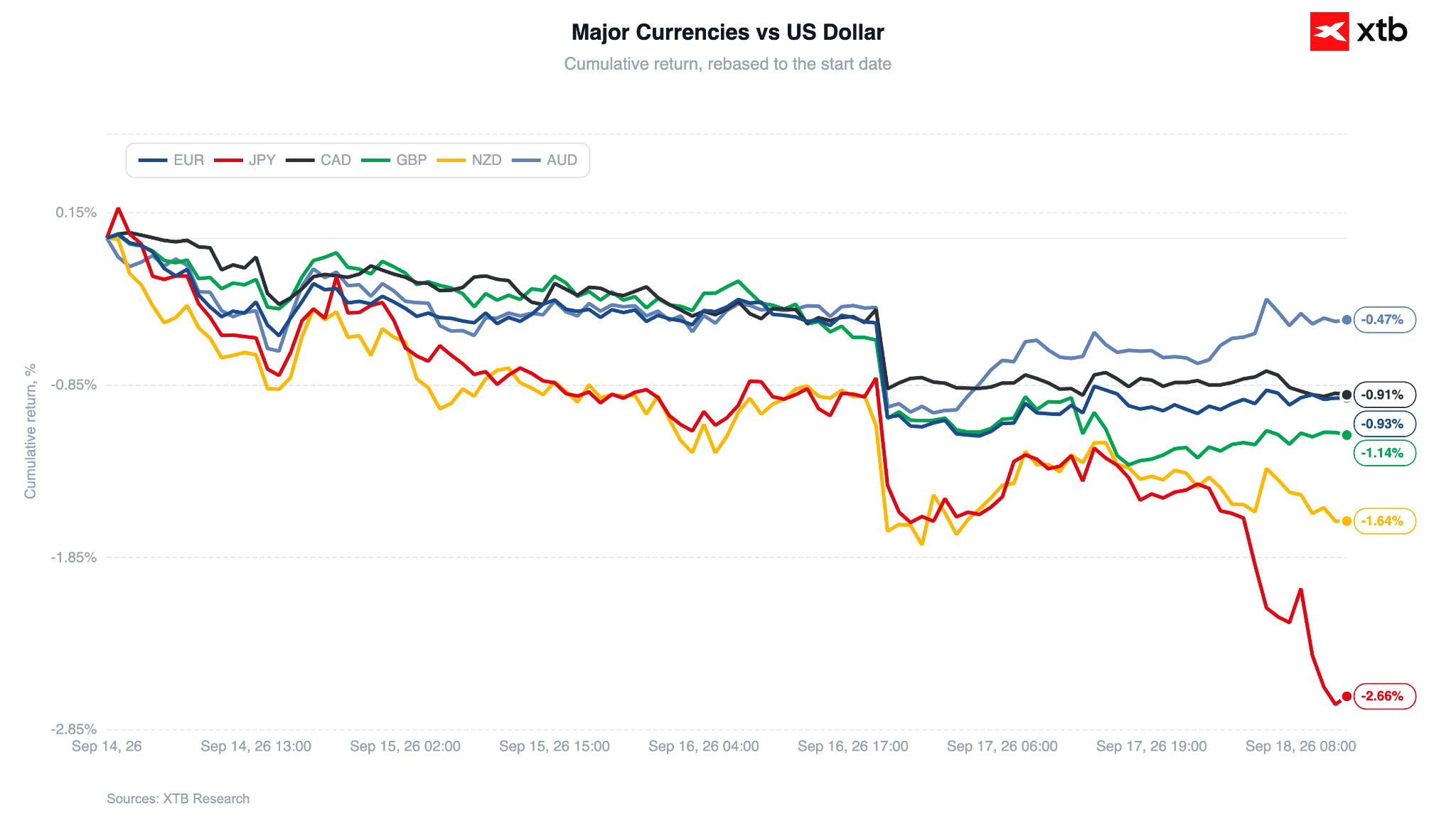 Source: XTB Research, 18.09.2026
There are at least several reasons behind this move; however, they all anchor around one key issue: the BoJ fell short of market expectations regarding its forward guidance.
Figure 3: Market-Implied BoJ Interest Rate Path (2026 - 2027)
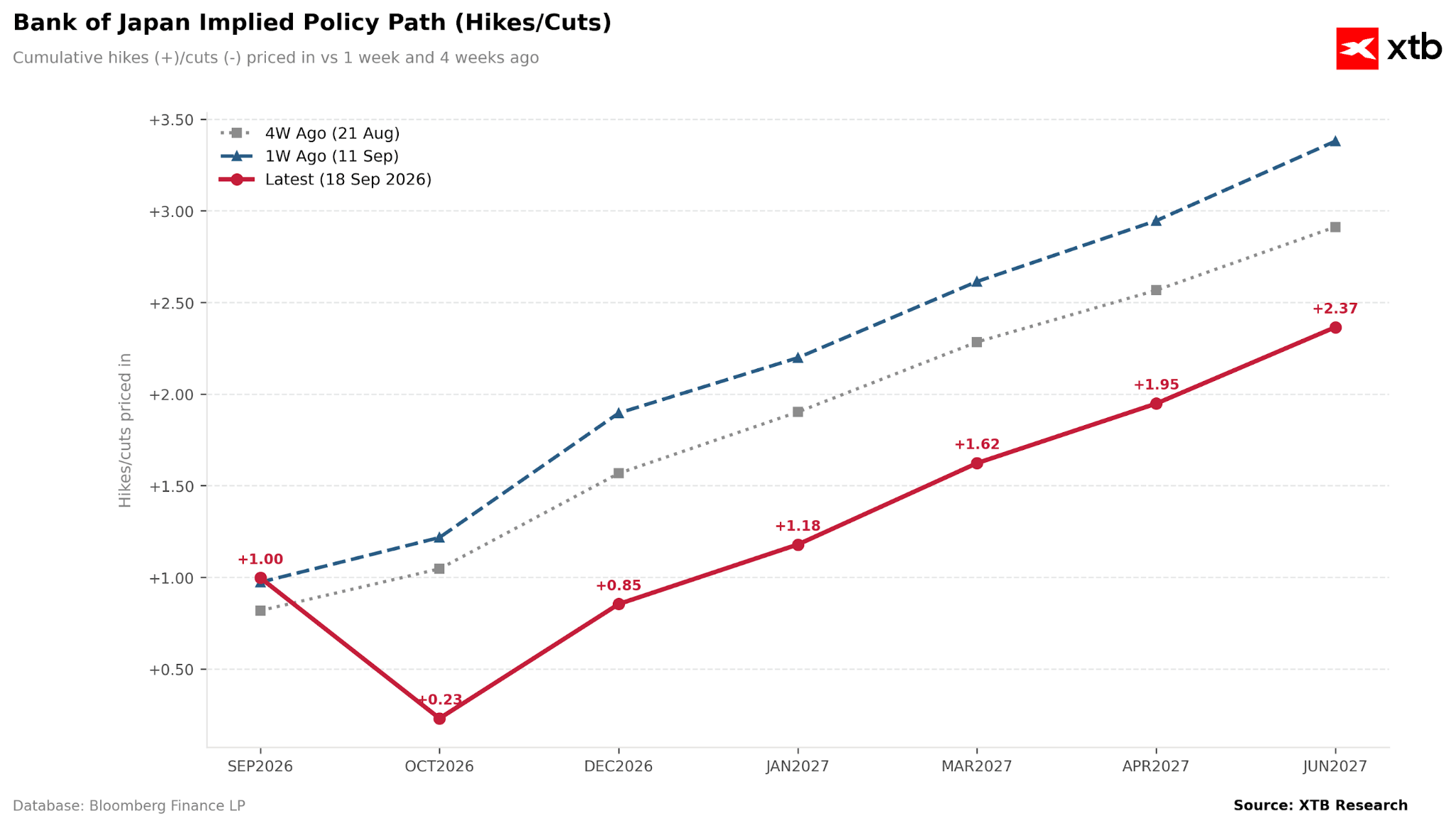 Source: XTB Research, 18.09.2026
Note: Current valuations refer to a higher base (i.e. the interest rate level following today's hike).
A Lack of Unanimity
Most importantly, the decision was not unanimous (7-2). The rate hike was opposed by Board members appointed in March by Sanae Takaichi's government: Toichiro Asada and Ayano Sato.
This is particularly significant given that Naoki Takamura and Hajime Takata, the most hawkish among the Board members, will end their terms as early as July next year. The government will once again nominate the candidates, which means the internal centre of gravity within the Board could shift towards a much more dovish stance.
Unlike ordinary bills, where a constitutional majority (two-thirds of the seats) in the House of Representatives allows the veto of the House of Councillors to be bypassed, selecting Board members requires the consent of both Houses. This restricts the government's freedom of action and may prevent the approval of ultra-dovish nominations.
Takaichi herself is perceived as a reflationist, meaning an advocate for economic policies aimed at deliberately inducing moderate inflation to stimulate demand. Her policy aligns to some extent with Abenomics, the economic vision of former Prime Minister Shinzo Abe, which assumes a loose fiscal policy, a weak yen to support exports, and active economic stimulation through state expenditure.
Ueda Not Hawkish Enough
Governor Ueda's press conference initially brought about a certain downward correction on the USDJPY pair; however, it ultimately failed to help the yen regain its footing. The Governor noted that "up until now, our short-term policy objective has been to push core inflation out of levels below 2 per cent; currently, core inflation is approaching 2 per cent, which [...] means that the policy [ed. note: monetary policy] phase has changed".
He mentioned, however, that the bank does not have a predetermined plan or a preset pace for hikes (e.g., once a quarter). Every subsequent move will be dependent on current macroeconomic data, particularly on prevailing inflation conditions.
He also sought to reassure investors, emphasising that although monetary policy is no longer ultra-loose, financial conditions in the country remain accommodative. In assessing the current economic situation, he used the phrase "mild recovery".
He confirmed that the bank must closely monitor exchange rate fluctuations. A weak yen fuels so-called imported inflation, especially in the face of high energy commodity prices; Japan covers approximately 90% of its energy demand through imports.
—
Michał Jóźwiak, Financial Markets Analyst at XTB



Market Wrap: A 4% surge in oil prices weighs on indices (08.10.2026)


Market Wrap: Oil rises again, French fiscal concerns weigh on euro (07.10.2026)

Oil falls below $100🚨
💶Chart of the Day: EURUSD at Lowest Since May 2025 Amid French Fiscal Crisis