EUR/HUF

Trade EUR/HUF CFD

Past performance is not necessarily indicative of future results, and any person acting on this information does so entirely at their own risk.

Fees

Less costs, more investments

Competitive fees

Trade with leverage and keep costs low

Free deposits and withdrawals

Manage funds without costs using selected payment methods

Free account opening

Complete the process in 15 minutes without unnecessary formalities.

Learn

What is CFD trading?

New to CFDs? Learn how CFD trading works and how you can trade on both rising and falling prices without owning the underlying asset. We explain the basics, financial leverage, potential benefits and risks in simple terms.

Read the Beginner’s Guide

Create an account

Open your XTB account in just a few simple steps. Get access to global markets and a wide range of investment opportunities.

Make a deposit

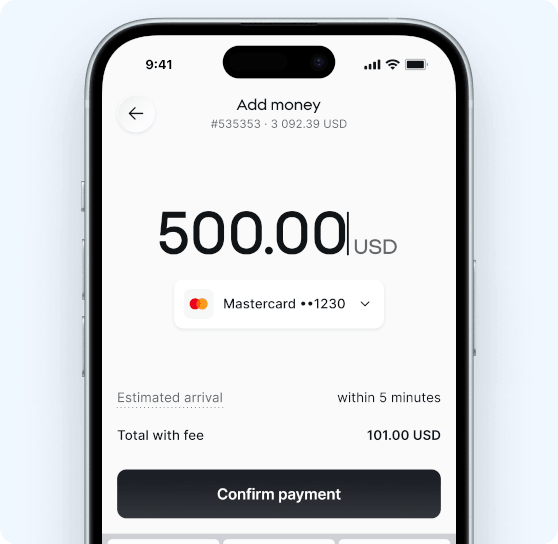
Add funds to your account using one of the available payment methods. Once your funds are available, you’re ready to start investing.

Trade EUR/HUF

Find EUR/HUF in XTB App, choose how much you want to invest and place your order. Start building your portfolio on your terms.

And make your money work in many ways

Explore more ways to put your money to work - from global stocks, ETFs and more. Discover Investment Plans while you wait for your next investment opportunity.

Popular in the markets

Most traded CFDs

Discover where CFD traders are most active. Explore some of the most traded CFDs across global markets and see which instruments are in focus.

News

Keep your finger on the pulse with our latest market news

We are regulated by leading financial regulatory authorities across multiple markets worldwide.

About instrument

Trade EUR/HUF CFD

The EUR/HUF pair brings together the euro — the currency of the European Union’s economic juggernaut — and the Hungarian forint, a symbol of resilience from a smaller, yet increasingly influential Central European economy. While not among the major pairs, EUR/HUF is a well-tracked cross, especially for those seeking exposure to emerging Europe with a euro-area benchmark.

EUR/HUF is like watching a quiet countryside road where, occasionally, macroeconomic crosswinds can stir up sharp turns. The pair is especially popular with traders interested in monetary policy divergence, EU enlargement narratives, and geopolitical risk from within the bloc.

In the XTB offer, EUR/HUF is available as a CFD instrument, allowing traders to speculate on the pair without directly holding any currency. However, trading CFDs carries high risk due to the volatile nature of the forex market.

📌 Key Takeaways

  • EUR/HUF pits the Eurozone’s currency against Hungary’s forint — an emerging market currency.
     
  • It’s a cross pair, usually traded as a reference for Central European macro risk.
     
  • Frequently influenced by ECB policy and Hungarian National Bank (MNB) decisions.
     
  • Offers exposure to Hungary’s higher interest rates and EU structural dynamics.
     
  • Not as liquid as majors, but sees spikes during regional EU events or risk-off periods.
     
  • Traders should monitor inflation trends, bond yields, and political developments.

🌍 Economies Model

🇪🇺 Euro Area (EUR)

The Euro represents the joint economy of 20 nations, overseen by the European Central Bank (ECB). It’s a low-yield, stability-focused currency tied to slow but steady GDP growth, strict fiscal norms, and inflation targeting. Key focus: price stability and maintaining unity across diverse member economies.

🇭🇺 Hungary (HUF)

Hungary is an EU member but not part of the eurozone, retaining its independent currency and monetary policy. The Hungarian National Bank (MNB) aggressively adjusts rates to combat inflation, making HUF sensitive to interest rate differentials. The country blends EU trade reliance with unique fiscal choices — occasionally diverging from Brussels' guidance.

📊 Key Macro & Data Affecting the Pair

📉 Inflation Divergence: Hungary often battles high inflation.
When Hungary’s inflation outpaces the EU, the MNB tends to raise rates, strengthening HUF against EUR — though this comes with volatility.

💰 Interest Rate Gap: EUR low vs. HUF high.
The ECB’s dovish stance contrasts with MNB’s tightening bias. The carry trade aspect often entices traders to sell EUR and buy HUF for yield, especially in calm markets.

🇪🇺 EU Funding & Rule-of-Law Tensions
Brussels' decisions to withhold or delay funds over governance concerns in Hungary can weigh heavily on HUF sentiment and spark short-term EUR/HUF jumps.

📉 GDP Disparities: Core vs. periphery
Hungary’s growth can be erratic and dependent on EU manufacturing demand. Disappointing Hungarian GDP data vs. steady EU growth can send HUF lower.

💼 Wage & Labor Market Data
Hungarian wage growth often fuels inflation concerns. Strong wage hikes can trigger MNB policy shifts, affecting the HUF side of the pair.

🌐 Risk Sentiment in Central Europe
EUR/HUF reacts to regional risk, such as political tensions or trade disruptions in Central & Eastern Europe. When global risk aversion rises, HUF tends to weaken.

💶 Trading Characteristics

Trading EUR/HUF is like balancing a scale between EU stability and Hungarian unpredictability. 🇪🇺⚖️🇭🇺 This pair is less liquid than EUR/USD but offers intriguing opportunities—especially for traders watching central bank divergence and regional geopolitical themes.

📊 Tight correlation with ECB vs NBH (Hungarian National Bank) policy makes it a macro play for rate spread strategies.

🔄 Expect moderate volatility, with spikes around ECB/NBH rate decisions or EU funding disputes with Hungary.

📅 Active sessions: European hours (07:00–16:00 GMT) with limited action during the U.S. session.

📉 Not ideal for high-frequency traders—spreads can widen unexpectedly.

⚡ May suit for: Event-based strategies and carry trade.

⚠️ Major currency pair movers 

🏦 1. Central Bank Policy Gap 📉
EUR/HUF is ultra-sensitive to divergence between ECB’s cautious moves and Hungary’s historically hawkish (or surprise dovish) turns.

🇪🇺 2. EU-Hungary Tensions ⚖️
Debates over democratic norms, rule-of-law, or funding freezes often trigger HUF volatility.

💡 3. Energy Dependency Risks ⚡
Hungary’s reliance on Russian energy creates outsized FX swings during energy shocks or sanctions announcements.

📈 4. Inflation Surprises 📊
Hungary’s inflation has been sticky. Unexpected CPI prints have moved HUF significantly in the past.

💼 5. Foreign Investor Sentiment 💬
Non-resident bondholders reacting to political or fiscal noise can prompt big HUF moves.

📅 6. ECB Tone Shifts 🔁
A dovish or hawkish surprise from the ECB changes the trading narrative on EUR/HUF dramatically—watch those pressers closely!

🕰️ Short History & Major Milestones

  • 1999: EUR introduced. HUF becomes increasingly pegged in analysis as Hungary seeks EU alignment.
     
  • 2004: Hungary joins the EU, strengthening economic ties and increasing EUR/HUF relevance.
     
  • 2012: Hungary’s MNB starts aggressive rate policies, creating volatility in the pair.
     
  • 2022–2023: Hungary battles double-digit inflation, pushing MNB rates to EU-leading highs.
     
  • Today: Traders closely monitor ECB vs. MNB policy path, EU-Hungary political relations, and risk sentiment.

Margin

0.20%

Leverage

500

Commission

-

Market hours

24 h from Sunday 11:00 pm to Friday 10:00 pm CET

Interesting Facts

What to know before investing in EUR/HUF

🇪🇺 Symbol of EU Aspirations: Hungary’s long-term ambition to adopt the euro adds a unique dimension to EUR/HUF. The pair is often viewed not only through economic data, but also as a reflection of Hungary’s progress toward deeper European integration.

🏦 One of Europe’s Most Aggressive Central Banks: The Hungarian National Bank (MNB) is known for making bold policy moves when inflation or currency pressure rises. Its dramatic rate adjustments have made the forint one of Europe’s most interest-rate-sensitive currencies.

⚖️ Hungary’s Forint Is Floating — But Politically Anchored: While the Hungarian forint operates under a free-floating exchange rate, political developments often play a major role in its direction. Government relations with the EU, especially around funding negotiations, can strongly influence investor confidence.

💶 Not Just a Cross, a Compass: EUR/HUF acts as a window into Hungary’s position within Europe. Beyond traditional FX factors, the pair can reflect changing views on EU cooperation, government policy, and the country’s broader geopolitical outlook.

📉 Hungary’s Carry Trade Appeal: The forint has often been used in carry trade strategies because of Hungary’s higher interest-rate environment. When investors are comfortable taking risk, demand for HUF can increase as traders look to capture yield differentials.

🌍 A Central European Risk Gauge: EUR/HUF is often viewed as a barometer for broader Central European sentiment. Regional tensions, geopolitical uncertainty, or shifts in investor confidence across neighboring economies can quickly influence the forint.

FAQ

Do you have more questions?

Find answers to our most commonly asked questions. Still have a question? Please contact our customer support team.

Yes — especially compared to major pairs. The Hungarian forint can exhibit sharp moves during MNB announcements, EU-related tensions, or emerging market selloffs. However, in calm periods, the pair may drift in ranges dictated by interest rate carry flows. It’s not wild every day, but susceptible to abrupt spikes on policy or political news.


Key events include ECB and MNB interest rate decisions, EU funding news regarding Hungary, Hungarian inflation and GDP reports, and regional EU political developments. Also, broader risk sentiment, such as geopolitical stress in nearby regions, can abruptly shift the pair’s direction.


Tensions — such as disputes over judiciary reforms or media independence — can lead the EU to withhold funding, triggering HUF weakness. Traders often price in governance risk, making politics a key EUR/HUF mover. It’s a reminder that in forex, politics and pips are often intertwined.


The Hungarian National Bank (MNB) is often proactive — even aggressive — in battling inflation. It’s not unusual to see bold rate decisions. Traders closely track MNB communication, as sudden shifts in tone can cause swift HUF repricing against the euro. The MNB’s independence and credibility are central to HUF stability.


It is best to proceed trading in FOREX with proper education - you can start with the Knowledge base we have prepared for you. Once you have the proper knowledge you should open a demo account to get a feel for the market and practice your trading strategy before investing real money. Remember that you can never have to much knowledge and you should constantly educate yourself during your presence on the financial markets.

There is no recipe for success in the FOREX market. However, there are some aspects that will help you become a better trader. Here are some tips: start with demo account (before risking real money - get a feel for the market and practice your trading strategy), develop a trading plan (it's important to have a clear plan in place before starting trading), use risk management tools (manage your risk when trading, through eg. Stop Loss orders), do not overtrade (it's easy to get caught up in the excitement of trading, but it's important to stick to your plan and not overtrade).

Financial markets are a very complex topic, as they are influenced by various factors, such micro- and macroeconomic events, policies or social changes. You should start your trading experience with proper education about the concepts, assumptions and laws that govern the markets - you can start with the Knowledge base we have prepared for you. Once you have the proper knowledge you should open a demo account to get a feel for the market and practice your trading strategy before investing real money. Remember that you can never have to much knowledge and you should constantly educate yourself during your presence on the financial markets.

Yes, FOREX investing can be risky. The value of currencies can fluctuate significantly due to a variety of factors, including economic conditions, political events and market speculation. It is important for individuals to carefully consider their own financial situation and risk tolerance before investing in FOREX.

When choosing a broker, you should consider a number of aspects related to its activity and offer. These things you should definitely consider: credibility of the invesment firm, cost and fees, instruments offered, investment platform, customer support and additional benefits. If you want to learn more about how to choose your broker visit: investresponsibly.com.

When choosing a FOREX platform there are several factors you should consider: platform ownership (proprietary platform are usually designed in the most intuitive way), availability of DEMO account (where you can test your knowledge practice strategies before risking real money), fees (commissions, spreads etc.), access to educational materials and market news . Before commiting to one platform you should carefully consider all above-mentioned aspects, as they will particulary contribute to the effectiveness of your trading.

The financial instruments we offer, especially CFDs, can be highly risky. Fractional Shares (FS) is an acquired from XTB fiduciary right to fractional parts of stocks and ETFs. FS are not a separate financial instrument. The limited corporate rights are associated with FS.
This page was not created for investors residing in Brazil. This brokerage is not authorized by the Comissão de Valores Mobiliários (CVM) or the Brazilian Central Bank (BCB). The content of this page should not be characterized as an investment offer in Brazil or for investors residing in that country.
Losses can exceed deposits