CH50cash

Trade CH50cash CFD

Past performance is not necessarily indicative of future results, and any person acting on this information does so entirely at their own risk.

Fees

Less costs, more investments

Competitive fees

Trade with leverage and keep costs low

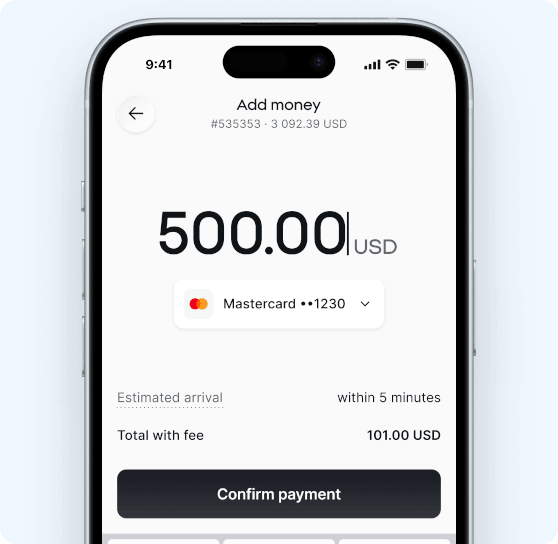
Free deposits and withdrawals

Manage funds without costs using selected payment methods

Free account opening

Complete the process in 15 minutes without unnecessary formalities.

Learn

What is CFD trading?

New to CFDs? Learn how CFD trading works and how you can trade on both rising and falling prices without owning the underlying asset. We explain the basics, financial leverage, potential benefits and risks in simple terms.

Read the Beginner’s Guide

Create an account

Open your XTB account in just a few simple steps. Get access to global markets and a wide range of investment opportunities.

Make a deposit

Add funds to your account using one of the available payment methods. Once your funds are available, you’re ready to start investing.

Trade CH50cash

Find CH50cash in XTB App, choose how much you want to invest and place your order. Start building your portfolio on your terms.

And make your money work in many ways

Explore more ways to put your money to work - from global stocks, ETFs and more. Discover Investment Plans while you wait for your next investment opportunity.

Popular in the markets

Most traded CFDs

Discover where CFD traders are most active. Explore some of the most traded CFDs across global markets and see which instruments are in focus.

News

Keep your finger on the pulse with our latest market news

We are regulated by leading financial regulatory authorities across multiple markets worldwide.

About instrument

Trade CH50cash CFD

The CH50cash is a Contract for Difference (CFD) that mirrors the performance of the FTSE China A50 Index, providing investors with leveraged exposure to the Chinese stock market. This instrument is designed for traders who seek to capitalize on the price movements of the top 50 A-share companies listed on the Shanghai and Shenzhen stock exchanges. As a leveraged product, CH50 allows traders to control a larger position with a smaller initial investment, enhancing potential returns but also increasing risk significantly.

The FTSE China A50 Index is a benchmark index that comprises the diversified, largest 50 A-share companies by market capitalization listed on both the Shanghai and Shenzhen stock exchanges. It offers a comprehensive representation of the performance of the Chinese economy, covering key sectors such as finance, consumer goods, healthcare, and technology. Launched by FTSE Russell, this index is widely followed by global investors seeking exposure to China's domestic market.

The CH50 CFD allows traders to speculate on the price movements of the FTSE China A50 Index without owning the underlying shares. As a leveraged instrument, it magnifies both potential gains and losses. For example, a leverage of 10:1 means that a $1,000 investment can control a $10,000 position. This feature makes CH50 attractive to traders looking for significant returns on capital, although it also entails higher risk, as adverse price movements can lead to substantial losses.

Trading Hours and Volatility The CH50 CFD can be traded almost 24 hours a day during weekdays, providing flexibility for traders to react to global market events and economic data releases. Key trading sessions include:

  • Pre-Market Trading: Starts at 4:00 AM HKT, allowing traders to position themselves ahead of the official market open.
  • Market Trading: From 9:30 AM to 4:00 PM HKT, characterized by high activity and liquidity.
  • After-Market: Continues until 1:00 AM HKT, offering opportunities to respond to late-breaking news.

Best Times to Trade

  • Economic Data Releases: Early morning (8:00 AM - 10:00 AM HKT) when major economic indicators are published.

  • Company Earnings Announcements: Volatility spikes around quarterly earnings releases from major Chinese companies.
  • Market Overlaps: The overlap between Chinese and European trading hours (3:00 PM - 5:30 PM HKT) often sees increased activity and volatility.
  • Geopolitical events and PBoC decisions: Investors may react dynamically as geopolitical tensions rise or ease. Also, People Bank of China interest rates decisions usually increase Chinese stock market activity.

The most important macro data

The most important Chinese market macro reports that typically increase stock volatility are:

Gross Domestic Product (GDP) Change

Description: The GDP growth rate measures the economic performance of China by comparing the current output of goods and services to previous periods (monthly, quarterly, yearly and so forth). It is a critical indicator of economic health and can significantly influence investor sentiment and market movements. Strong GDP growth often leads to the long-term, bullish market trend.

Manufacturing Purchasing Managers' Index (PMI)

Description: The Manufacturing PMI is a key indicator of the health of China's manufacturing sector. It is based on surveys of purchasing managers in the manufacturing industry, covering aspects such as new orders, production, employment, supplier deliveries, and inventories. A PMI above 50 indicates expansion, while a PMI below 50 signifies contraction.

Consumer Price Index (CPI)

Description: The CPI measures changes in the price level of a basket of consumer goods and services purchased by households. It is a primary indicator of inflation. High inflation can lead to tighter monetary policy by the People’s Bank of China (PBoC), which can negatively affect stock prices. Conversely, lower-than-expected inflation may support a more accommodative monetary policy, potentially boosting stock markets.

Trade Balance

Description: The trade balance report shows the difference between the value of China’s exports and imports. A surplus indicates that exports exceed imports, which is generally positive for the economy and can boost market confidence. Conversely, a trade deficit can signal economic weaknesses. Significant changes in the trade balance can influence market expectations regarding China’s economic stability and growth.

People's Bank of China (PBoC) Monetary Policy Statements

Description: Statements from the PBoC regarding monetary policy, including interest rate adjustments, reserve requirement ratio changes, and other liquidity measures, are closely watched by investors. These statements provide insights into the central bank’s view on economic conditions and its policy direction. Announcements of easing measures, such as rate cuts, typically lead to positive market reactions. Tightening measures, such as rate hikes, can cause market declines.


Standard Transaction Spread

6

Margin

3%

Leverage

33

Commission

-

Market hours

12:00 am - 11:00 pm

Interesting Facts

What to know before investing in CH50cash

Inception and Growth: The FTSE China A50 Index was created to provide a snapshot of the performance of China's largest and most liquid A-shares. It has become a key indicator of China's economic health and market trends.

Economic Integration: The companies in the FTSE China A50 Index play a crucial role in both the domestic and global economy, reflecting the integration of China's markets with the world.

Major Constituents: The index includes some of China's most influential finance, technological and manufacturing companies, such as Industrial and Commercial Bank of China (ICBC), Ping An Insurance or Kweichow Moutai.

Market Resilience vs Geopolitics: The index has demonstrated resilience during various economic crises. On the other hand, history shows that global trade disruptions, tariffs and geopolitical tensions may pressure Chinese stock market

Technological Influence: Companies within the index, particularly in the technology sector, like Tencent and Alibaba, have a significant impact on global innovation and market trends.

PBoC and macro data role: As one of the largest central banks in the world, People Bank of China decides about interest rates, changing short and long-term borrowing costs. Also, FTSE A50 index usually reacts to significant economy data, signalling contraction or expansion, compared to investors expectations about Chinese economy


FAQ

Do you have more questions?

Find answers to our most commonly asked questions. Still have a question? Please contact our customer support team.

The FTSE China A50 Index is a stock market index that includes the 50 largest A-share companies listed on the Shanghai and Shenzhen stock exchanges, representing the performance of the overall Chinese businesses and economy.

CH50 is a leveraged CFD based on the FTSE China A50 Index quotations. It allows traders to speculate on the index's price movements with less capital, without owning the underlying shares, offering both long and short positions. Trading on CH?50 is much riskier than just investing in FTSE China A50 due to financial leverage and volatility risk.

The index includes companies from various sectors such as finance, consumer goods, healthcare, technology, and more.

Investors can gain exposure through ETFs, mutual funds, and other financial instruments that track the index. For leveraged exposure, traders can use the CH50 CFD. However, financial leverage may increase both - financial appreciation and losses.

 Companies must be listed on the Shanghai or Shenzhen stock exchanges and meet specific market capitalization and liquidity requirements.

The index is reviewed quarterly to ensure it accurately reflects the current market and includes the largest and most liquid A-share companies.

By understanding the features and mechanics of the CH50 CFD and the FTSE China A50 Index, traders can make more informed decisions and better manage their trading strategies in the dynamic Chinese market.

Indices and stocks are not the same thing. An index is a statistical measure of the change in a portfolio of stocks. It is not itself a stock, but rather a composite of the performance of a group of stocks. Stocks, on the other hand, are individual securities that represent ownership in a particular company.

There is no one "best" index for trading. The best index to trade depends on your investment goals, risk tolerance, and other personal factors. Some popular indices for trading include the S&P 500, NASDAQ Composite, and Dow Jones Industrial Average.

It is difficult to rank indices, as different indices are designed to track different types of market segments and have different methodologies. Some of the most well-known indices include: S&P 500, NASDAQ Composite, Dow Jones Industrial Average, FTSE 100, Nikkei 225.

It is possible to trade on FOREX and to trade indices, but they are quite different markets. FOREX is about trading currencies, while indices represent the performance of a group of stocks. It is not possible to say whether one is "better" than the other, as the choice of which market to trade will depend on the individual trader's goals and risk tolerance.

The financial instruments we offer, especially CFDs, can be highly risky. Fractional Shares (FS) is an acquired from XTB fiduciary right to fractional parts of stocks and ETFs. FS are not a separate financial instrument. The limited corporate rights are associated with FS.
This page was not created for investors residing in Brazil. This brokerage is not authorized by the Comissão de Valores Mobiliários (CVM) or the Brazilian Central Bank (BCB). The content of this page should not be characterized as an investment offer in Brazil or for investors residing in that country.
Losses can exceed deposits