CAD/MXN

CAD/MXN - Forex

Instrument which price is based on quotations of Canadian Dollar to Mexican Peso on the interbank market.
Create account
Past performance or future forecasts does not constitute a reliable indicator of future performance.
Download free app
ABOUT INSTRUMENT

Invest in CAD/MXN CFD

CAD/MXN represents the exchange rate between the Canadian Dollar (CAD) and the Mexican Peso (MXN). It shows how many Mexican Pesos are required to purchase one Canadian Dollar.

The pair is influenced by commodity prices, particularly crude oil, interest rate expectations in Canada and Mexico, US economic conditions, and global risk sentiment. Canada and Mexico are both closely connected to the US economy, making North American trade and economic developments important drivers of CAD/MXN.

CAD/MXN trading through contracts for difference (CFDs) is among the investment options offered by XTB.

What affects the CAD/MXN exchange rate?

Oil and commodity prices

Canada is a major energy exporter, making the Canadian Dollar sensitive to movements in crude oil prices. Rising oil prices can support CAD through stronger export revenues, while falling prices can put pressure on the currency.

Mexico is also a significant commodity producer, but the Mexican Peso is more closely influenced by manufacturing exports, US trade and global investor flows. Differences in commodity exposure can therefore contribute to movements in CAD/MXN.

Interest rate differentials

Differences between the monetary policies of the Bank of Canada (BoC) and Bank of Mexico (Banxico) can influence CAD/MXN. Higher relative interest rates can increase demand for a currency, while expectations of rate cuts may reduce its appeal.

US economic conditions

Canada and Mexico have strong trade relationships with the United States. US economic growth, employment, inflation and changes in trade policy can therefore affect both CAD and MXN and influence the relative value of the two currencies.

Global risk sentiment

The Mexican Peso is generally sensitive to changes in global risk appetite and international capital flows. During periods of increased uncertainty, emerging-market currencies can come under pressure, while stronger risk appetite can support MXN.

Canadian economic data

Canadian GDP, inflation, employment and trade data can influence expectations for Bank of Canada policy and affect the Canadian Dollar. Stronger-than-expected economic data can support CAD, while weaker data may put downward pressure on the currency.

Mexican economic data

Mexico's inflation, GDP, employment and trade figures can affect expectations for Banxico policy and demand for MXN. Changes in economic conditions can therefore contribute to volatility in CAD/MXN.

Important macroeconomic data for CAD/MXN

Traders monitoring CAD/MXN commonly follow:

  1. Bank of Canada interest rate decisions – Changes in Canadian monetary policy can influence CAD and the interest rate differential with Mexico.
  2. Bank of Mexico interest rate decisions – Banxico policy is a key driver of MXN and can have a significant impact on CAD/MXN.
  3. Crude oil prices – Oil is an important Canadian export, making energy prices relevant to CAD.
  4. US economic data – US GDP, inflation, employment and trade data can affect both Canadian and Mexican economic conditions.
  5. Canadian GDP and employment data – These indicators provide insight into Canadian economic growth and potential BoC policy changes.
  6. Mexican inflation and GDP data – Economic indicators from Mexico can influence expectations for Banxico and the Mexican Peso.

CAD/MXN trading hours and volatility

CAD/MXN can generally be traded throughout the forex market's 24-hour weekday cycle, subject to XTB's specific trading hours and market conditions.

Trading activity can increase during North American market hours when Canadian, Mexican and US markets are active. Volatility may also increase around Bank of Canada and Bank of Mexico decisions, major US economic releases, oil price movements and significant trade or political developments.


0.003
5%
1:20
-
24 h from Sunday 11:00 pm to Friday 10:00 pm CET

Interesting facts

Oil-Sensitive Currency: Canada is a major oil exporter, making crude oil prices an important influence on the Canadian Dollar. Changes in global energy markets can affect Canadian export revenues and investor expectations, contributing to movements in the CAD/MXN exchange rate.

North American Trade: Canada and Mexico both have close economic relationships with the United States. Changes in US economic growth, trade policy or demand can affect both currencies, making North American developments an important factor when analysing CAD/MXN.

Interest Rate Differential: Differences between Bank of Canada and Bank of Mexico interest rates can influence CAD/MXN. When the expected return on one currency changes relative to the other, capital flows and currency demand can shift.

Emerging-Market Sensitivity: The Mexican Peso is sensitive to global investor risk appetite and capital flows. During periods of heightened uncertainty, MXN can come under pressure, potentially affecting CAD/MXN even when Canadian economic conditions remain unchanged.

Manufacturing Link: Mexico has a large manufacturing and export sector closely integrated with US supply chains. Changes in US industrial demand and trade conditions can therefore influence the Mexican Peso and contribute to movements in CAD/MXN.

Commodity Exposure: CAD and MXN are both influenced by global economic and commodity conditions, but their exposure differs. Canada is strongly linked to energy exports, while Mexico has significant manufacturing and industrial trade links with the US.

TOP INSTRUMENTS

Check out more instruments

All forex
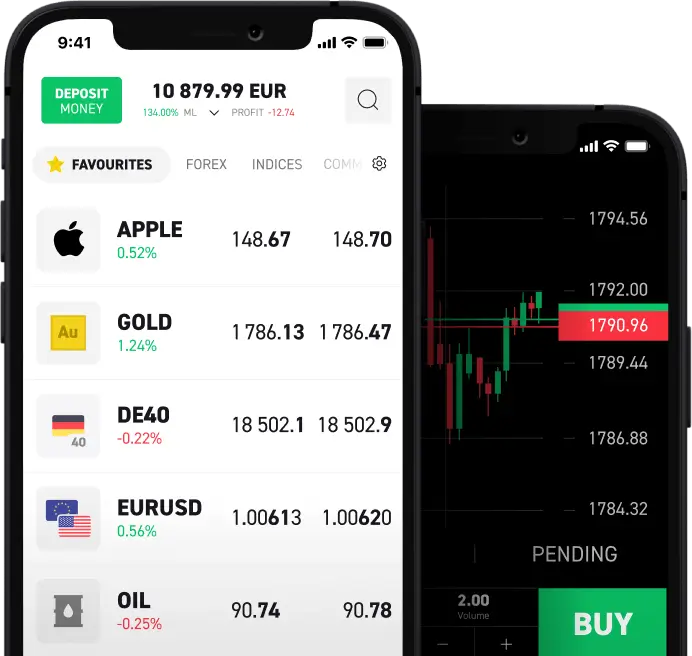
Have all your investments always at hand

With award-winning and easy to use XTB investing app

Latest news

Keep your finger on the pulse with our latest news

US OPEN: Optimism in tech is back, NA...
21 September 2026
Chart of the Day: European Gas (NATGA...
21 September 2026
The Week Ahead
21 September 2026
See more news
GET ACCESS

How to trade CAD/MXN with XTB?

1. Open an account

Complete the form and send relevant documents - all without unnecessary formalities. The opening of an account depends on an appropriateness assessment, verified by a test.

2. Make a deposit

Choose a deposit method convenient for you from a range of available ones, including instant and free payments.

3. Start investing

Wybieraj spośród 11800+ instrumentów.

1. Download the app

Visit your mobile store and download our app completely for free

2. Open an account

Complete the form and send relevant documents - all without unnecessary formalities. The opening of an account depends on an appropriateness assessment, verified by a test.

3. Make a deposit and start investing

Choose a deposit method convenient for you from a range of available ones, including instant and free payments

WHY XTB

Why invest at XTB?

Innovative Platform

We are constantly working on the development of our proprietary and award-winning investment platform to make sure it suits all your needs. Available in both desktop and mobile versions.

Regulation

We are one of the largest stock exchange-listed bokers in the world, regulated by several reputable supervisory authorities. We are also covered by a compensation fund.

Multilingual and highly qualified Customer Support

Our support team is ready to help you 24 hours a day, from Monday to Friday.

LEARN MORE

CAD/MXN Trading: Canadian Dollar vs Mexican Peso | XTB

Learn what drives CAD/MXN, including oil prices, BoC and Banxico policy, US economic data and global risk sentiment. Explore CAD/MXN trading with XTB.

TOP INSTRUMENTS

Check out more instruments

All forex
Education

Explore extensive Knowledge base

Heatwave Market Dynamics
Could Bond Markets Decide Britain's Next Prime Minister?
Keir Starmer Resigns: What It Means for GBP, Gilts and UK Markets
FAQ

Do you have any questions?

CAD/MXN is the forex pair showing how many Mexican Pesos are required to purchase one Canadian Dollar. CAD is the base currency and MXN is the quote currency.

Key factors include oil prices, Bank of Canada and Bank of Mexico monetary policy, interest rate differentials, US economic conditions, Canadian and Mexican economic data, and global risk sentiment.

Canada is a major oil exporter, so changes in crude oil prices can influence the Canadian Dollar. Higher oil prices may support CAD, while falling prices can put pressure on the currency and affect CAD/MXN.

Changes in interest rate expectations in Canada and Mexico can influence demand for CAD and MXN. A widening interest rate differential can affect capital flows and potentially cause movements in the exchange rate.

Canada and Mexico are both closely connected to the US economy through trade and supply chains. Changes in US growth, employment, inflation or trade policy can therefore affect both currencies and CAD/MXN.

CAD/MXN activity can increase during North American trading hours when Canadian, Mexican and US markets are active. Volatility can also rise around central bank decisions, economic data releases and major commodity price movements.

Trading CAD/MXN involves risks including exchange-rate volatility, leverage and changes in market liquidity. Commodity price movements, monetary policy decisions, economic data and global risk sentiment can cause significant price changes.

Analysis of CAD/MXN can include monitoring crude oil prices, Bank of Canada and Bank of Mexico policy, US economic data, Canadian and Mexican economic indicators, and global risk sentiment. Technical analysis can also be used to assess price trends and market levels.

It is best to preced trading in FOREX with proper education - you can start with the Knowledge base we have prepared for you. Once you have the proper knowledge you should open a demo account to get a feel for the market and practice your trading strategy before investing real money. Remember that you can never have to much knowledge and you should constantly educate yourself during your presence on the financial markets.

There is no recipe for succes in the FOREX market. However, there are some aspects that will help you become a better trader. Here are some tips: start with demo account (before risking real money - get a feel for the market and practice your trading strategy), develop a trading plan (it's important to have a clear plan in place before starting trading), use risk management tools (manage your risk when trading, through eg. Stop Loss orders), do not overtrade (it's easy to get caught up in the excitement of trading, but it's important to stick to your plan and not overtrade).

Financial markets are a very complex topic, as they are influenced by various factors, such micro- and macroeconomic events, policies or social changes. You should start your trading experience with proper education about the concepts, assumptions and laws that govern the markets - you can start with the Knowledge base we have prepared for you. Once you have the proper knowledge you should open a demo account to get a feel for the market and practice your trading strategy before investing real money. Remember that you can never have to much knowledge and you should constantly educate yourself during your presence on the financial markets.

Yes, FOREX investing can be risky. The value of currencies can fluctuate significantly due to a variety of factors, including economic conditions, political events and market speculation. It is important for individuals to carefully consider their own financial situation and risk tolerance before investing in FOREX.

When choosing a broker, you should consider a number of aspects related to its activity and offer. These things you should definitely consider: credibility of the invesment firm, cost and fees, instruments offered, investment platform, customer support and additional benefits. If you want to learn more about how to choose your broker visit: investresponsibly.com.

When choosing a FOREX platform there are several factors you should consider: platform ownership (proprietary platform are usually designed in the most intuitive way), availability of DEMO account (where you can test your knowledge practice strategies before risking real money), fees (commissions, spreads etc.), access to educational materials and market news. Before commiting to one platform you should carefully consider all above-mentioned aspects, as they will particulary contribute to the effectiveness of your trading.