CHF/HUF

Trade CHF/HUF CFD

Past performance is not necessarily indicative of future results, and any person acting on this information does so entirely at their own risk.

Fees

Less costs, more investments

Competitive fees

Trade with leverage and keep costs low

Free deposits and withdrawals

Manage funds without costs using selected payment methods

Free account opening

Complete the process in 15 minutes without unnecessary formalities.

Learn

What is CFD trading?

New to CFDs? Learn how CFD trading works and how you can trade on both rising and falling prices without owning the underlying asset. We explain the basics, financial leverage, potential benefits and risks in simple terms.

Read the Beginner’s Guide

Create an account

Open your XTB account in just a few simple steps. Get access to global markets and a wide range of investment opportunities.

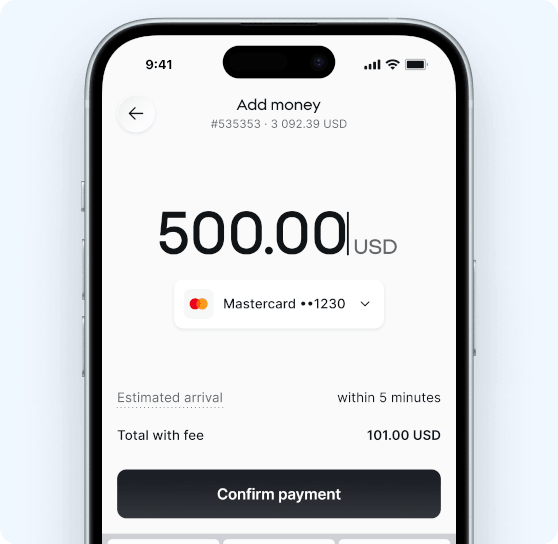
Make a deposit

Add funds to your account using one of the available payment methods. Once your funds are available, you’re ready to start investing.

Trade CHF/HUF

Find CHF/HUF in XTB App, choose how much you want to invest and place your order. Start building your portfolio on your terms.

And make your money work in many ways

Explore more ways to put your money to work - from global stocks, ETFs and more. Discover Investment Plans while you wait for your next investment opportunity.

Popular in the markets

Most traded CFDs

Discover where CFD traders are most active. Explore some of the most traded CFDs across global markets and see which instruments are in focus.

News

Keep your finger on the pulse with our latest market news

We are regulated by leading financial regulatory authorities across multiple markets worldwide.

About instrument

Trade CHF/HUF CFD

The CHF/HUF pair might not steal headlines like the majors, but it tells a fascinating tale of contrast: Swiss precision vs. Hungarian transformation. On one side is the ultra-stable Swiss franc, a safe-haven currency symbolizing Alpine serenity. 

On the other is the Hungarian fort, representing Central Europe's post-communist evolution. Together, this pair becomes a unique lens into two very different economic worlds – one shaped by financial conservatism, the other by structural transition.

In the XTB offer, CHF/HUF is available as a CFD instrument, allowing traders to speculate on the pair without directly holding any currency. However, trading CFDs carries high risk due to the volatile nature of the forex market.

🔑 Key Takeaways

  • CHF/HUF links a Western European safe-haven with a high-yield emerging currency.
     
  • Often used as a barometer of Eastern Europe’s risk appetite versus Swiss monetary stability.
     
  • Sensitive to Swiss National Bank (SNB) policy and Hungary’s inflation swings.
     
  • Often illiquid compared to majors – spreads can widen during uncertainty.
     
  • Traders watch EU-Hungary relations, energy imports, and inflation dynamics closely.
     
  • The pair can serve as a hedge or speculative play on broader EM vs. safe-haven themes.

🌍 Economies Model

Switzerland – Alpine Safe-Haven

Switzerland operates as a financial fortress. Its model revolves around low inflation, high export value (think watches, chocolate, and pharma), and one of the most stable financial systems in the world. The Swiss franc (CHF) is a magnet for capital during crises 🛡️, making it a “go-to” for safety seekers.

Hungary – Emerging EU Economy

Hungary’s economy blends old and new. It’s export-driven (especially to Germany), but vulnerable to energy shocks and external inflation. The Hungarian National Bank (MNB) has frequently intervened to manage rates and FX volatility. The forint (HUF) reflects Hungary's EM-like traits – with higher interest rates but more market risk.

📈 Trading Characteristics

CHF/HUF is a "cross-pair" not traded with the volume of majors, but still presents key trading windows. Expect tighter moves during European hours and wider spreads during Asian sessions 🌙. The pair is sensitive to risk-on/risk-off shifts, with CHF gaining in fear phases. Traders often use it to hedge EM exposure or target macro divergence between the MNB and SNB.

🚨 Major Currency Pair Drivers

  • ⚖️ Interest Rate Divergence: Big swings come when Hungary or Switzerland surprises with monetary decisions.
     
  • 💥 Political Noise in Hungary: EU sanctions, funding disputes, or policy changes can create abrupt volatility in the HUF.
     
  • 📉 SNB Actions: Intervention or surprise comments from SNB leadership can shift CHF valuation sharply.
     
  • 🛢️ Energy Price Shocks: Sudden oil or gas price rises can weigh heavily on HUF.
     
  • 📰 Low Liquidity Risk: Lower daily volume means slippage or gaps can occur during crisis headlines or flash news events.
     
  • 🧭 Global Sentiment Shifts: Broad equity sell-offs or geopolitical stress often push CHF higher and HUF lower – a recipe for sharp moves.

📊 Key Macro & Data Affecting CHF/HUF

💸 Swiss National Bank Interventions
The SNB is known for currency interventions and negative rates. Any hint of CHF weakening or policy change can swing the pair fast.

🔥 Hungarian Inflation & MNB Policy
Hungary has battled high inflation, prompting aggressive rate hikes. Forint’s strength or weakness hinges on how credible and timely these policies are.

⚡ EU Funding and Political Tension
Hungary’s access to EU funds often faces hurdles due to governance issues. Delays or cuts to EU support weaken the HUF.

💼 Swiss Export Sentiment
CHF is partly driven by Swiss exports and global demand for stability. Weak global trade or strong CHF often triggers Swiss policy reactions.

🛢️ Energy Dependency & Prices
Hungary imports much of its energy. High oil or gas prices weigh on the HUF by worsening trade balances and stoking inflation.

🧭 Global Risk Sentiment
CHF/HUF tends to rise during global fear phases as traders flee to safety. When risk appetite is strong, the forint usually gains ground.

📜 Short History & Major Milestones

  • 2000s: CHF/HUF began to stabilize as Hungary moved closer to EU standards.
     
  • 2008 GFC: Safe-haven demand pushed CHF sharply higher vs. HUF.
     
  • 2015: SNB removes EUR/CHF peg, adding volatility to CHF/HUF.
     
  • 2022–2023: Hungary battles soaring inflation; CHF/HUF hits new highs.
     
  • Today: The pair reflects interest rate differentials and broader EU–Hungary politics.

Margin

0.20%

Leverage

500

Commission

-

Market hours

24 h from Sunday 11:00 pm to Friday 10:00 pm CET

Interesting Facts

What to know before investing in CHF/HUF

🇨🇭 Swiss Stability Icon: The Swiss franc (CHF) has earned a reputation as the “bank vault of Europe” due to Switzerland’s long-standing political neutrality, strong institutions, and reputation for fiscal discipline.

🇭🇺 Hungarian High-Rates: Hungary has often maintained some of the highest interest rates in the European Union, making the Hungarian forint (HUF) an attractive target for carry trade strategies. Investors may seek to benefit from the yield advantage offered by Hungarian assets, especially when global risk appetite remains strong. 

🧊 SNB’s Surprise Legacy: In January 2015, the Swiss National Bank (SNB) stunned global markets by unexpectedly ending its minimum exchange rate policy for EUR/CHF, which had been in place to limit excessive franc appreciation. 

🌐 Energy Exposure: Hungary’s high reliance on imported energy makes the Hungarian forint (HUF) particularly sensitive to global energy market developments. With a large share of its energy supply coming from outside the European Union, fluctuations in natural gas and oil prices can have a direct impact on Hungary’s trade balance.

🏛️ Central Bank Contrasts: The Monetary Council of the National Bank of Hungary (MNB) and the Swiss National Bank (SNB) represent two very different approaches to monetary policy. The MNB has often been more reactive, adjusting policy rates and interventions in response to inflation pressures, currency movements, and changing market conditions.

💱 Wide Spreads Warning: Compared with the more actively traded EUR/HUF pair, CHF/HUF typically experiences lower liquidity and wider bid-ask spreads, increasing transaction costs for traders.

FAQ

Do you have more questions?

Find answers to our most commonly asked questions. Still have a question? Please contact our customer support team.

CHF/HUF offers exposure to both sides of Europe: stable Switzerland and volatile Hungary. This contrast often leads to meaningful price moves driven by interest rate spreads, inflation gaps, and global risk appetite. Traders use it to play EM risk, safe-haven flows, or monetary divergence.


CHF/HUF isn’t as liquid as EUR/USD or USD/JPY. It sees fewer daily trades and wider spreads, especially during market stress or off-peak hours. That said, it's still actively monitored by experienced traders and professionals exposed to Swiss or Eastern European markets.


Hungary’s inflation directly impacts the forint’s value. Higher inflation typically weakens the HUF unless the central bank hikes rates decisively. Switzerland, on the other hand, usually maintains low inflation, making the CHF more stable. The inflation gap between both nations often drives directional moves.


Key data includes Hungary’s CPI, interest rate decisions from the MNB, Swiss inflation figures, SNB policy updates, and global energy prices. Political developments in the EU (especially regarding Hungary) also play a pivotal role.


Due to potential volatility, traders often size smaller and monitor spreads closely. Watching for sudden SNB interventions or Hungarian political developments is crucial. Using technical levels combined with macro awareness helps manage this pair.


It is best to proceed trading in FOREX with proper education - you can start with the Knowledge base we have prepared for you. Once you have the proper knowledge you should open a demo account to get a feel for the market and practice your trading strategy before investing real money. Remember that you can never have to much knowledge and you should constantly educate yourself during your presence on the financial markets.

There is no recipe for success in the FOREX market. However, there are some aspects that will help you become a better trader. Here are some tips: start with demo account (before risking real money - get a feel for the market and practice your trading strategy), develop a trading plan (it's important to have a clear plan in place before starting trading), use risk management tools (manage your risk when trading, through eg. Stop Loss orders), do not overtrade (it's easy to get caught up in the excitement of trading, but it's important to stick to your plan and not overtrade).

Financial markets are a very complex topic, as they are influenced by various factors, such micro- and macroeconomic events, policies or social changes. You should start your trading experience with proper education about the concepts, assumptions and laws that govern the markets - you can start with the Knowledge base we have prepared for you. Once you have the proper knowledge you should open a demo account to get a feel for the market and practice your trading strategy before investing real money. Remember that you can never have to much knowledge and you should constantly educate yourself during your presence on the financial markets.

Yes, FOREX investing can be risky. The value of currencies can fluctuate significantly due to a variety of factors, including economic conditions, political events and market speculation. It is important for individuals to carefully consider their own financial situation and risk tolerance before investing in FOREX.

When choosing a broker, you should consider a number of aspects related to its activity and offer. These things you should definitely consider: credibility of the invesment firm, cost and fees, instruments offered, investment platform, customer support and additional benefits. If you want to learn more about how to choose your broker visit: investresponsibly.com.

When choosing a FOREX platform there are several factors you should consider: platform ownership (proprietary platform are usually designed in the most intuitive way), availability of DEMO account (where you can test your knowledge practice strategies before risking real money), fees (commissions, spreads etc.), access to educational materials and market news . Before commiting to one platform you should carefully consider all above-mentioned aspects, as they will particulary contribute to the effectiveness of your trading.

The financial instruments we offer, especially CFDs, can be highly risky. Fractional Shares (FS) is an acquired from XTB fiduciary right to fractional parts of stocks and ETFs. FS are not a separate financial instrument. The limited corporate rights are associated with FS.
This page was not created for investors residing in Brazil. This brokerage is not authorized by the Comissão de Valores Mobiliários (CVM) or the Brazilian Central Bank (BCB). The content of this page should not be characterized as an investment offer in Brazil or for investors residing in that country.
Losses can exceed deposits