



Gulf Arab and European leaders estimate that a US-Iran peace agreement could take around six months to finalize. They are urging both sides to extend the current ceasefire to allow more time for negotiations.
- Gulf states still believe Iran is pursuing nuclear weapons capabilities, despite recent US-Israeli strikes.
- According to regional officials, any deal should prevent Iran from enriching uranium and ban long-range ballistic missiles.
- Gulf leaders are largely against a return to fighting and prefer a diplomatic solution led by the United States.
- A major immediate demand is the reopening of the Strait of Hormuz to restore energy flows.
- Officials privately warned that a global food crisis could emerge if the waterway remains closed beyond next month.
- Energy prices may rise further if the conflict continues past the proposed negotiation timeline.
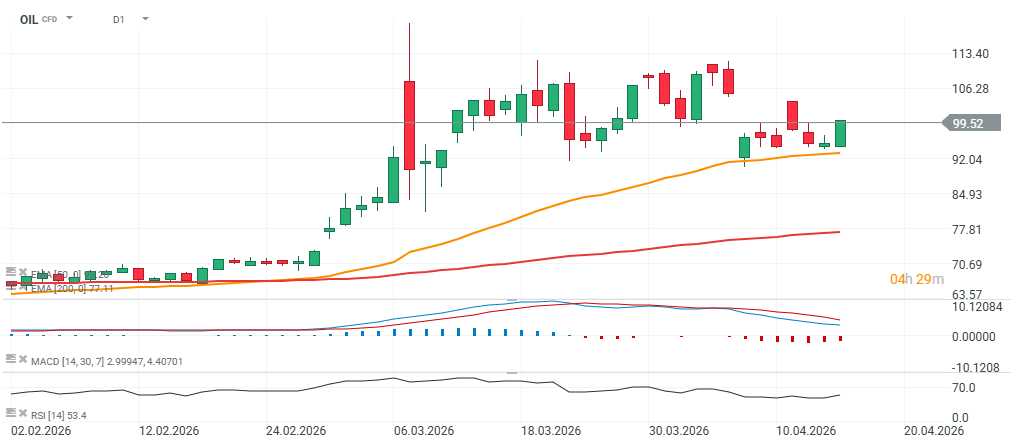
Oil is rebounding today and moving back toward $100 per barrel, indicating that stress in the energy market remains far from easing.
Source: xStation5
Source: xStation5


Daily summary 📈 Precious metals and stock indices rebound as Treasury yields fall


Oil gains as U.S. crude inventories fall


U.S. indices attempt to rebound after recent losses


Hot inflation data from the US🔥📈 PPI and retail sales are rising!