



NFP: 119k (exp. 50k, prev. 22k, rev. -4k)
Unemployment rate: 4.4% (exp. 4.3%, prev. 4.3%)
Earnings M/M: 0.2% (exp. 0.3%, prev. 0.3%, rev. 0.4%)
Earnings Y/Y: 3.8% (exp. 3.7%, prev. 3.7%, rev. 3.8%)
Initial Jobless Claims (w/e 15th Nov.): 220k (exp. 230k, prev. 232k)
Mixed US labor market data. On one hand, there was a high Non-Farm Payrolls (NFP) reading, but this was offset by an upward revision to the unemployment rate as well. Monthly wage growth came in lower, but the year-over-year figures present a mixed picture of the situation. Weekly jobless claims were lower than expected.
Jerome Powell highlighted that the Federal Reserve is now placing more emphasis on the unemployment rate rather than the actual payroll numbers, given the unusual labor market dynamics. He explained that the job market is in a "low hire, low fire" state due to constraints like lower immigration and falling labor force participation, creating a less dynamic, more balanced but fragile labor market"low hire, low fire". These labor market conditions mean that job growth is slower and layoffs have been subdued, leading to a focus on unemployment rate trends as a key signal. This context possibly explains why the US100 is gaining, reflecting investor optimism, while the swap market is pricing in a higher probability of rate cuts, but expecting them only after a pause in December.
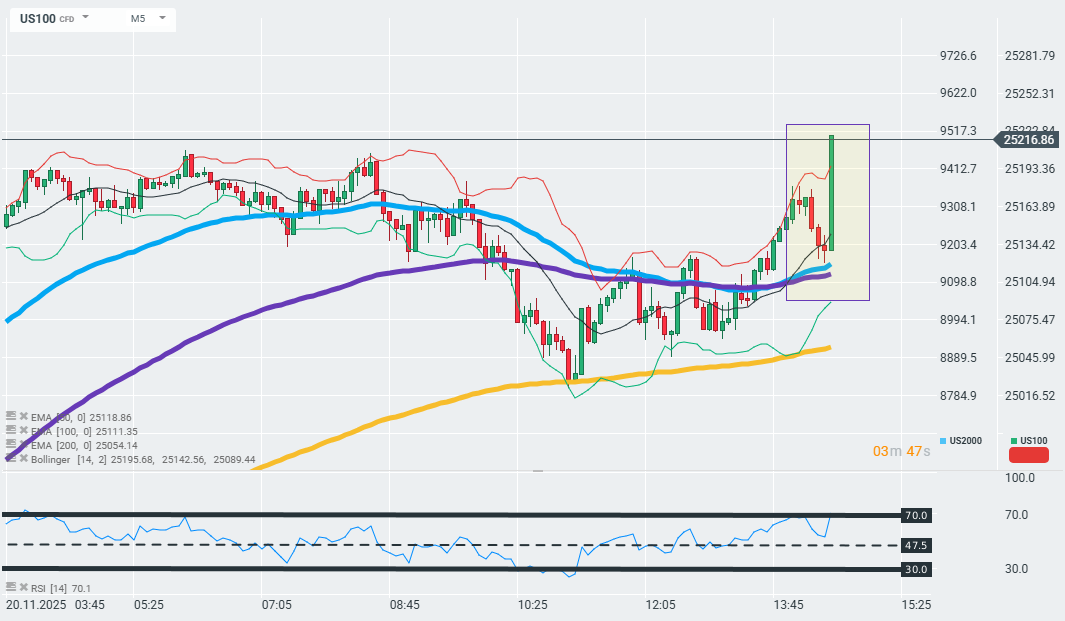
Source: xStation


Daily summary 📈 Precious metals and stock indices rebound as Treasury yields fall


Oil gains as U.S. crude inventories fall


U.S. indices attempt to rebound after recent losses


US Open: Nasdaq 100 extends losses 🚩 AI stocks under pressure, CoreWeave falls 8%