


The British pound is today the weakest G10 currency, after a significantly weaker-than-expected inflation report opened the door wide for the first Bank of England rate cut since August. The broad month-on-month price decline marks an end to the persistent inflation stickiness seen in the UK in recent months.
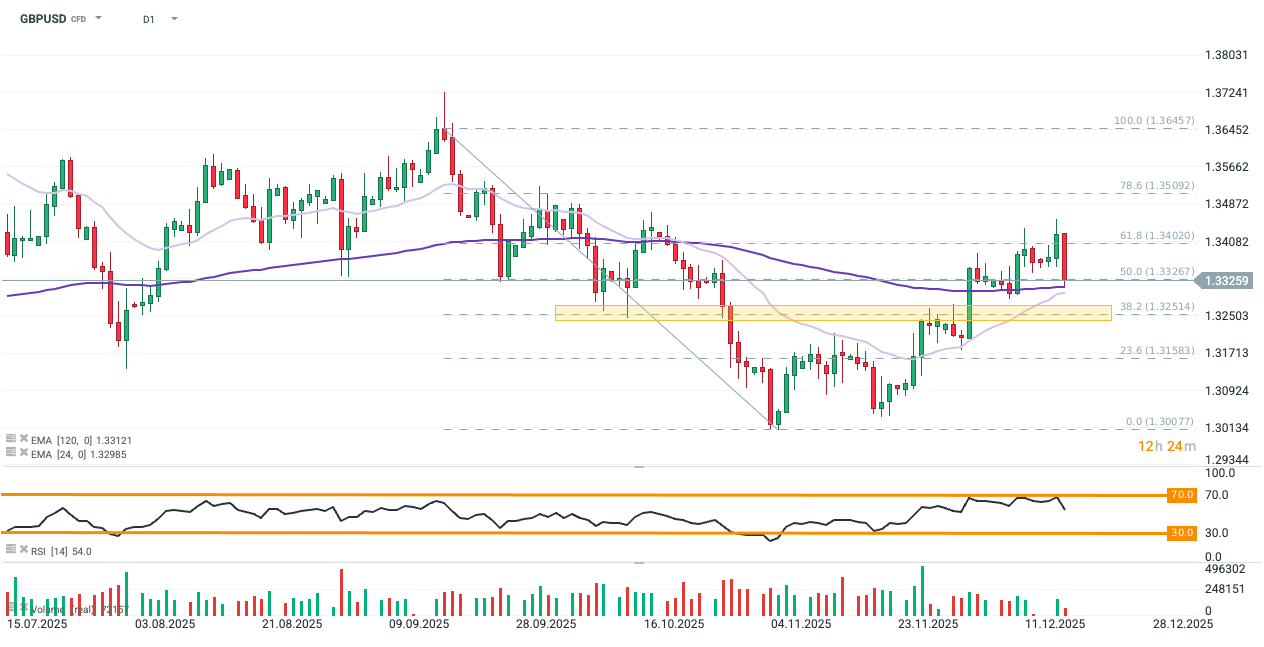
GBPUSD slipped to the 100-day exponential moving average (EMA100, dark purple), breaking the uptrend that began in November. Further weakness will largely depend on BoE communication, but given the global slowdown in rate cuts (except in the U.S.), a retest of the 1.30 level seems inevitable. Source: xStation5
What drives GBPUSD today?
-
The latest UK inflation report showed a broad, unexpected drop in prices compared with the previous month. CPI fell in November to 3.2% from 3.6% in October (-0.2% MoM). Core CPI also dropped to 3.2% (forecast and previous 3.4%), while producer price inflation eased to 3.5% from 3.6%.
-
The largest price declines were in the food and beverages category (from 4.9% to 4.2%), a key focus for the BoE as it gauges household inflation expectations. Alcohol, tobacco, and household services also contributed to the declines.
-
The reading strongly increases expectations for a BoE rate cut. UK rates are currently the highest among G10 countries, with previous cuts paused as inflation returned below 4% (3.8% in July–September). The faster-than-expected drop in price pressures has boosted market expectations for monetary easing, interrupting pound gains.
-
The market currently prices in a nearly 98% probability of a 25bp rate cut at tomorrow’s BoE meeting, with a further cut expected in April 2026.


Three markets to watch next week (23.10.2026)

BREAKING: France slows down, Germany holds on. Euro falls below 1.12

Chart of the Day: Is USDJPY running out of road? Inflation forces the BoJ to act, but the Fed could spoil the Yen’s rally



Macro Calendar: Preliminary PMI Readings and Earnings Ahead