



Silver and gold have continued the strong gains of almost the entire previous week. Today saw a test of the $2732 per ounce level in gold, while silver added more than 1.3% intraday and climbed above $34. Such a large scale of appreciation in precious metals is primarily the result of geopolitical uncertainty, which was exacerbated after the weekend by the drone attack of the Israeli Prime Minister's private residence. Moreover, the cycle of interest rate cuts is progressing, making capital allocations in relatively uncertain times even more attractive in precious metals.
From a technical point of view, silver maintains the foundations of an upward trend, indicated by the upward-directed moving averages, which additionally (in the case of the 50-week average) maintained the overall trend in August this year. At this point, it seems that the main control zone for demand and supply is the previously mentioned $34 level. Maintaining it in the long term could be key to maintaining the overall uptrend on silver in the long term. In the long term, on the other hand, the $35 zone is expected to be an important resistance level.
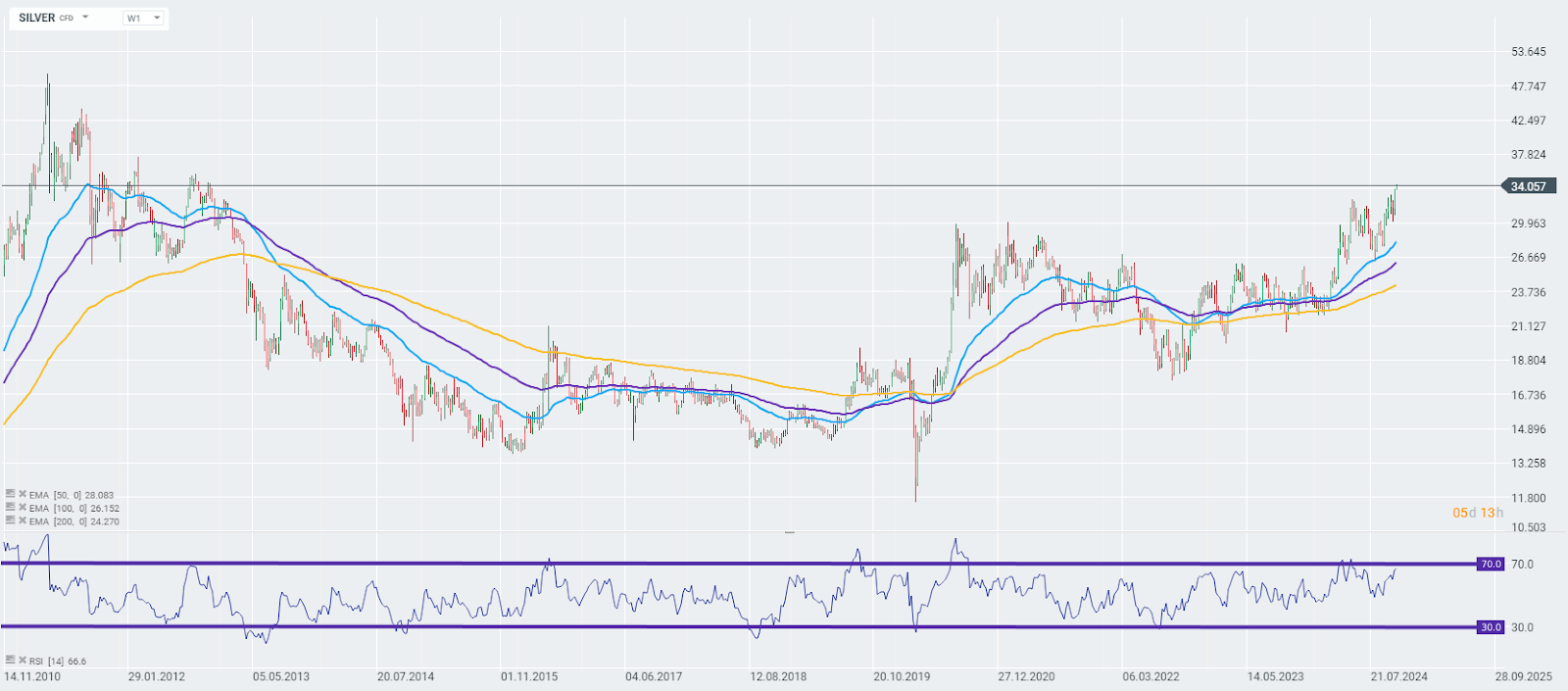
Source: xStation



Daily Summary: Friday offers no relief; the US100 drops 2%🚨


Three Markets to Watch Next Week (October 16, 2026)

Chart of the Day: NATGAS - Are there chances for a seasonal rebound amid warm weather?


Morning Briefing: Warsh's silence on interest rates. AI debt fears cooled sentiment, but a rebound is visible