



Japan’s economy contracted in Q3 for the first time in six quarters, falling 0.4% q/q (−1.8% annualized). The decline is a result of U.S. tariffs, which hit exports, while new housing regulations weakened demand for homes. Although the slowdown was milder than expected, it increased pressure on policymakers to implement a new fiscal package — potentially worth more than 17 trillion JPY, aimed at supporting households and key sectors.
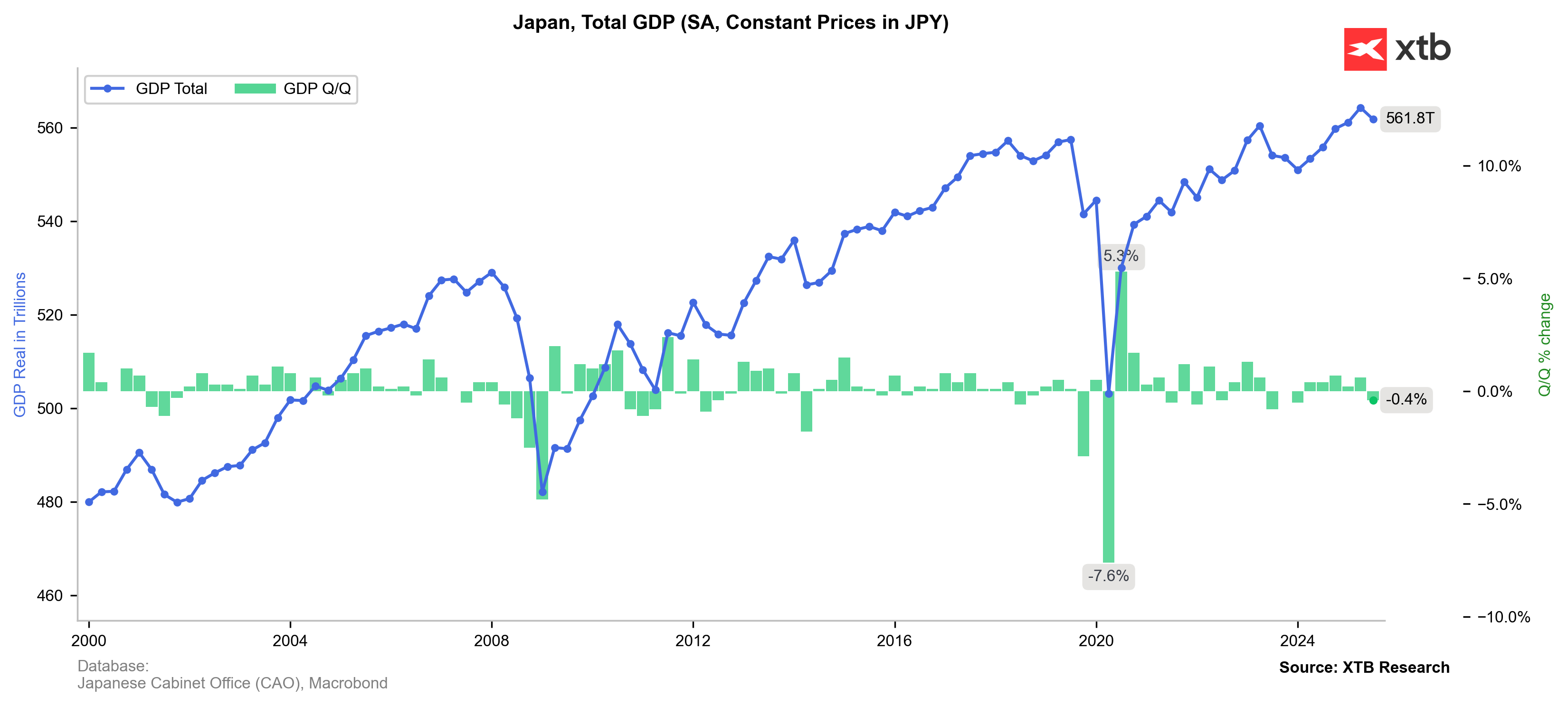
At the same time, September industrial production surprised to the upside, and capital investment remained resilient, suggesting that growth fundamentals are not collapsing. However, the drop in business sentiment within the industrial sector is noteworthy, as it diverges significantly from the global rebound seen in recent months.
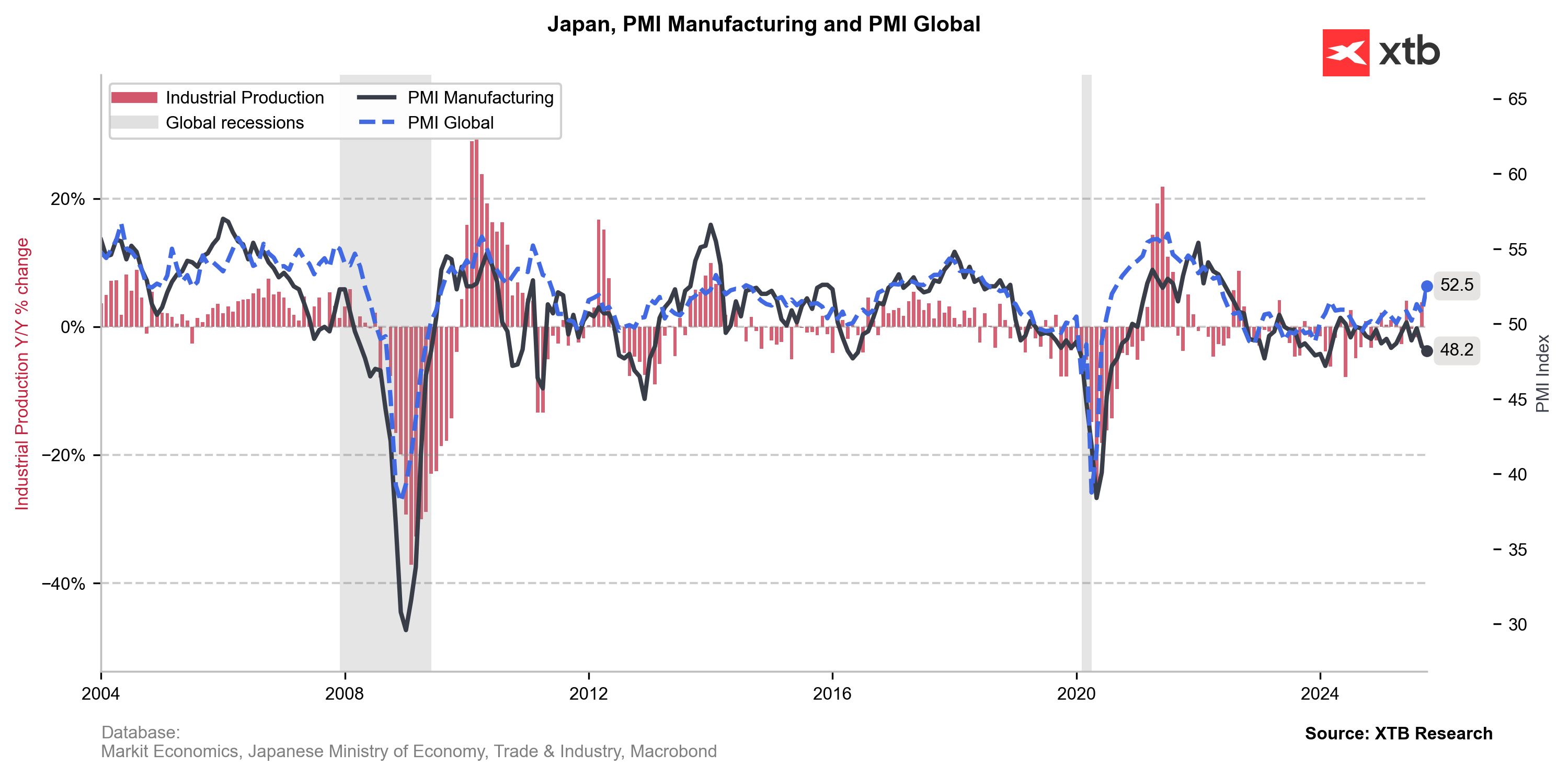
The Bank of Japan remains cautious: core inflation is still below target, Governor Ueda emphasizes the need for patience, and several government advisers argue that rate hikes should be postponed until spring 2026.
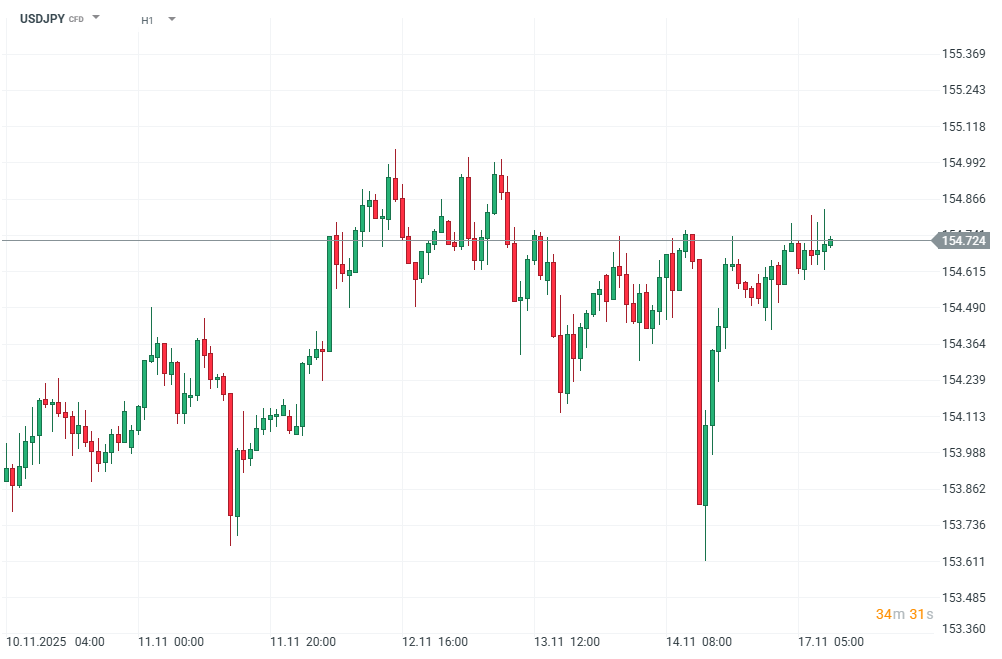
Financial markets reacted much more strongly to fiscal concerns than to the GDP figure itself. Yields on long-term government bonds rose sharply — the yield on 20-year JGBs reached levels not seen since 1999, and the market has become more cautious regarding such a large debt issuance. Concerns about increased bond supply, rising fiscal risk premium, and the size of the stimulus package pushed long-term bond prices lower. At present, we do not see a significant reaction in the FX market: the yen is down only 0.00–0.10% against G10 currencies, while the JP225 index is falling moderately by 0.28%.



Daily Summary: Buyers Refuse to Give In

US Natural gas extends declines 🔥📉



US OPEN: The wave of AI concerns is building again, oil returns near highs


Chart of the Day: US100 (Nasdaq 100). Rebound in AI trade vs. weakening technical picture