



-
The main factor driving today’s volatility was the sharp rise in US Treasury yields, which sent the stock market on a real rollercoaster ride. The yield on 30-year bonds rose this week to its highest level since 2007, reaching around 5.26 per cent, whilst the benchmark yield on 10-year bonds exceeded 4.7 per cent, its highest level since January 2025. Investors have lost faith in the determination of the new Fed chair, Kevin Warsh, to tackle inflation, despite his assurances that he remains committed to the process, although he himself admitted that he does not have a magic wand. The market was also digesting the financial results of major technology firms, including Apple and Amazon, which further heightened trading volatility during the session.
-
On the geopolitical front, the Iranian army reported attacks on strategic US military bases in Kuwait and Bahrain, in response to the latest wave of US strikes against Iran. Iran also attacked oil tankers in the Strait of Hormuz, a key chokepoint for global trade, which briefly drove up energy prices due to fears of supply disruptions. Despite these tensions, there were signs on Friday that oil flows through the Strait of Hormuz were resuming, which temporarily eased supply concerns in the oil market.
-
The macroeconomic data published on Friday proved to be mixed, but generally confirmed the persistent inflationary pressure in the US economy. The labour cost index for the second quarter rose by 0.9 per cent quarter-on-quarter, exceeding the forecast of 0.8 per cent, fuelling concerns about the persistence of wage pressure. At the same time, consumer sentiment in the University of Michigan survey improved to 55.2 points, better than the expected 54.0, whilst annual inflation expectations fell to 4.2 per cent, the lowest since March. In the eurozone, inflation rose to 2.9 per cent in July, with marked differences between member states.
-
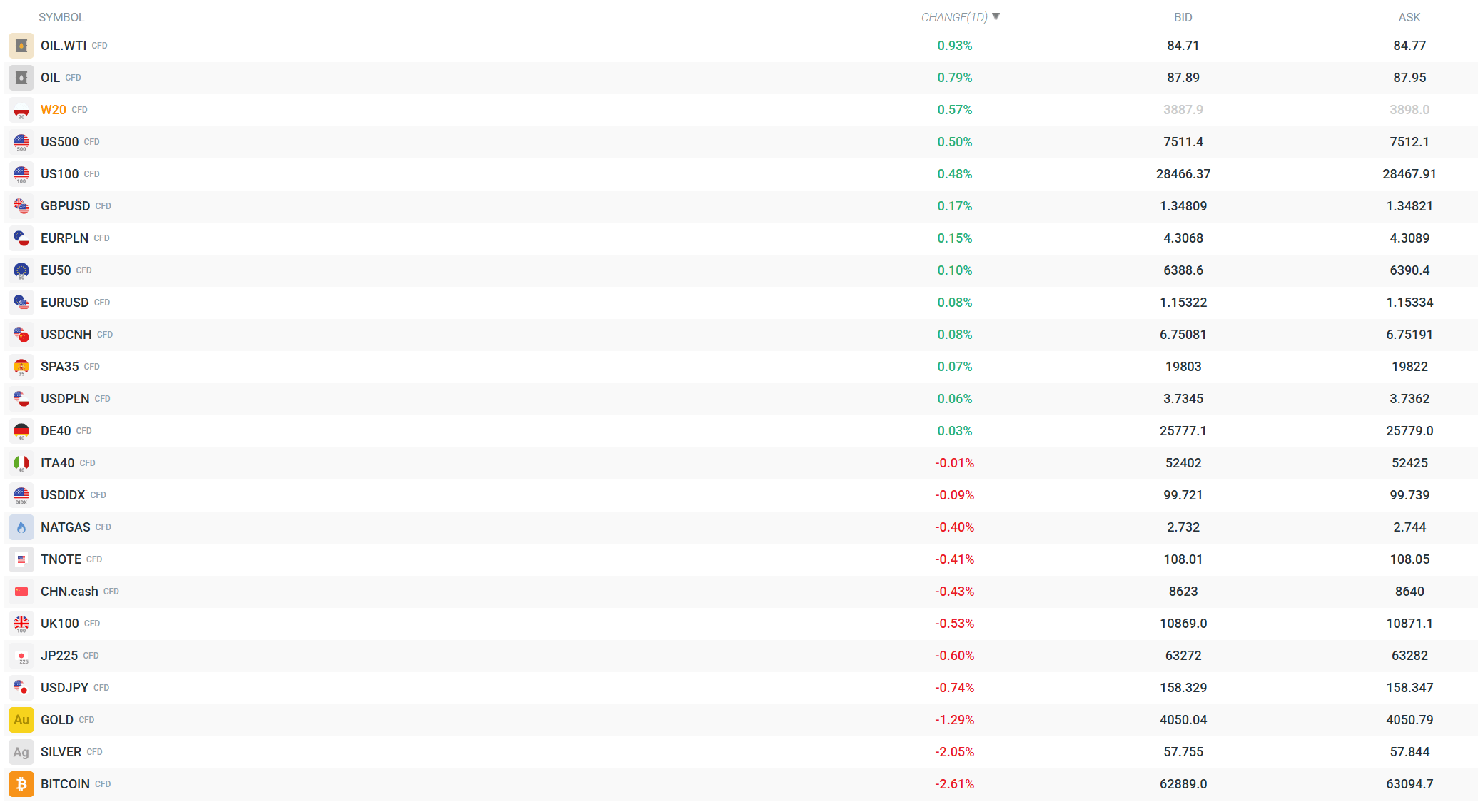
The main US stock market indices are currently trading in positive territory despite earlier sharp fluctuations. The Nasdaq Composite gained 0.6 per cent, the S&P 500 rose by 0.4 per cent, and the Dow Jones climbed by 228 points, or 0.5 per cent. The iShares Semiconductor ETF surged by 5.4 per cent, building on Thursday’s massive 8.5 per cent rise following Microsoft’s excellent results. Futures on European indices were more mixed, with the German DE40 up slightly by 0.06 per cent, whilst the UK100 fell by 0.50 per cent and the Chinese CHN.cash by 0.42 per cent.
-
The stock market was dominated by starkly contrasting reactions to the hyperscalers’ results. Apple fell by over 9 per cent, despite its third-fiscal-quarter revenue exceeding forecasts thanks to a 22 per cent rise in iPhone sales; however, revenue from services and the outlook for the next quarter fell short of expectations. Amazon rose by as much as 11 per cent following better-than-expected revenue, buoyed by the strength of its cloud segment, which bolstered investor confidence in spending on artificial intelligence. Other notable movements included a 10 per cent fall in Novo Nordisk following a failed clinical trial of a cardiac drug, a spectacular 133 per cent rise in Replimune following a positive opinion from the FDA panel, and solid results from Chevron and Exxon Mobil, supported by high oil prices amid the war with Iran.
-
On the foreign exchange market, the dollar remained relatively stable, although the USDIDX index slipped slightly by 0.03 per cent. The Japanese yen fell by 0.49 per cent against the dollar, and analysts are highlighting the extremely low five-year Z-score for USDJPY, which, combined with warnings from the US Treasury Department that it stands ready to intervene jointly with the Bank of Japan, could trigger a sharp reversal in the exchange rate. The zloty remained stable against the euro and the dollar, recording slight gains of between 0.10 and 0.15 per cent.
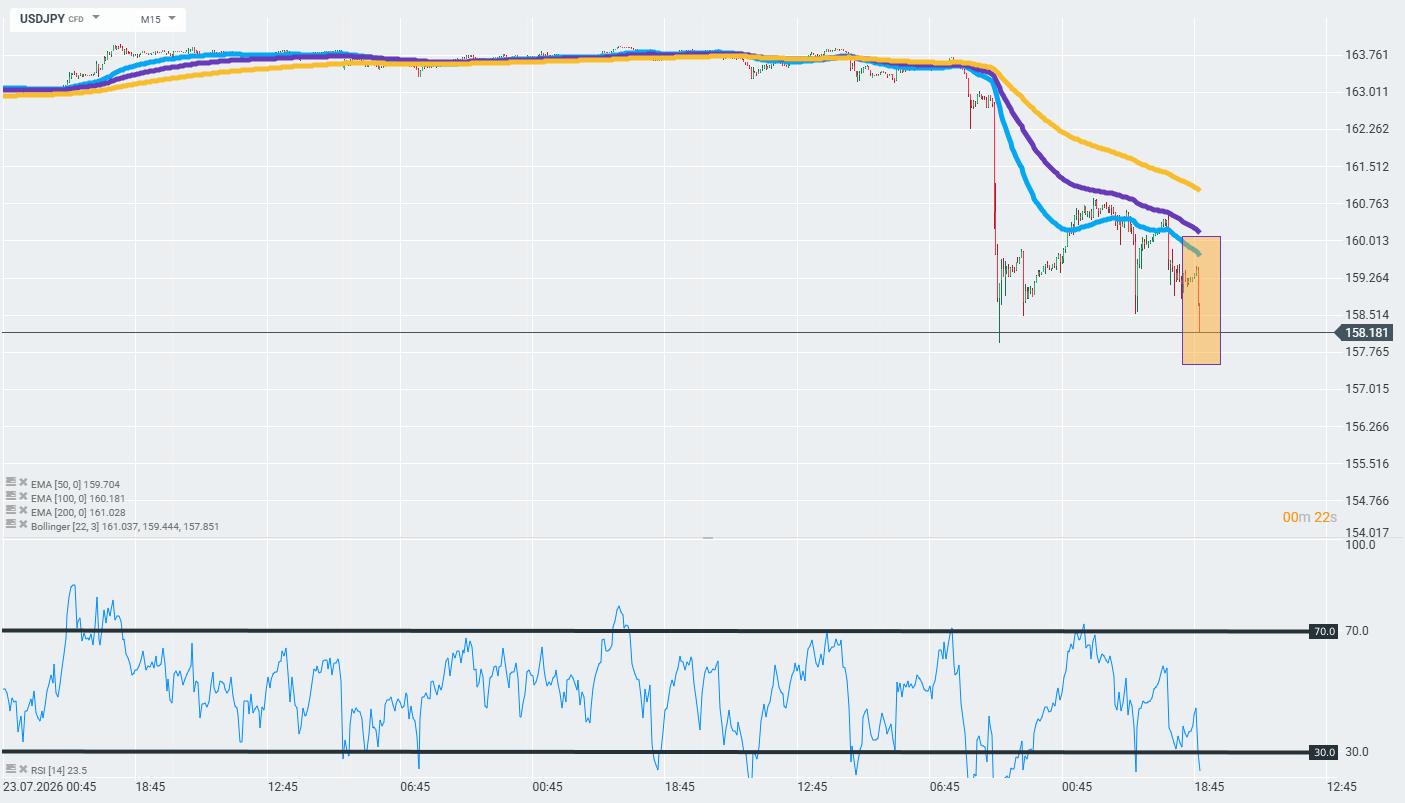
A new rumour about currency intervention has emerged in the media. The yen has strengthened by 0.7% against the US dollar over the last 15 minutes. Source: xStation
-
The energy commodities market surged once again on the back of a geopolitical risk premium, with WTI crude gaining 1.10 per cent and Brent 0.92 per cent on the day, following an impressive monthly rise in oil prices of nearly 25 per cent. European natural gas closed the month with an astronomical gain of over 33 per cent, reflecting concerns over supplies ahead of the heating season. Gold and silver came under heavy pressure from hawkish data from the Fed, falling by 1.32 per cent and 2.15 per cent respectively, whilst cocoa continued its strong rebound, gaining over 6 per cent on Friday on the back of supply concerns in West Africa.
-
Bitcoin fell by 2.77 per cent, following a general decline in risk appetite triggered by rising bond yields and the hawkish stance of FOMC members. The pressure on non-interest-bearing assets affected both precious metals and cryptocurrencies, illustrating just how heavily the current macroeconomic environment is weighing on the valuations of speculative assets.
Source: xStation


Three markets to watch next week (23.10.2026)



Daily Summary: Oil at five-month highs, indices under pressure (23.10.2026)

US Open: Further declines on Wall Street, Brent above 111 USD, AI correction continues (14.10.2026)

BREAKING: France slows down, Germany holds on. Euro falls below 1.12