


The DE40 index is currently losing around 3%, testing key support for the uptrend marked by the 200-day exponential moving average, which halted declines in November 2025. The main catalyst is the sharp rise in European TTF gas prices, which have exceeded EUR 50 per MWh with an increase of over 60% since the beginning of the week, caused by the suspension of LNG supplies from Qatar following incidents in the Strait of Hormuz. Low gas stocks in Europe at around 30% and suspended LNG tankers are fuelling concerns about energy costs, hitting import-dependent economies. The market fears that the surge in energy prices in Europe will cause consumer prices to rise sharply, pushing up overall inflation and ultimately forcing the ECB to resume its cycle of interest rate hikes in Europe. Bookmakers such as Polymarket have seen increased interest in contracts betting on rate hikes today, but instruments based on swaps and European bond yields continue to show that the ECB is unlikely to raise interest rates by 25 basis points by the end of the year.
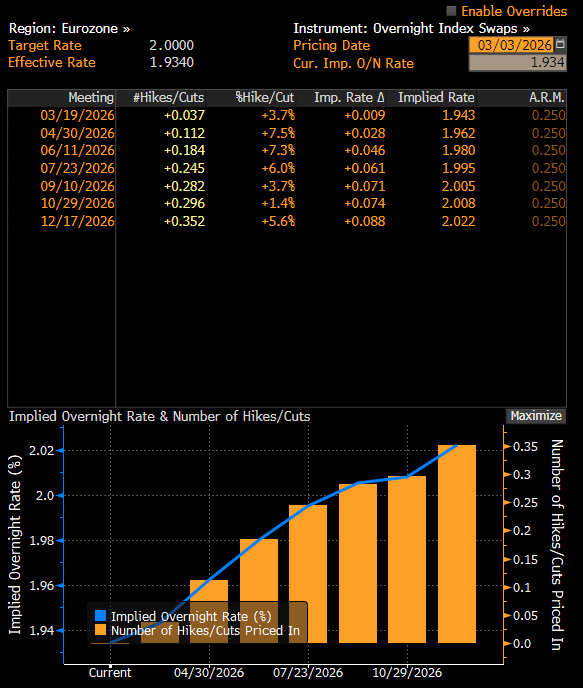
Source: Bloomberg Financial LP
Investors are also looking today at preliminary CPI data from the eurozone for February, which surprised with higher-than-expected values: 1.9% y/y compared to the expected 1.7% and the previous 1.7%. Core CPI rose by 2.4% y/y (forecast 2.2%; previous 2.2%), while monthly CPI rose by 0.7% (forecast 0.5%; previous -0.6%). These strong readings further increase inflation risks in Europe today in the context of rising energy prices.
Interestingly, a similar situation prevails in Japan and Korea, where the JP225 is down more than 4% and local gas prices have soared even higher than in Europe, with JKM LNG reaching levels above USD 13/MMBt, the highest since early 2025. If the situation does not stabilise within the next two weeks, the euro and DE40 may experience even greater corrections, and the European Central Bank could theoretically return to considering interest rate hikes, which could be disastrous for economic recovery and further weaken local markets. On the other hand, however, it should be remembered that the resumption of full traffic in the Strait of Hormuz could rapidly reverse the current movements.
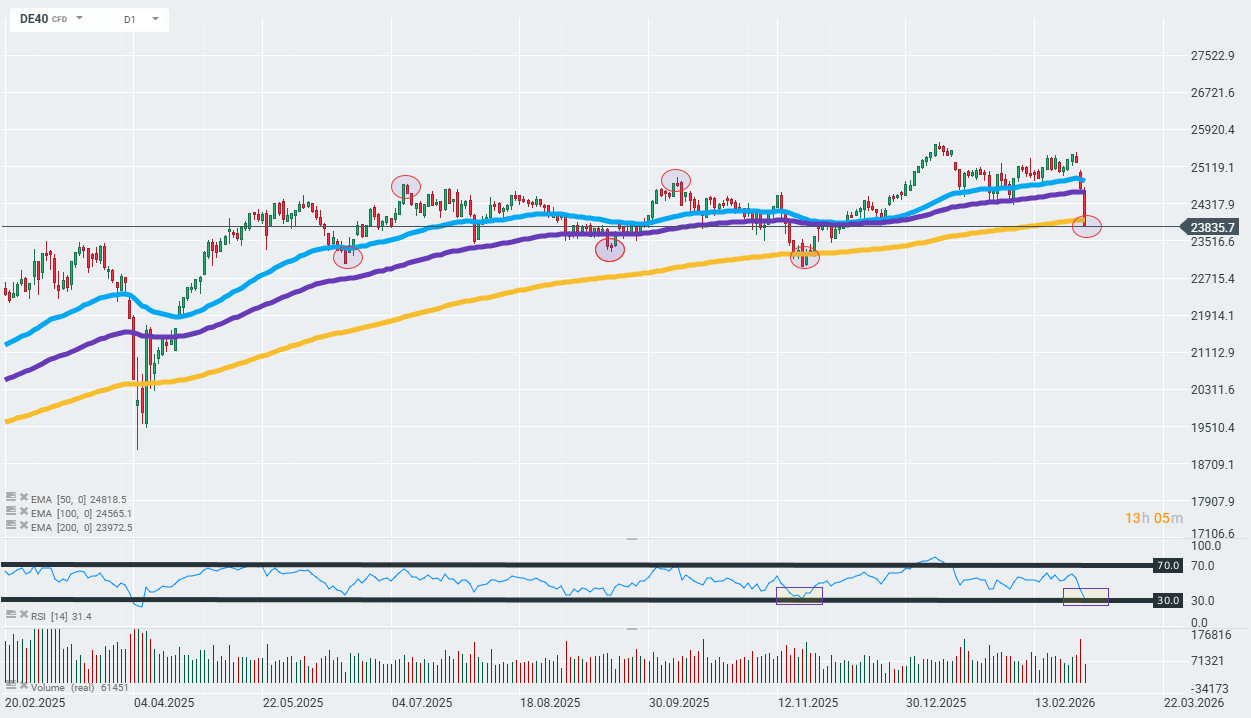
The German DE40 is now testing a key support level marked by the 200-day EMA (gold curve on the chart). It is worth noting that in the past, this zone has repeatedly been a point of demand reaction, which has revived after deeper sell-offs. What happens next with the DE40 will largely depend on the highly volatile geopolitical situation and, above all, the issue of transport through the Strait, which is currently relatively deserted. Source: xStation
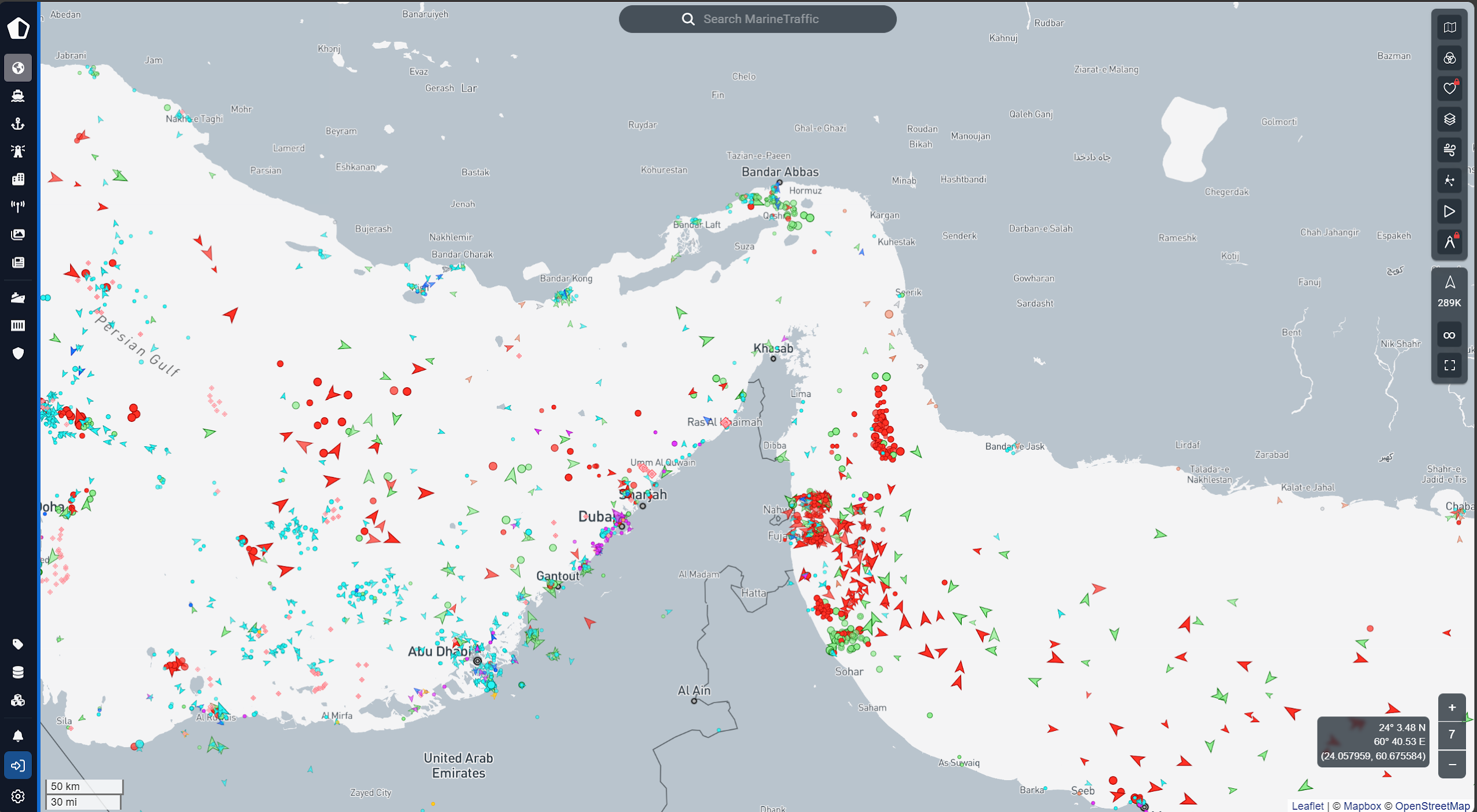
The current state of transport in the Strait of Hormuz is very limited. With the exception of a few ships flying the Iranian flag, most tankers from oil-producing countries have stopped in zones or ports just before the strait. Source: marinetraffic


Three Markets to Watch Next Week (09.10.2026)



Daily Summary: A Shallow Rebound Ahead of Earnings Season


US OPEN: Trump de-escalates, OpenAI supports Wall Street sentiment
🔼 Gold gains 1.2%