



Unprecedented intervention by US Treasury Secretary Scott Bessent has triggered deep reshuffling in the global financial system. The decision to at least double the scale of long-term Treasury bond buybacks (to a minimum of $4 billion per operation in 10–30 year maturities) halted the rise in US debt yields, but simultaneously occurred at the expense of the currency itself.
The dollar took the full brunt of the market adjustment, pushing the EURUSD rate toward the key resistance level at 1.1700. Although the Treasury Department's decision itself is intended primarily to limit the recent rise in yields at the long end of the curve, the move in TNOTES does not justify such a large move in the dollar. Yesterday's FOMC minutes provided no new market information and indicate that a fairly large faction remains within the US central bank that would like to raise interest rates now, though Kevin Warsh himself is not among them.
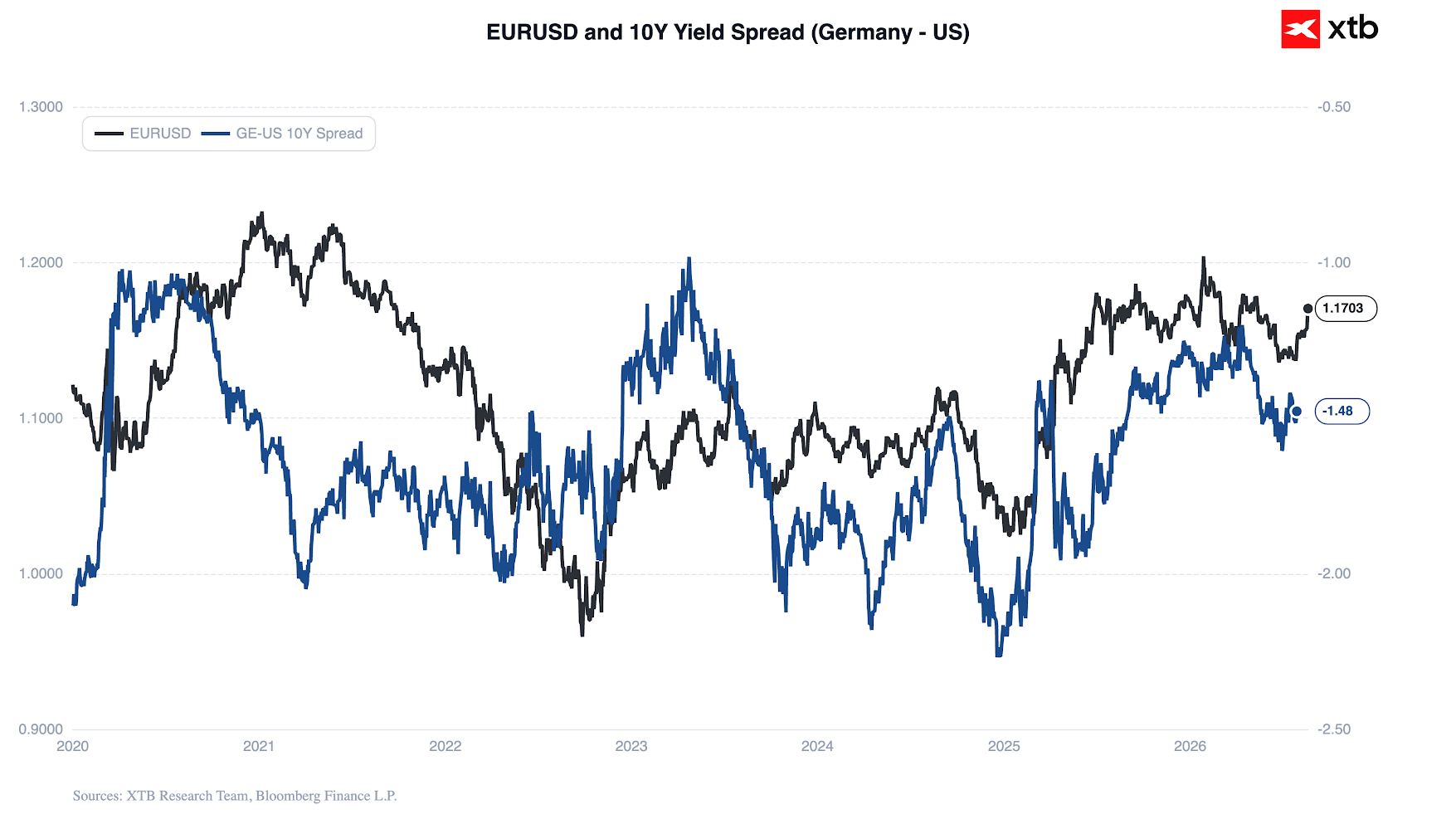 EURUSD rebounds to 1.17, even though the move in bond prices is relatively small. Interestingly, the yield spread between Germany and the US has even fallen recently. Source: Bloomberg Finance LP, XTB
Bessent's Plan: A fuse, but not a cure for debt
US public debt crossing the $40 trillion barrier and 30-year paper yields reaching 5.34% forced Washington to abandon the previous principle of "predictability" in debt management. In the assessment of Wall Street analysts (including from Franklin Templeton, Nomura, or Barrenjoey), Bessent's actions act only as a market "fuse."
An operation aimed at buying back less liquid, longer-maturity bonds eases temporary liquidity tensions but does not eliminate fundamental problems such as:
- Giant fiscal deficit and record supply of government papers.
- Persistent inflation, which has been fueled by high energy prices for nearly half a year.
- Supply pressure from the AI sector, which is mass-emitting corporate bonds to finance infrastructure and is seen by some as competition for government securities.
The situation remained tense not only in the United States but also in Europe and Japan, where we observed yield increases on long-term debt securities to the highest levels in years.
The narrative of dollar devaluation
Since the Treasury Department's intervention failed to permanently lower yields, the US dollar became the market's "safety valve." Analysts point to Washington's growing readiness to manually steer the market, starting from currency interventions coordinated with Japan to artificially suppressing debt maturity costs. Deutsche Bank in its commentary indicates that the Treasury can buy back bonds, but at the same time cannot "buy back the dollar." The central bank could be responsible for that, and as is known, Kevin Warsh is not a very big fan of the Fed's bloated balance sheet. Nevertheless, at least for the moment, we can notice that capital may seek refuge in other places, such as the stock market, gold, or other safe-haven currencies like the Swiss franc.
EURUSD tests 1.17 while EM currencies may rest after the recent sell-off
The dollar's weakness can be seen with the naked eye on the most important pair, EURUSD, which following yesterday's strong growth is continuing the move today and crossing the 1.17 level. Recently we observed slight overbuying of the US dollar and overselling of other currencies, such as the euro or Australian dollar. Now, with the new US strategy, this situation may reverse.
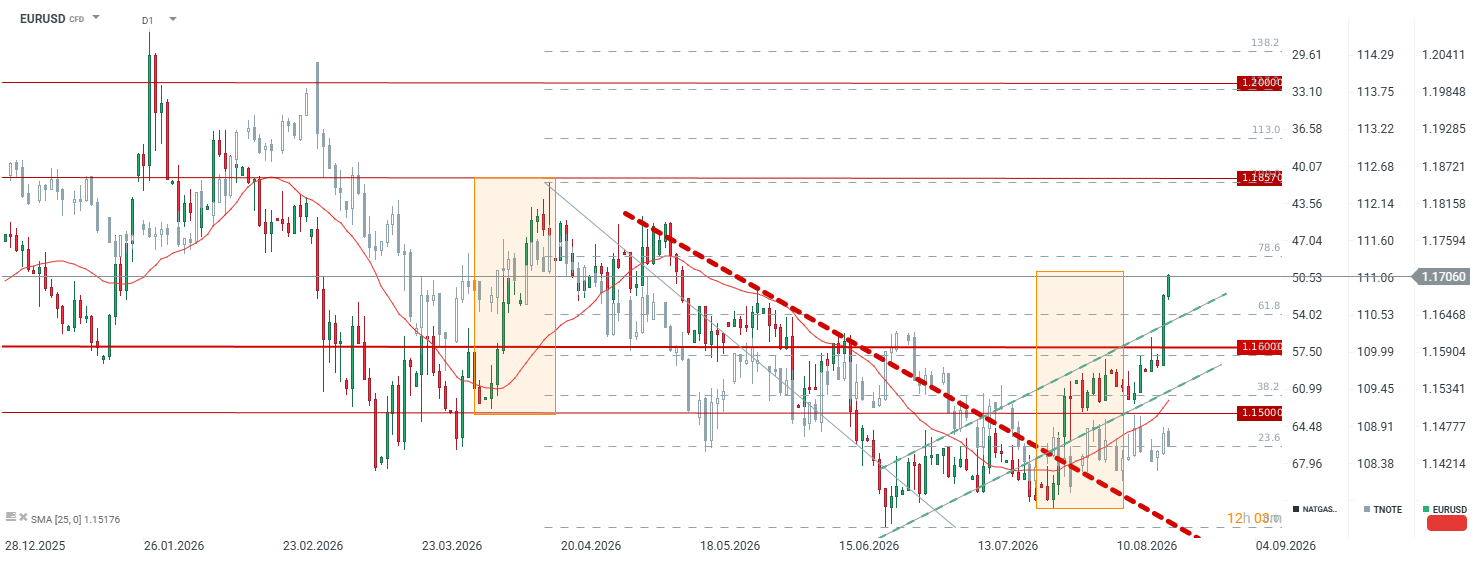 EURUSD breaks out upward from the growth trend channel and achieves a rebound range similar to April this year. Breaking the 61.8 retracement of the last large downward wave negates the strength of that impulse, which may allow for an attempt to test the 1.1780-1.1800 area. On the other hand, it is worth noting that US bond prices at the moment do not justify such high levels. Source: xStation5
Speculator positioning in key markets
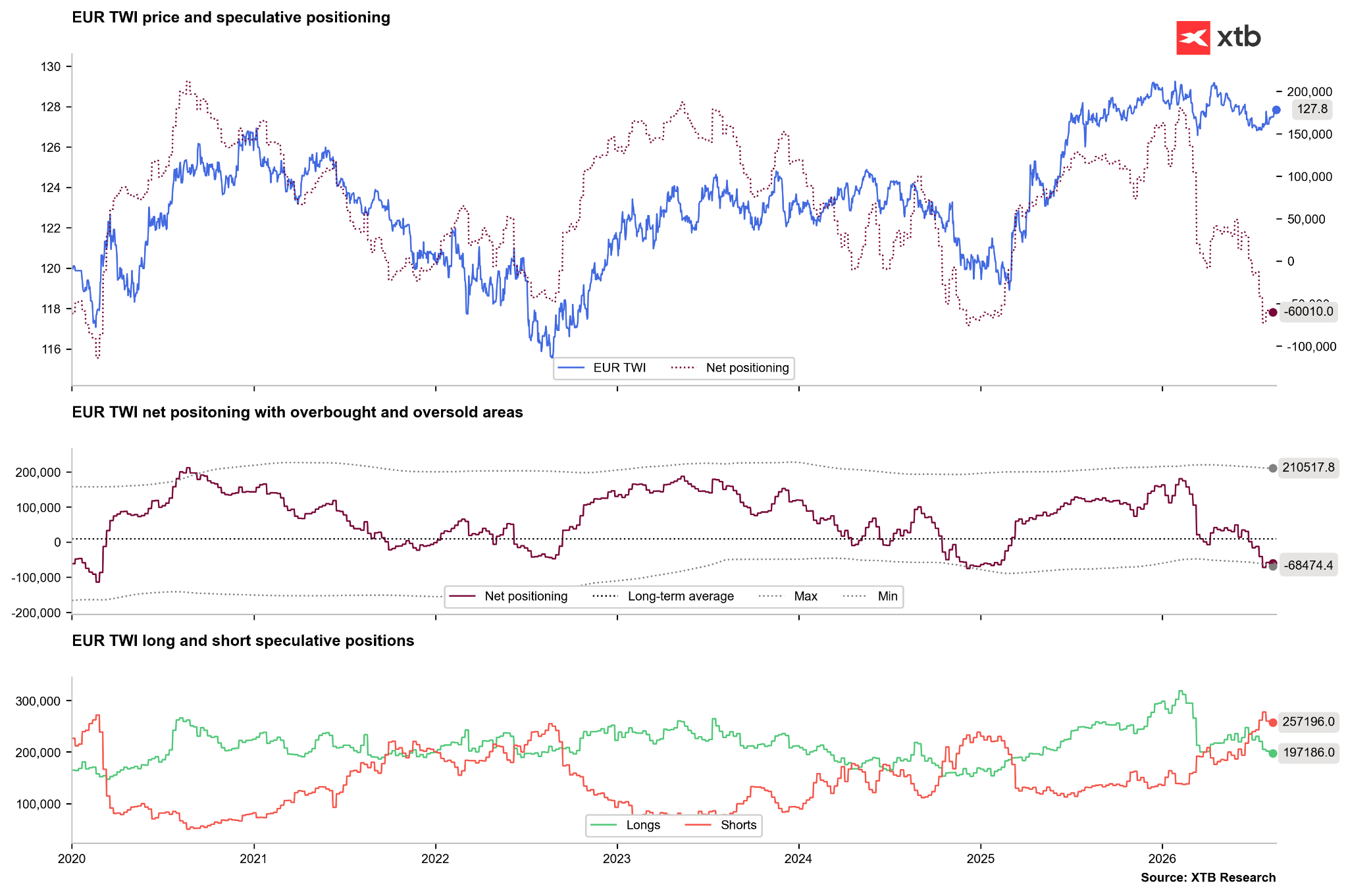 The euro is currently the most heavily oversold on contracts since the beginning of 2025. Such extreme negative positioning can work in favor of a further rebound on the EURUSD pair if speculators start changing the direction of their positions. Source: Bloomberg Finance LP, XTB
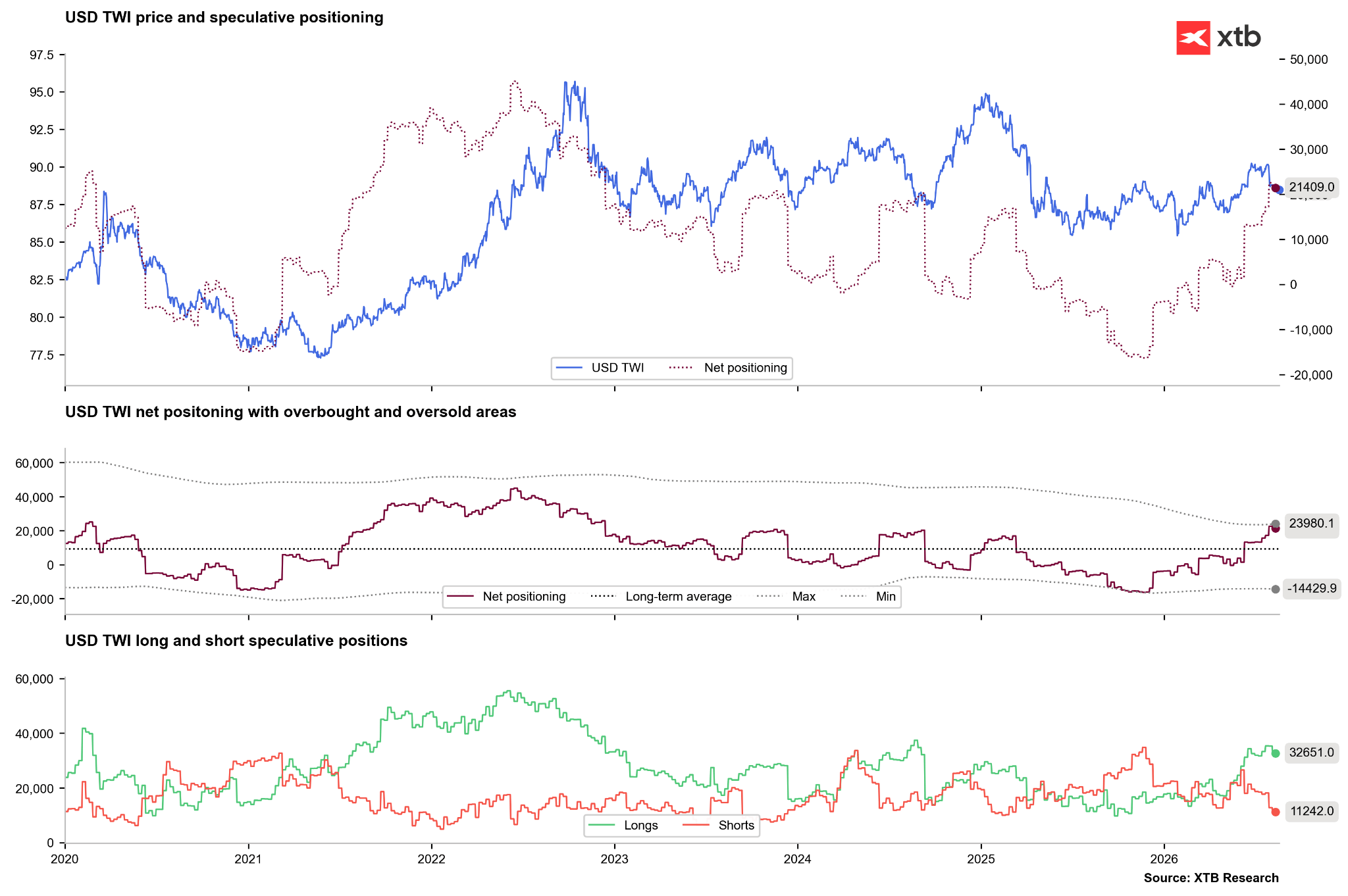 Net positions on the dollar index rose to the highest level since 2023. Source: Bloomberg Finance LP, XTB
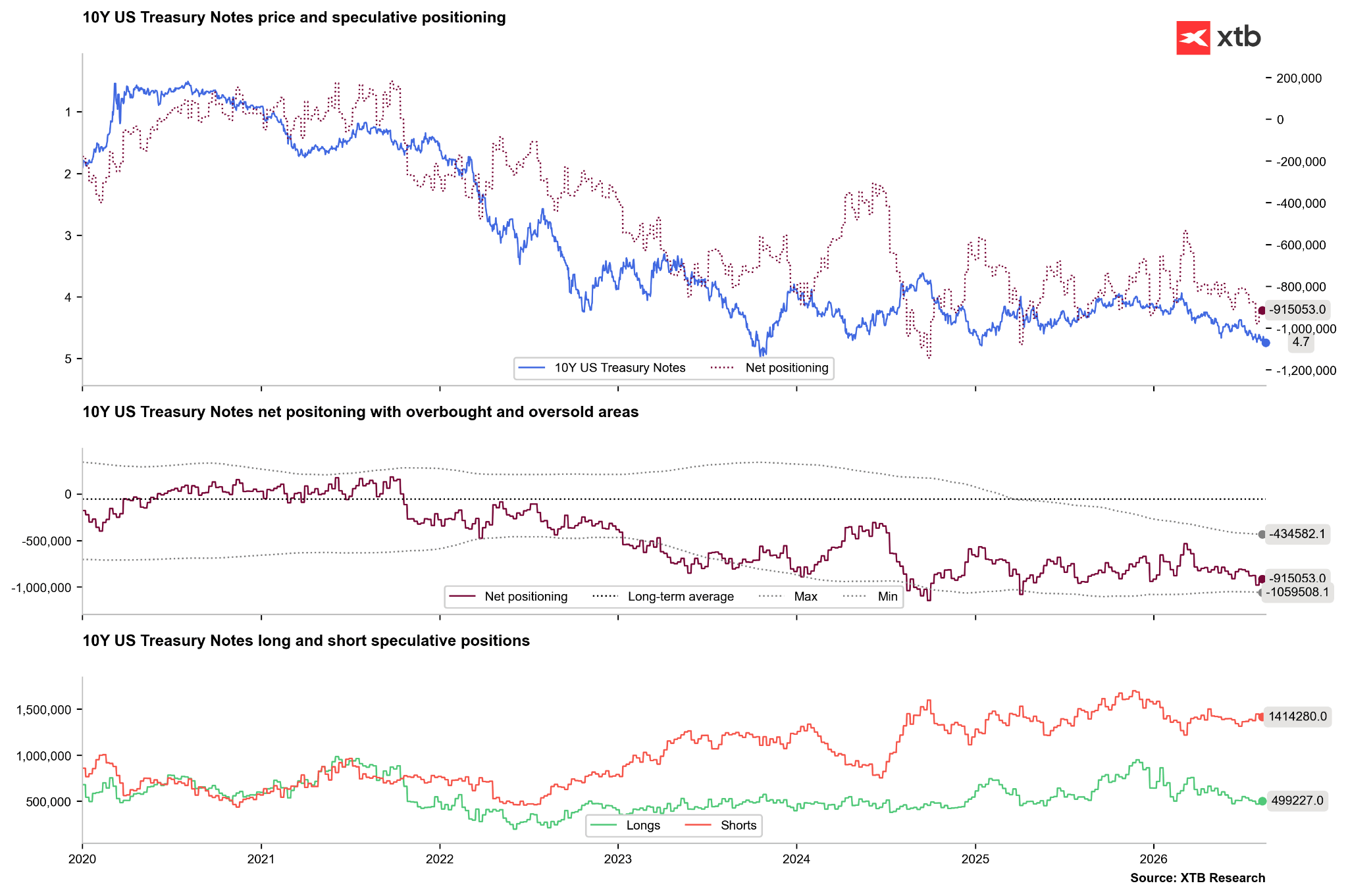 Net positions on US 10-year bonds remain at very low levels. If we notice a rebound in long positions, it could be a clear signal of a potential drop in yields. Source: Bloomberg Finance LP, XTB


BREAKING: France slows down, Germany holds on. Euro falls below 1.12



Daily Summary: Valuations Under Pressure, Capital Moves Away From Technology

Market Wrap: "Decent" results are not enough – tech stocks fall further; oil highest since May (22.10.2026)


Daily Summary: SpaceX and the tech sector drive Wall Street, oil retreats sharply below $97