


By way of introduction, today's Wall Street session will be shortened, closing at 19:00 local time. Indications point to a strong rebound as trading resumes following the brief Thanksgiving holiday break.
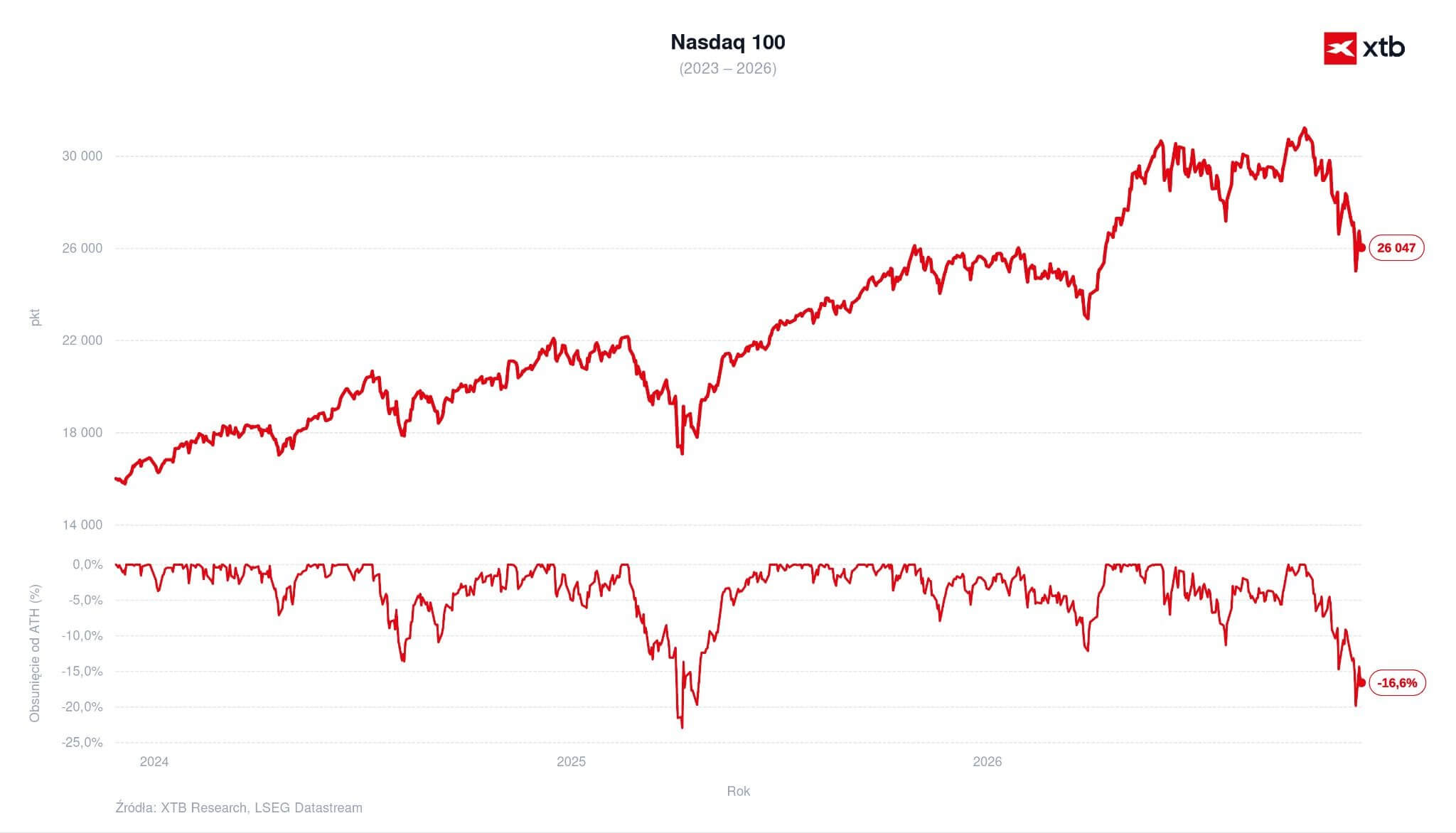
Nasdaq 100 futures are up 2.8% in pre-market trading, while S&P 500 futures have advanced 1.7% to around 7,320 points. Should these gains hold, both indices will snap a two-session losing streak. This marks an important signal, as Wednesday saw the Nasdaq 100 briefly touch technical bear market territory before an afternoon dip-buying rally pushed it back above that threshold.
Figure 1: Nasdaq 100 (2023 - 2026)
Source: XTB Research, 27.11.2026
Three key developments take centre stage today: a rare verbal intervention from Chinese authorities, questions over whether the bounce in AI-related stocks will prove sustainable, and the first weekly gain for crude oil prices in four weeks.
📈 Equities (Asia)
Asian markets are being led higher by Chinese equities today. At midday, the State Council, chaired by Premier Li Qiang, issued an uncommon statement outlining support for the stock market. It pledged an expanded role for the "national team", the state funds purchasing equities, with Central Huijin serving as a market stabilization fund. Beijing also intends to channel more long-term capital into the stock market while encouraging companies to increase dividends and share buybacks.
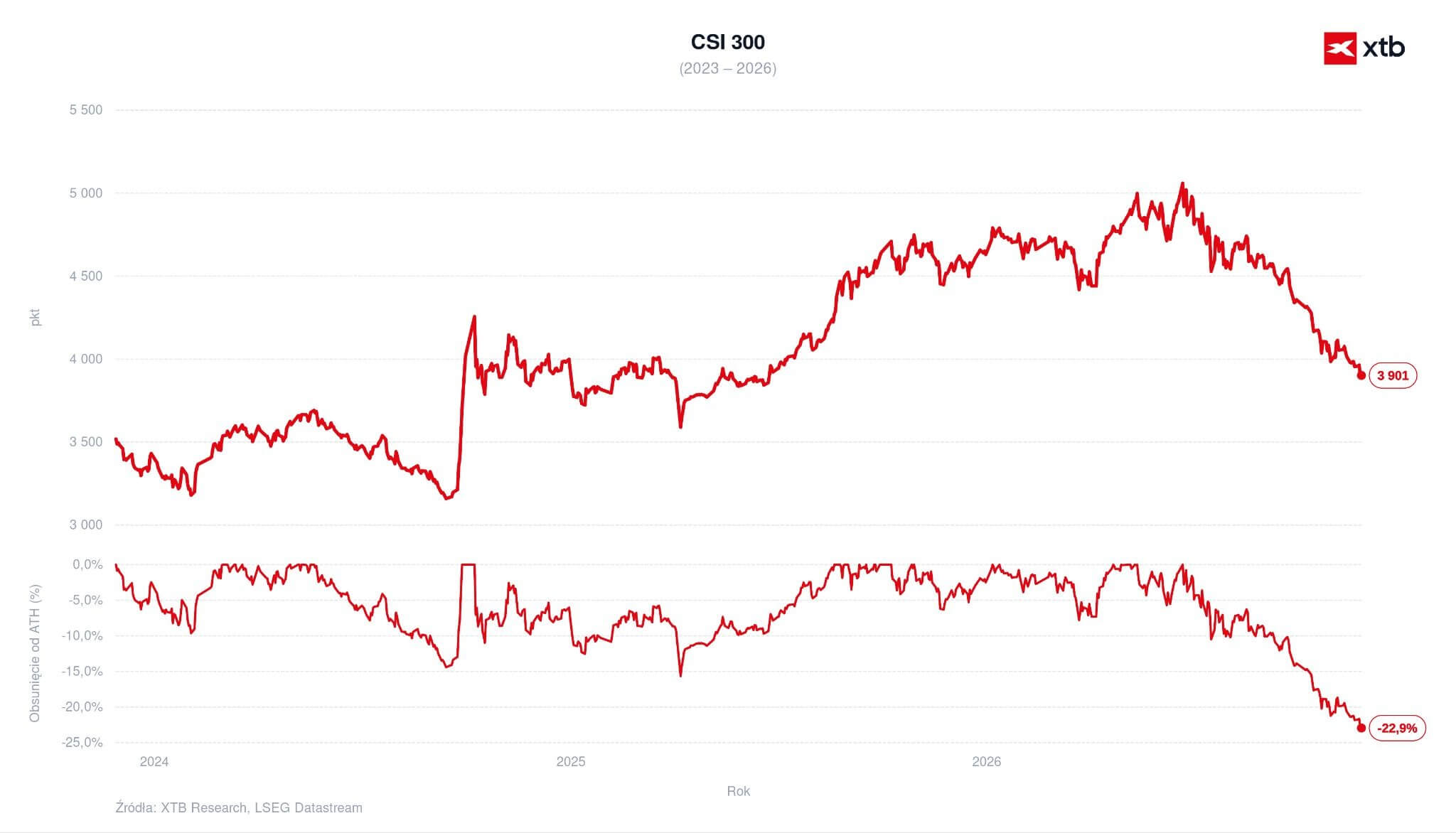
The Shanghai Composite has gained 3.3%, while the CSI 300 is up nearly 4%, marking its best daily performance in two years. The Star 50 index added roughly 12%, the ChiNext surged around 10%, and Hong Kong's Hang Seng Tech index gained approximately 6%.
Figure 2: CSI 300 (2023 - 2026)
Source: XTB Research, 27.11.2026
However, this recovery starts from depressed levels. As recently as Thursday, the CSI 300 was trading at its lowest since June 2025 and remains down 13% year-to-date, putting it on track for its worst annual performance since 2022. AI stocks have suffered the sharpest declines, initially weighed down by stretched valuations and subsequently hit by US chip export restrictions. Compounding these pressures, Donald Trump proposed tariffs of up to 40% on goods from 14 countries this week, including China. Although state funds have been buying stocks since October, their interventions have so far merely managed to slow the rate of decline.
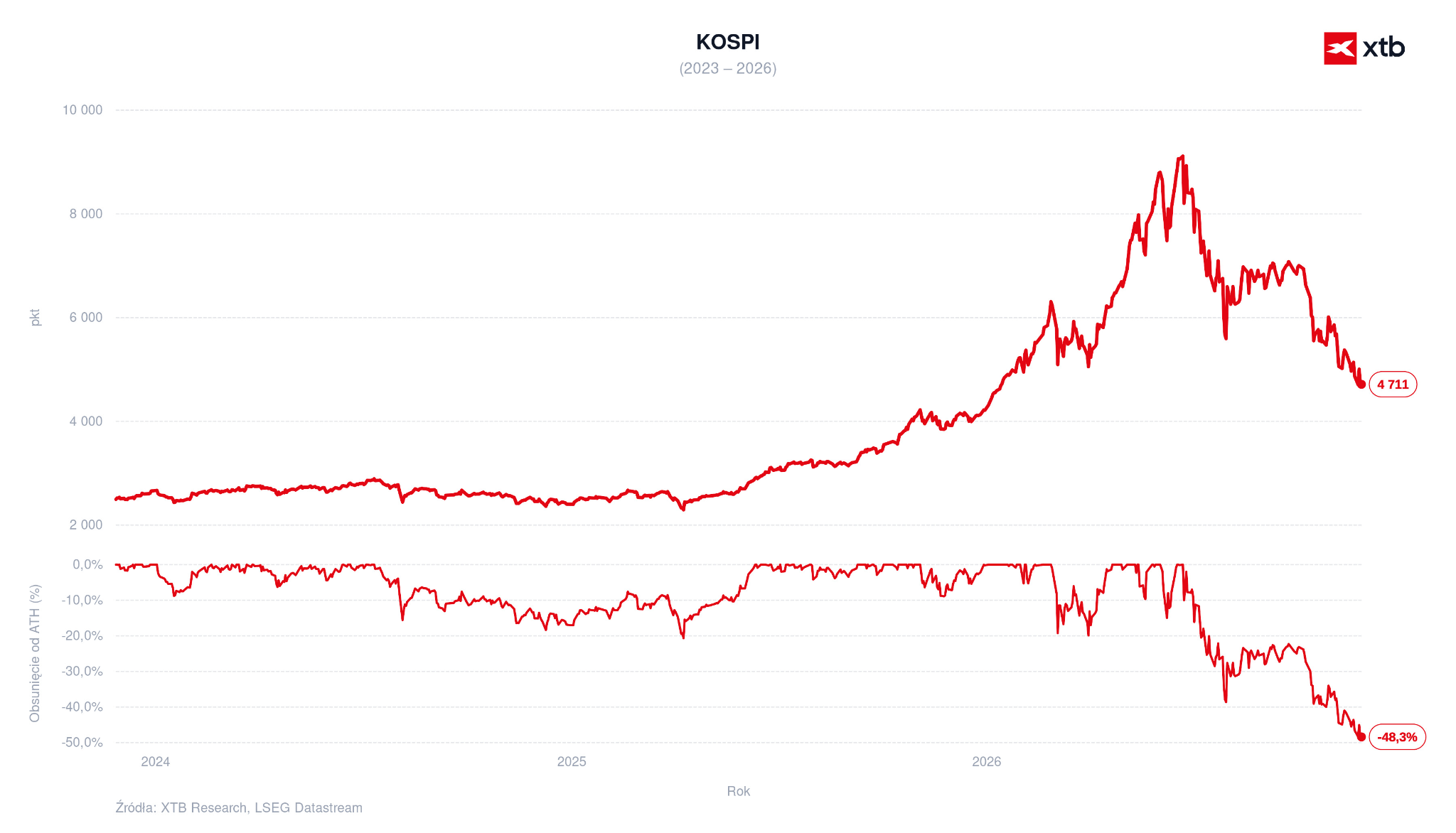
Elsewhere in the region, the Kospi advanced 4.3% following reports that Seoul is considering expanding its market stabilization fund, while the Nikkei added around 2%. Chipmakers including SK Hynix, Samsung Electronics, and Kioxia led the gains in both markets.
Figure 3: Kospi (2023 - 2026)
Source: XTB Research, 27.11.2026
📈 Equities (US)
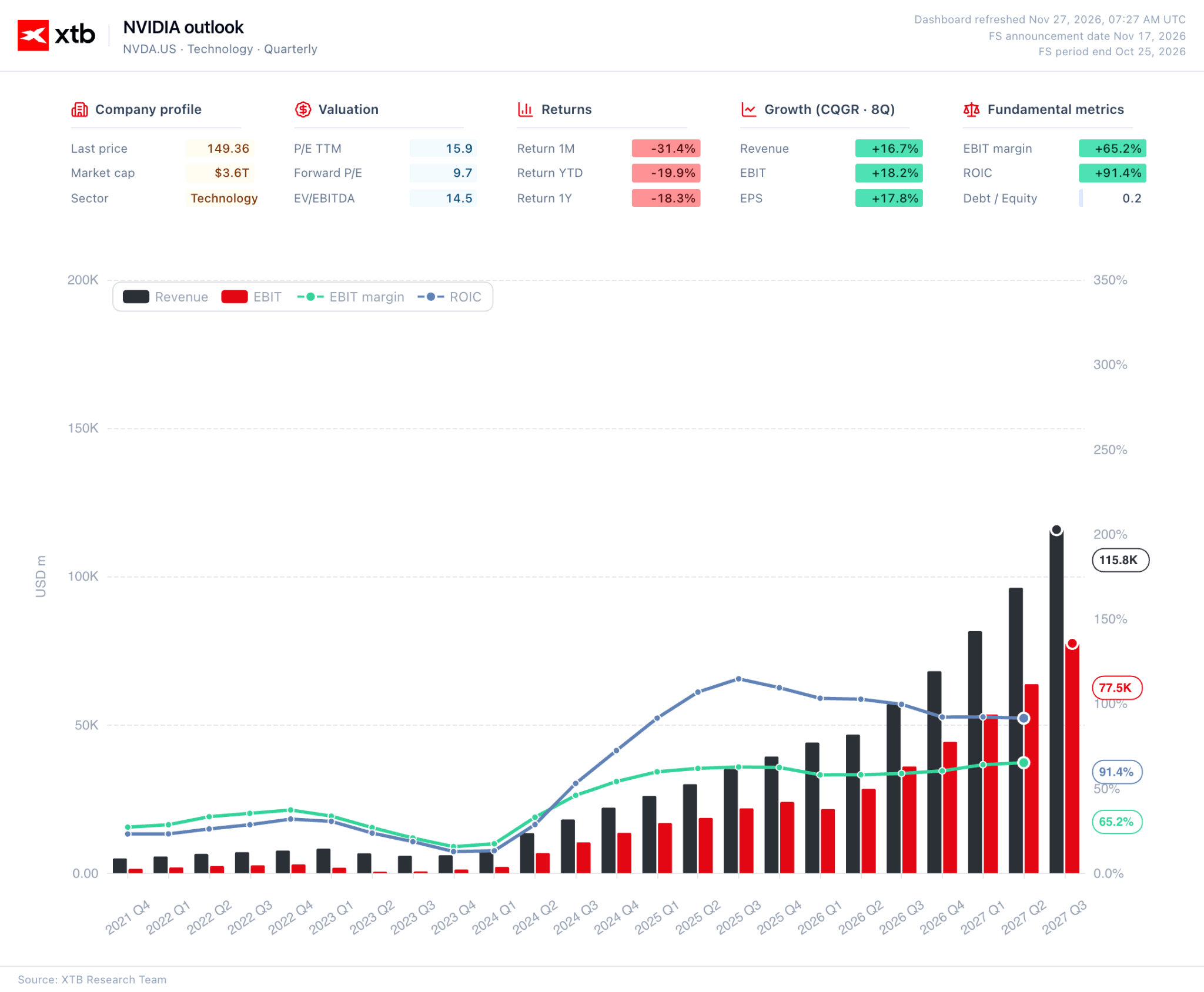
Wednesday's Wall Street rally bypassed Nvidia. While the Nasdaq 100 recovered most of its intraday losses to close 0.6% lower, Nvidia shares fell 3.9% to around $149, taking its cumulative November loss to approximately 27%. On the same day, S&P placed Nvidia's credit rating on CreditWatch with negative implications, citing corporate governance concerns.
Figure 4: Nvidia dashboard (2023 - 2026)
Source: XTB Research, 27.11.2026
Nvidia's difficulties are increasingly spilling over into sales. New US regulations effective 19 November mandate export licences for advanced chips sent to Malaysia, Singapore, Indonesia, and Thailand. Licences are also required for deliveries to data centres that lease computing capacity to Chinese entities. According to the Financial Times, Nvidia has halted server shipments to these four nations pending compliance verification. Distributors are taking a firmer stance: CNBC reports that distributors are refusing chip sales to compute-leasing providers if any portion of that capacity could be utilized by clients based in China.
📈 Equities (Europe)
European markets posted solid gains during Thursday's session despite the absence of US trading. The DAX climbed 2.1%, the CAC 40 rose 1.6%, and the WIG20 advanced 1.6%. In early pre-market trading today, Euro Stoxx 50 futures are up approximately 0.7%.
AI restructuring themes are also emerging in Germany, where Bloomberg reports that SAP is preparing plans to eliminate at least 10,000 roles as part of an AI-focused business transformation.
📈 Monetary policy and bond market
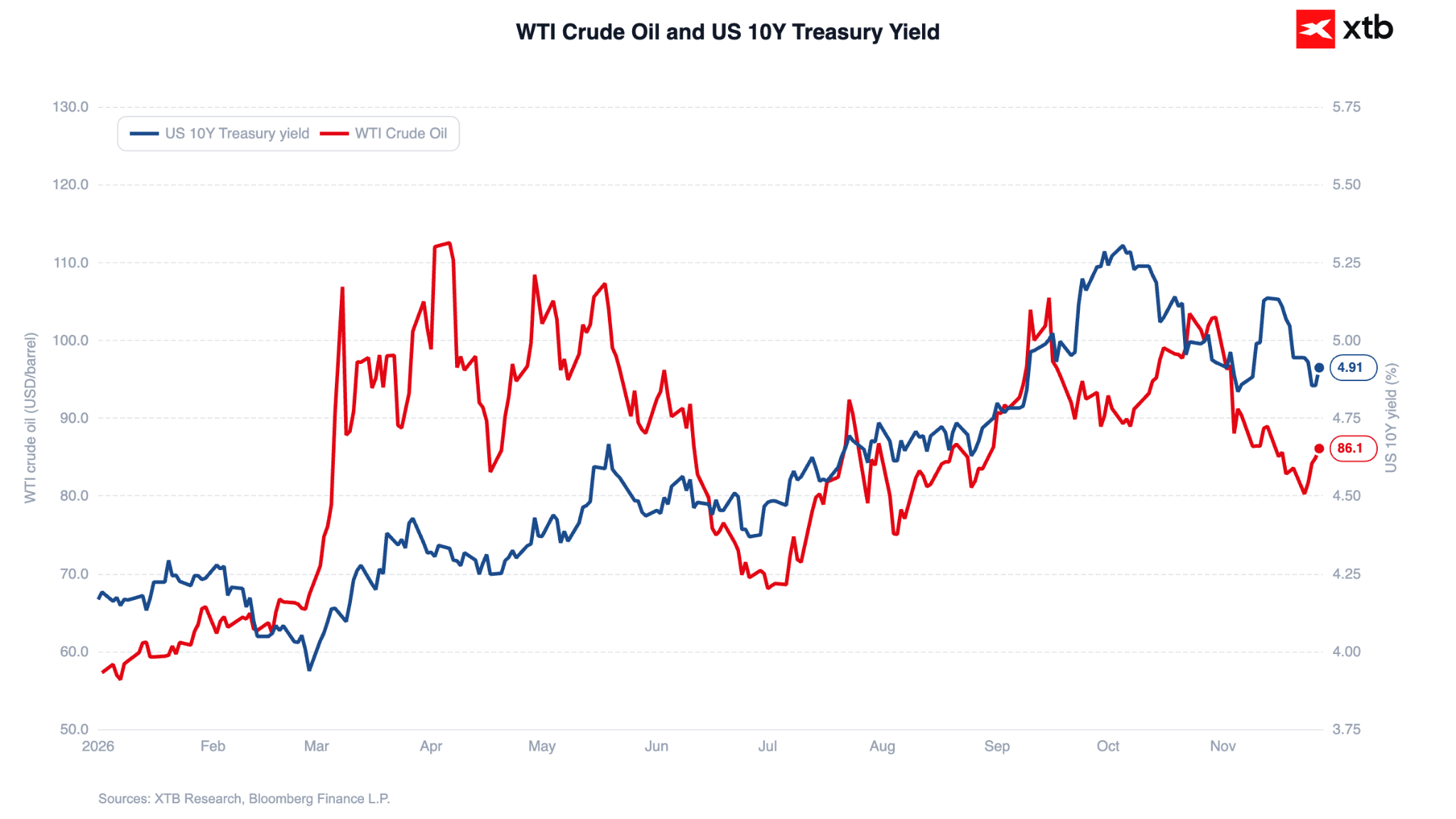
The resurgence in risk appetite is putting upward pressure on bond yields. As trading resumed, the US 10-year Treasury yield rose 7 basis points to around 4.92%. Nevertheless, yields remain roughly 25 basis points lower over a two-week horizon, as the tech sell-off prompted investors to tone down expectations for rate hikes.
Figure 5: US 10-year Treasury yield and WTI crude oil (2026)
Source: XTB Research, 27.11.2026
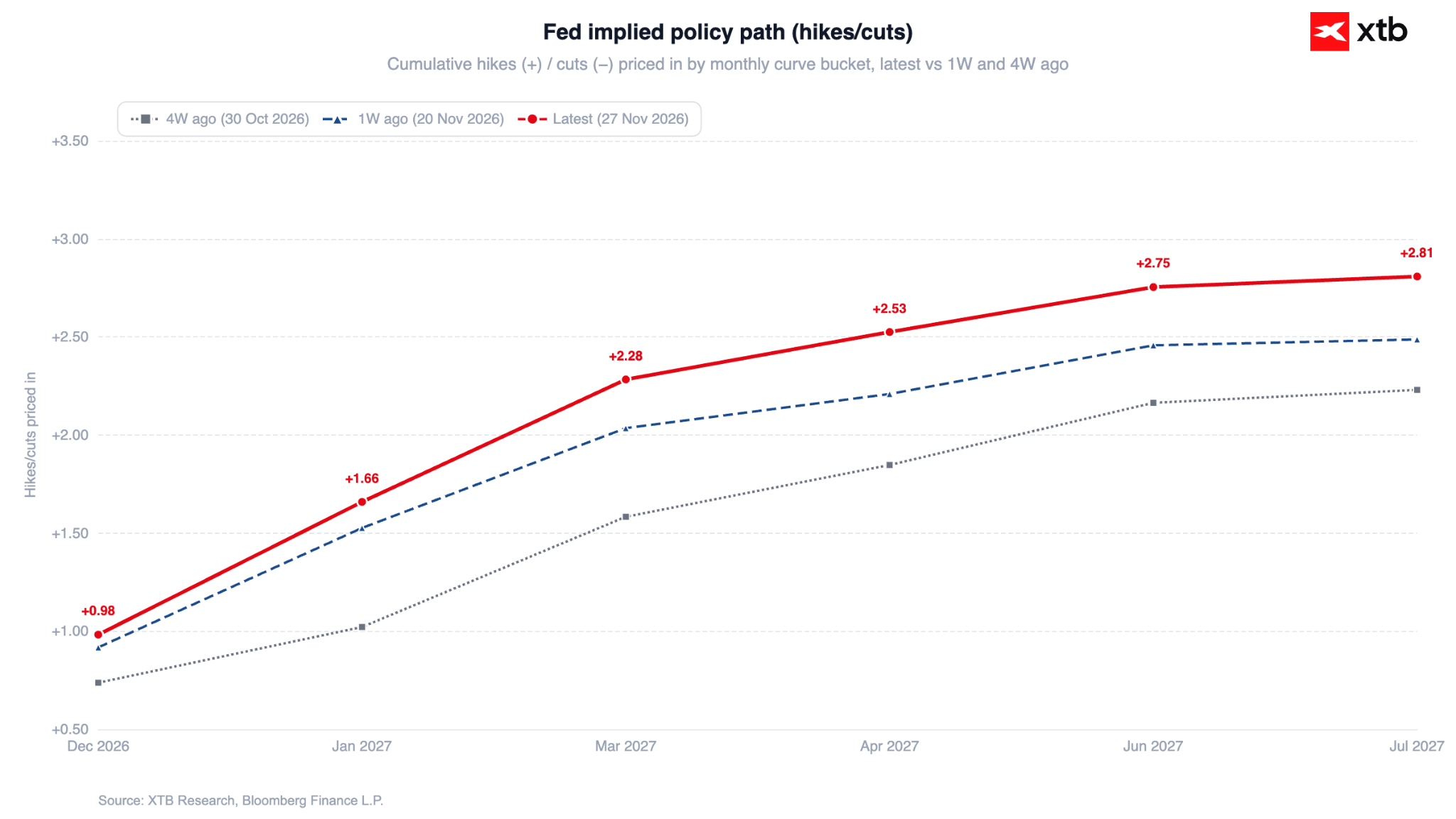
This shift is evident in Fed rate pricing. Current market pricing discounts two 25-basis-point rate increases by September 2027, with a 70% probability of a third. Two weeks ago, markets were discounting three full hikes and a 35% chance of a fourth. A 25-basis-point move at the upcoming December meeting (decanon 9 December) remains almost fully priced in, but speculation regarding a 50-basis-point hike has evaporated. This aligns with our view that market pricing had become overly aggressive regarding policy tightening. The Fed has now entered its standard pre-FOMC blackout period.
Figure 6: Market-implied Fed policy path (2026 - 2027)
Source: XTB Research, 27.11.2026
In Japan, Tokyo core inflation accelerated in November to its highest level in 16 months, bolstering the case for a Bank of Japan interest rate hike in December. In the Eurozone, Pablo Hernández de Cos has been confirmed as the next ECB President, a selection interpreted by markets as a signal of policy continuity.
💱 Foreign exchange
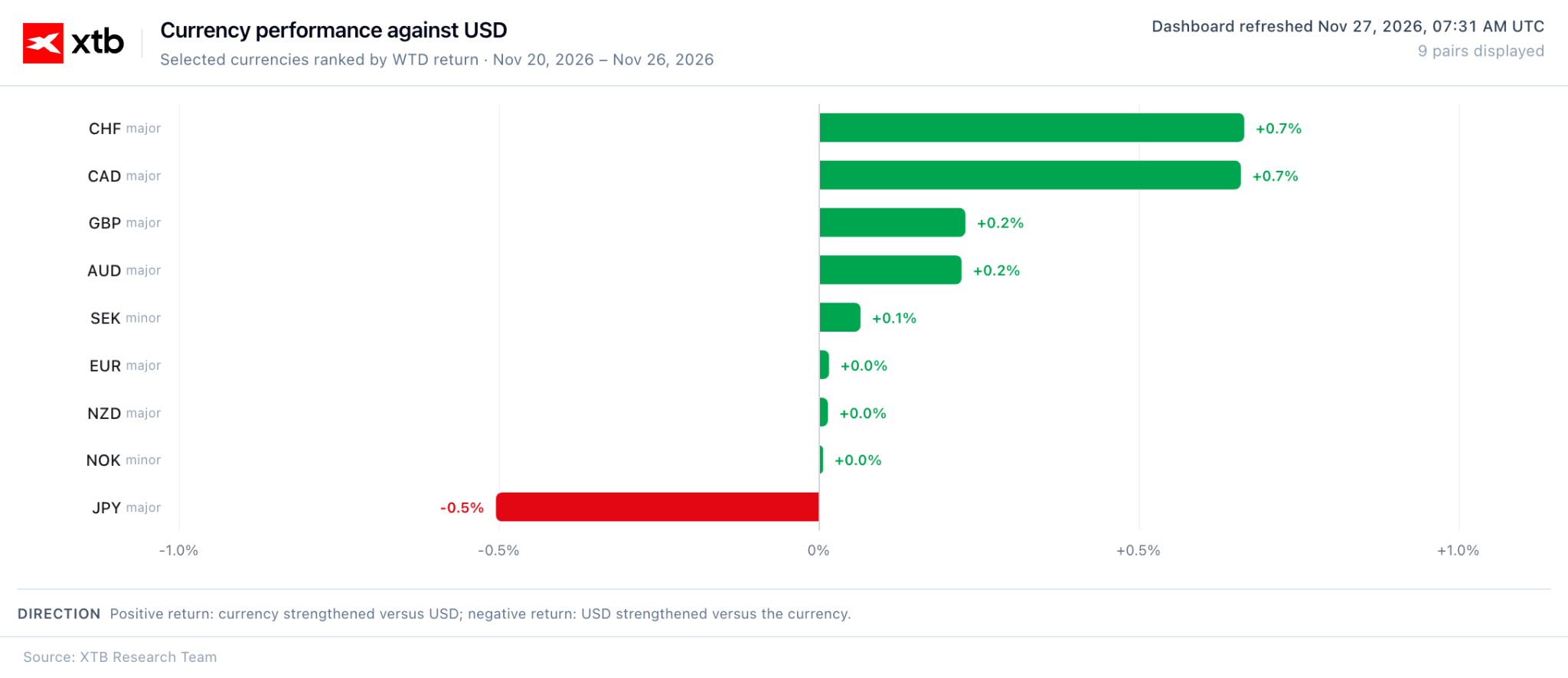
EURUSD is trading near its week-opening levels around 1.098, remaining close to its April 2025 lows. The US dollar continues to draw support from expectations of a December Fed rate hike, which markets view as virtually certain, alongside safe-haven demand stemming from recent equity volatility.
Figure 7: G10 currency performance against the US dollar (current week)
Source: XTB Research, 27.11.2026
The New Zealand dollar gained around 0.4% following election results showing Prime Minister Christopher Luxon's coalition fell short of a majority, leaving it reliant on support from the centrist Opportunity Party.
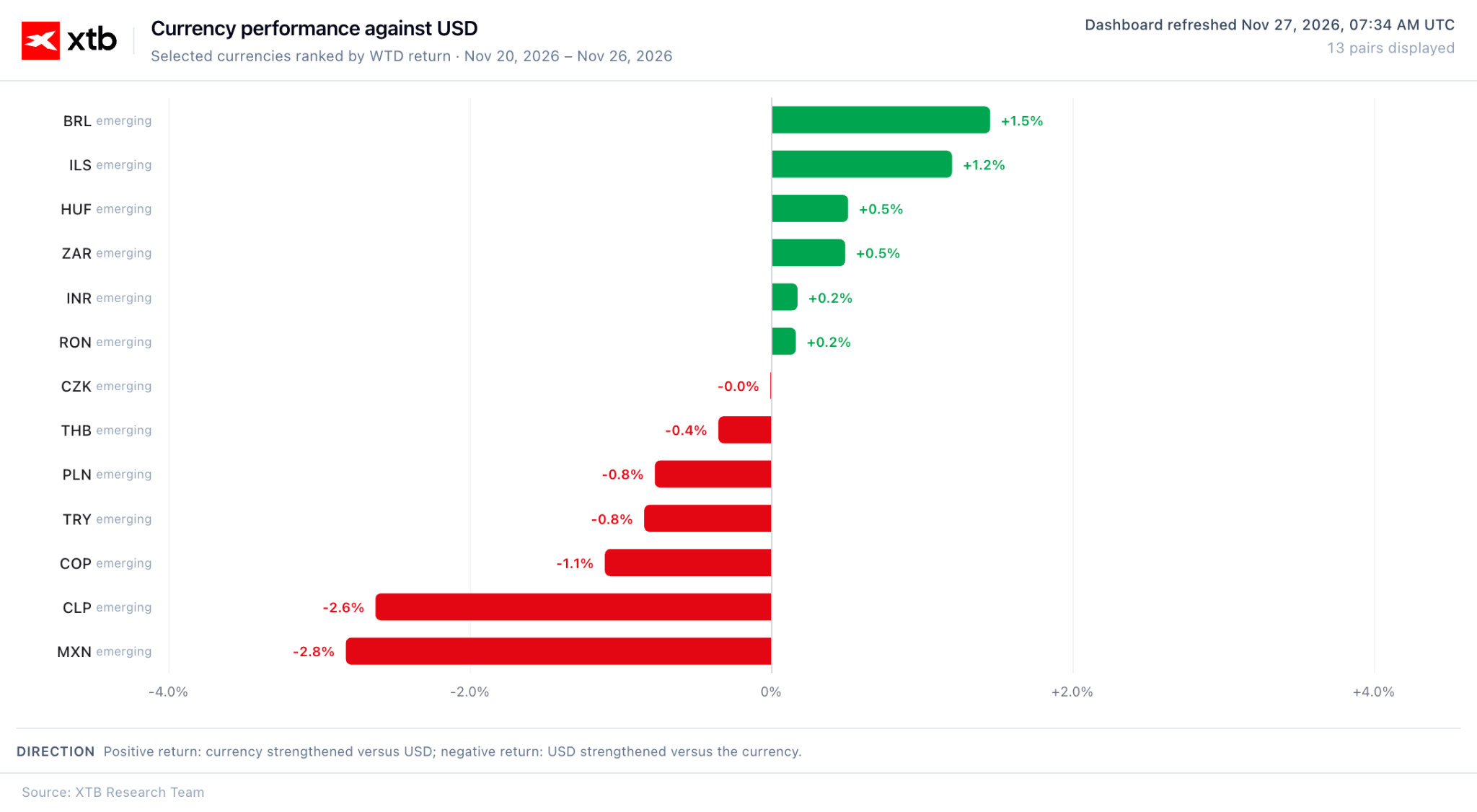
Among emerging market currencies, the Brazilian real led gains with a 2.7% rally on Thursday, its strongest single-day performance since 5 October. Sentiment was boosted after President Lula appointed Bradesco Chairman Luiz Carlos Trabuco Cappi as Finance Minister, a move seen by investors as a step toward fiscal predictability.
Figure 8: EM currency performance against the US dollar (current week)
Source: XTB Research, 27.11.2026
🛢️ Energy commodities
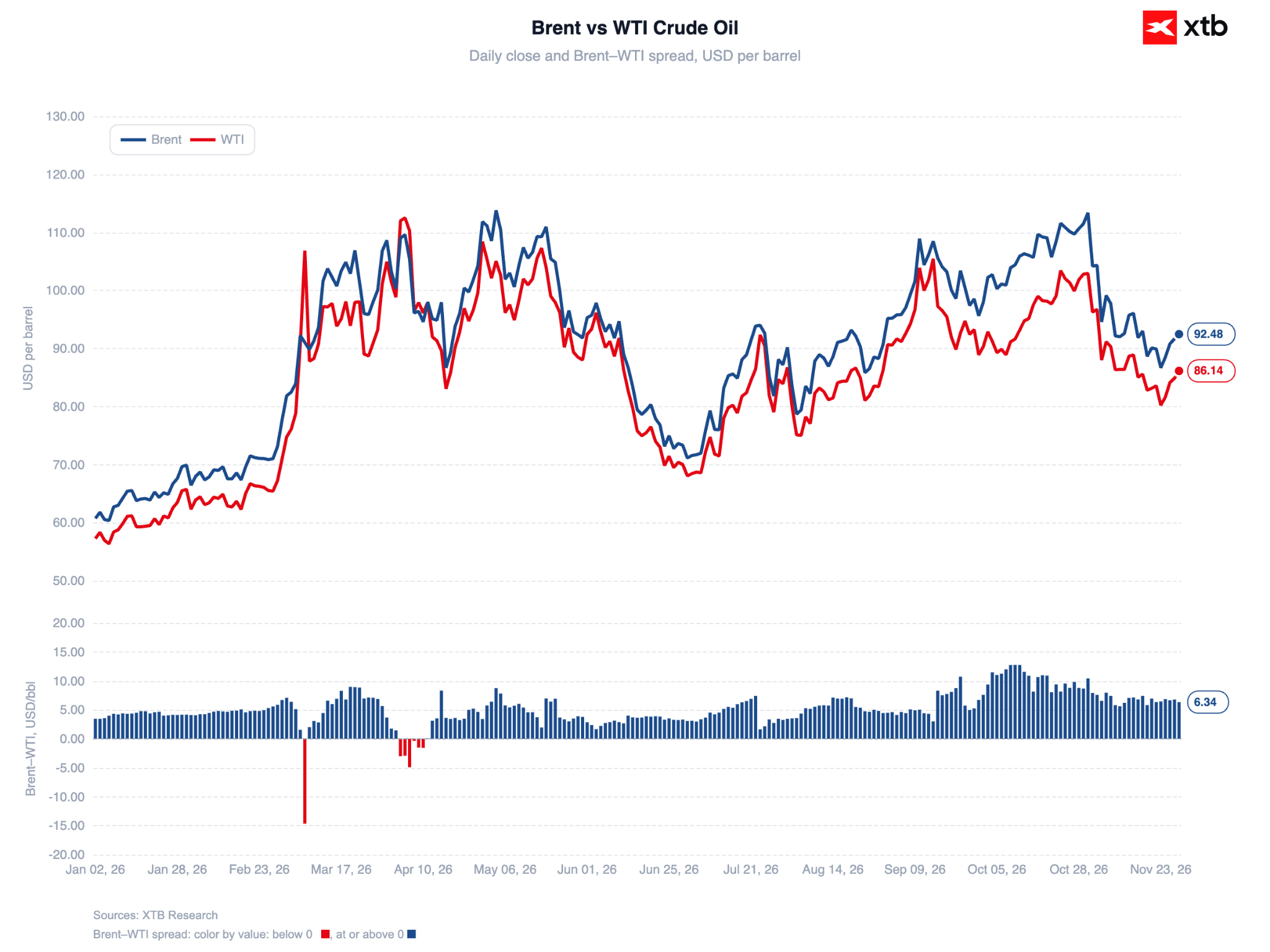
Crude oil is heading for its first weekly gain this month. Brent is trading around $97 per barrel, up 4.5% week-to-date, while WTI stands near $86. Geopolitical tensions in the Middle East have escalated once again. Houthi forces backed by Tehran struck a Saudi refinery in Jizan on the Red Sea, temporarily disrupting operations. Earlier in the week, their targets included the Ras Tanura terminal on the Persian Gulf. Additionally, a drone strike in Kuwait resulted in two Italian fatalities; Kuwait blamed Iran, which denied involvement. A tanker was also hit in the Strait of Hormuz on Wednesday, though vessel traffic through the strait expanded overall in November, capping upside price pressure.
Figure 9: Brent and WTI crude oil (2026)
Source: XTB Research, 27.11.2026
Despite this week's rebound, Brent remains down nearly 20% in November. According to the IEA, recovering exports from the Gulf are expected to push the market into surplus this quarter. From a broader macroeconomic perspective, refined product trends are key: European diesel futures have dropped nearly 30% from their peak following the onset of the US-Iran conflict, causing refining margins to compress rapidly. Consequently, the weekly uptick in crude prices is unlikely to reignite inflationary pressures.
OPEC+ is scheduled to meet on Sunday and is considering maintaining existing output limits through January. This comes amid Reuters reports suggesting the Trump administration encouraged Venezuela and Iraq to evaluate exiting OPEC.
🪙 Precious metals
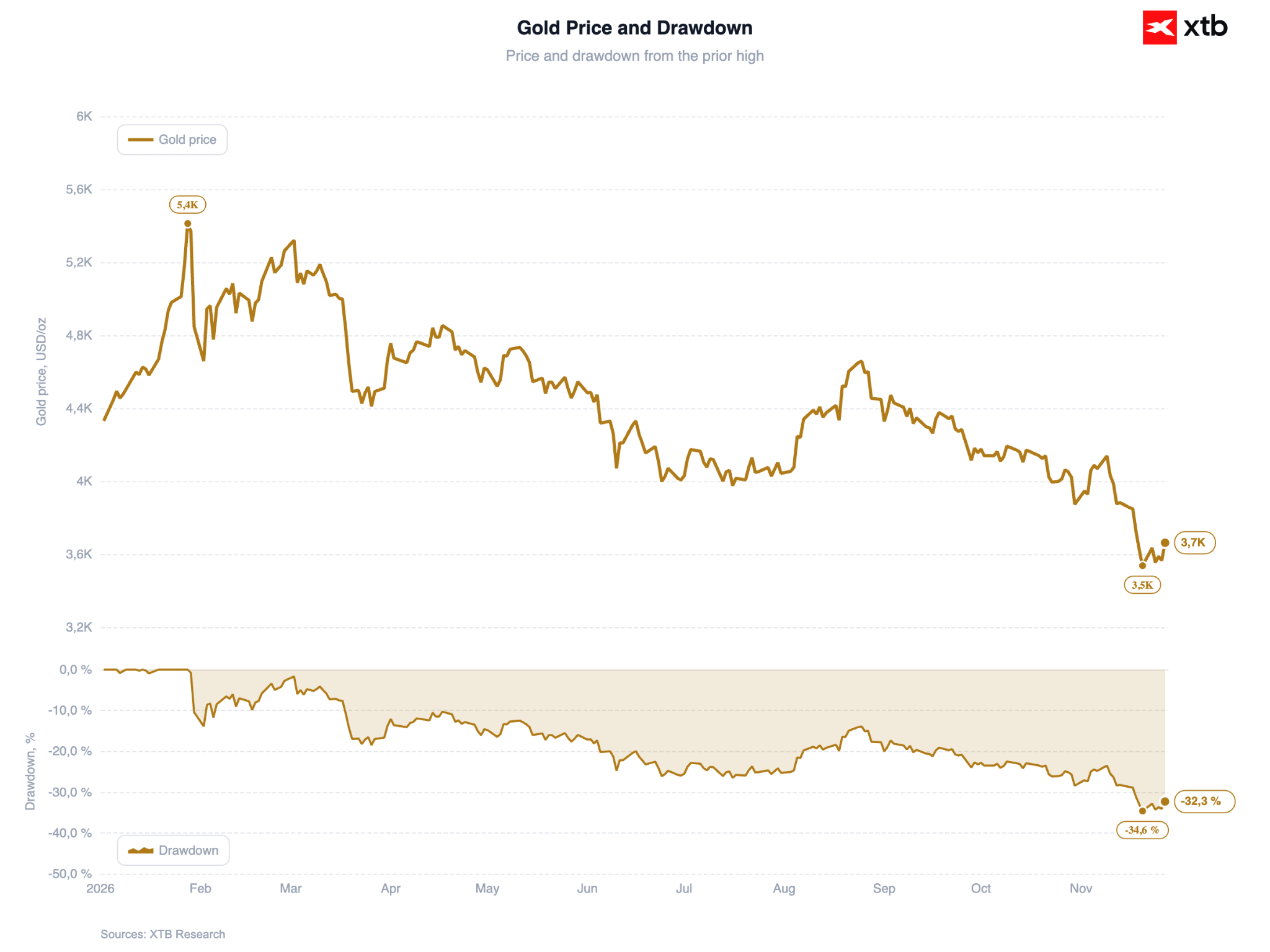
Gold prices rose 2.4% to around $3,650 per ounce, bouncing off a 15-month low hit two days prior. The rebound was supported by a softer dollar and improved sentiment toward technology stocks. Nonetheless, gold has traded below $4,000 since 11 November and is on track for a third consecutive monthly decline of over 6%. Silver outperformed sharply, rising 6.5% to around $44, while platinum gained over 5% and copper advanced 2%.
Figure 10: Gold (2026)
Source: XTB Research, 27.11.2026
₿ Cryptocurrencies
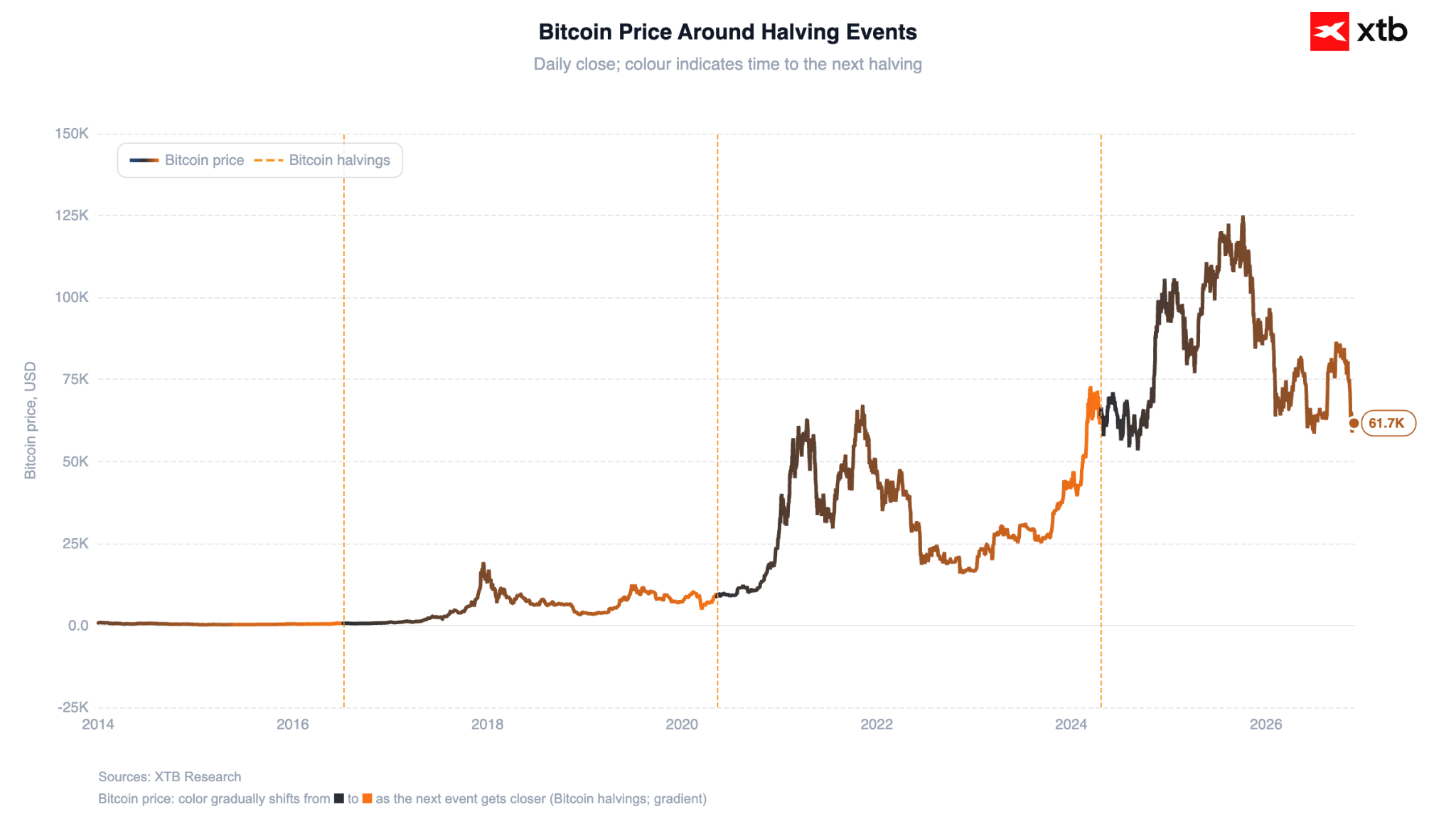
Bitcoin gained 1.6% to trade around $61,700, benefiting from broader risk-on sentiment. However, it remains down over 20% in November, pointing to its worst monthly drop in over four years. Demand stays subdued: US spot Bitcoin ETFs registered $453 million in net outflows on Wednesday, bringing monthly redemptions past $5 billion.
Figure 11: Bitcoin (2014 - 2026)
Source: XTB Research, 27.11.2026
—
Michał Jóźwiak, Financial Markets Analyst at XTB


Market Wrap: European Indices Rise 📈


📈 Gains across global stock markets


Daily Summary: Trump's New Tariffs and AI Sector Slowdown Trigger Wall Street Sell-Off
🐻Nasdaq 100 (US100) on the brink of a bear market