



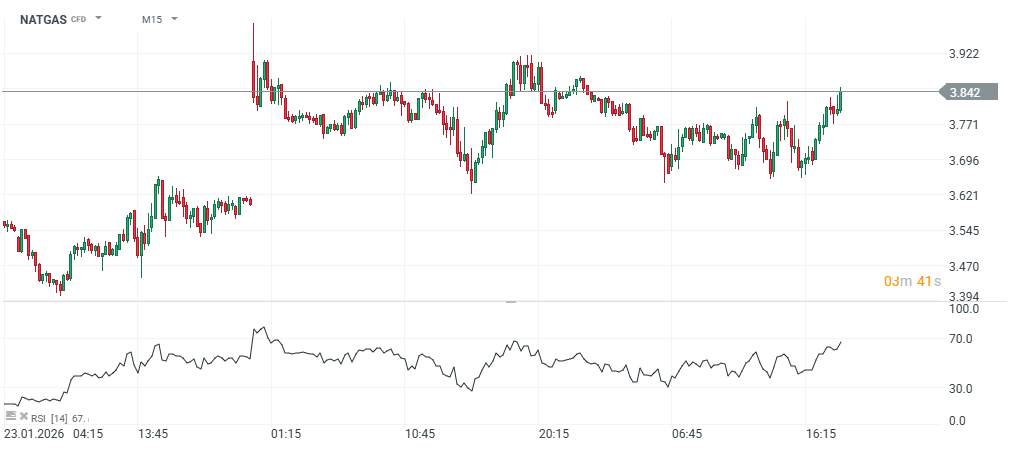
U.S. Henry Hub natural gas futures (NATGAS) are gradually turning higher again after the contracts rollover and a correction from last week’s rally, following Monday’s surge and subsequent pullback from three-year highs. The earlier jump was driven by winter storm Fern and widespread production freeze-offs across key basins.
- The rally was demand-led first. Residential and commercial consumption climbed to around 69 Bcf on Monday, a seasonal peak typical of intense cold waves. Power-sector demand also spiked sharply. Gas burn for electricity generation is estimated near 50 Bcf, a level comparable to the hottest days of last summer, just in a winter setting.
- In the near term, the key question is how long this demand shock lasts. Forecasts suggest demand will remain exceptionally elevated until temperatures start to moderate early next week, which continues to keep the physical market very tight.
- On the futures curve, the front month is behaving like an expiring contract typically does. For example, the February Nymex contract is down roughly 3% ahead of Wednesday’s expiration, while market attention shifts toward the next delivery months.
- The March contract is down about 3.5% to the $3.84 area, highlighting the sharp gap between immediate supply tightness and expectations of a relatively quick normalization. This is a textbook example of storm-driven backwardation.
- The second pillar of the story is supply disruption. Production outages have appeared across multiple U.S. regions, initially estimated at around 2 Bcf per day, then deepening abruptly to as much as 12 Bcf per day, with the Permian and the broader Gulf Coast taking the biggest hit.
- The market’s main debate now is not whether the storm mattered, but how quickly production returns to normal. The prevailing scenario is continued tightness through midweek, followed by a noticeable supply rebound over the weekend.
The pullback does not mean the market has fully calmed down. Investors are starting to price in a peak in the cold spell and the subsequent recovery in output. Until temperatures and production genuinely normalize, elevated volatility remains the base case.
NATGAS (M15 timeframe)
Source: xStation5
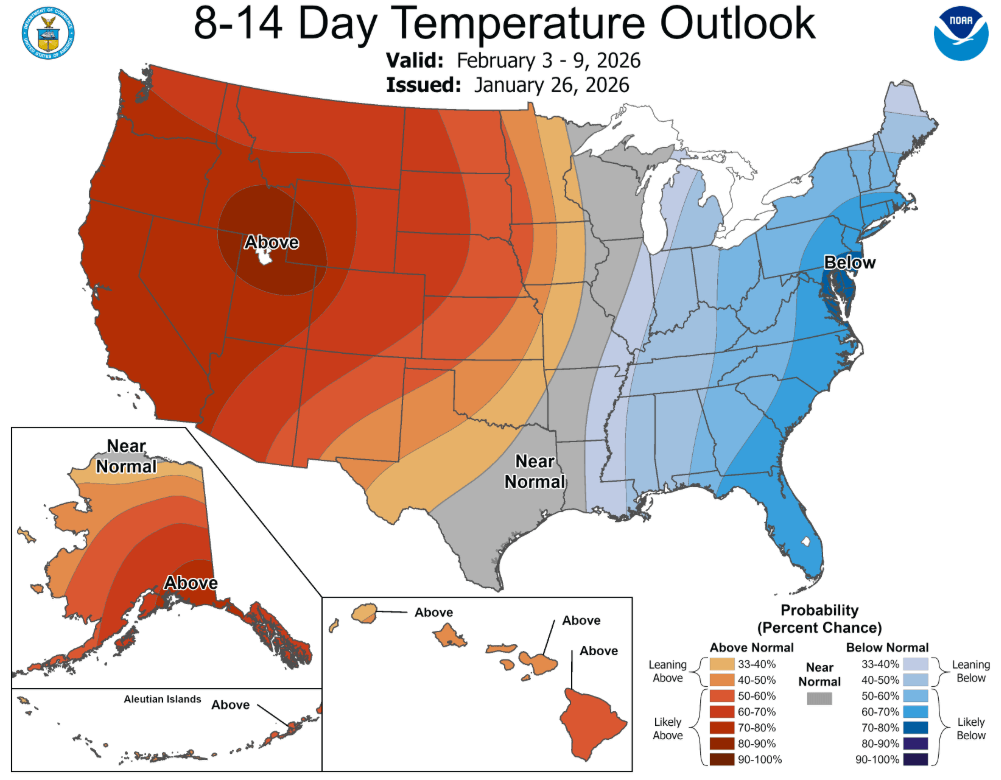
Weather forecasts for the U.S. indicate that cold temperatures may persist along the East Coast in early February.
Source: NOAA, CPC



Daily Summary: Friday offers no relief; the US100 drops 2%🚨


Three Markets to Watch Next Week (October 16, 2026)


Market wrap: European indices rebound 🔼 Defence stocks on the rise

🔼 EURUSD continues to rebound