



- According to Bloomberg estimates, it would take around two months of a full closure of the Strait of Hormuz to cause severe global economic disruption. Markets still see reasons to believe that the passage could be reopened sooner.
- The Persian Gulf accounts for roughly 20% of the global oil and gas market, with around 20% of that supply flowing to developed economies. Most Asian countries, which rely heavily on imports, maintain reserves covering several months or have access to Russian oil and gas. Europe appears to be the most exposed region.
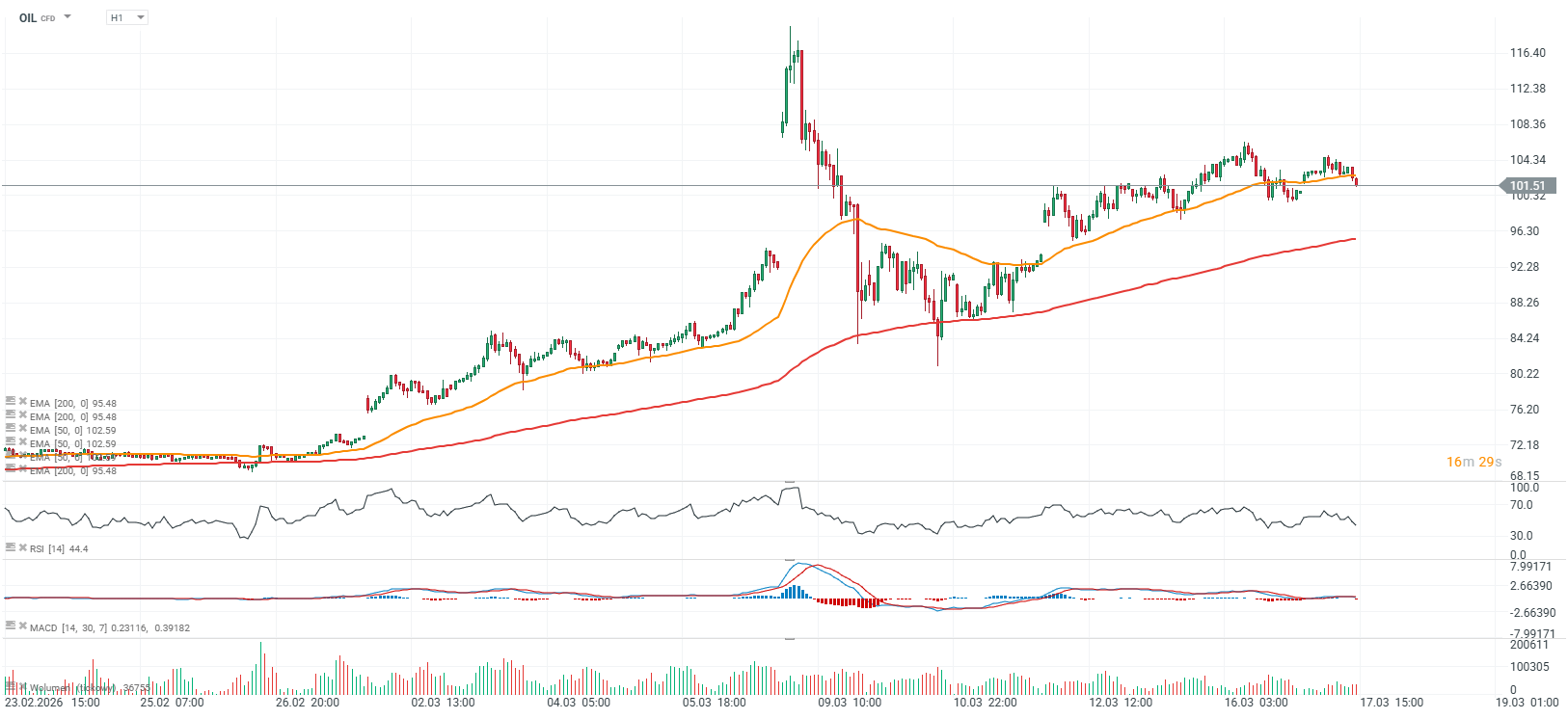
OIL (H1 timeframe)
Oil prices are gradually cooling, and when comparing recent price increases with RSI, a potential bearish divergence can be observed. If prices fall below $100, the first key support level is seen around $96 per barrel (based on prior price reactions).
Source: xStation5
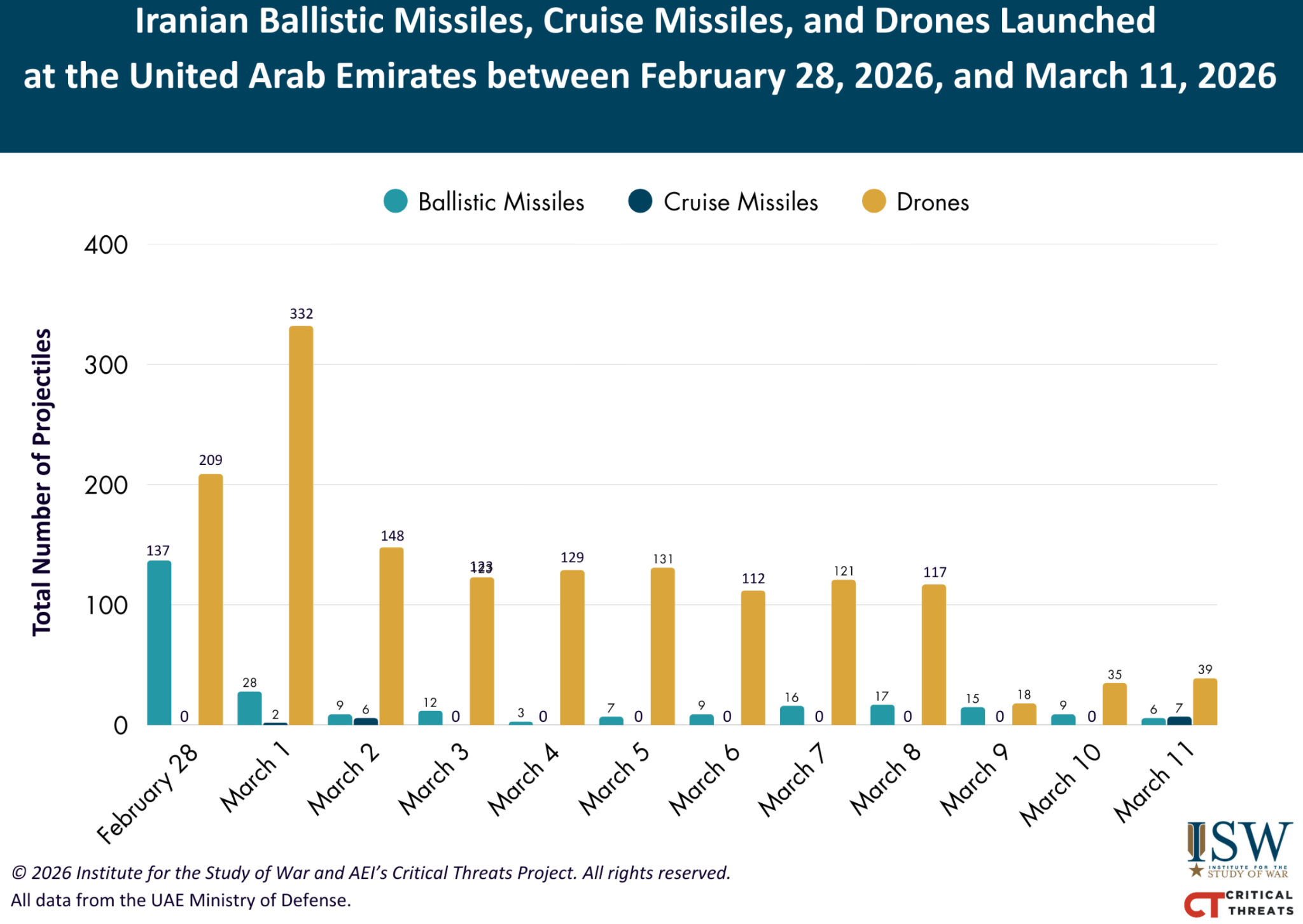
Estimates from the ISW think tank point to a depletion of Iran’s missile capabilities. According to comments from the US military, Iran’s naval and air force potential, as well as much of its industrial base, has been significantly degraded following nearly 20,000 strikes on various targets across the country by the US and Israel. This may reduce Iran’s willingness to continue the conflict.
 Source: ISW


Daily Summary: Oil at five-month highs, indices under pressure (23.10.2026)


US Open: Further declines on Wall Street, Brent above 111 USD, AI correction continues (14.10.2026)


Chart of the Day: Is USDJPY running out of road? Inflation forces the BoJ to act, but the Fed could spoil the Yen’s rally



Macro Calendar: Preliminary PMI Readings and Earnings Ahead