



Over the weekend, the conflict between Iran, the United States, and Israel escalated sharply. Both sides expanded military operations to include energy infrastructure and targets across the region. Israeli forces carried out airstrikes on several Iranian oil facilities near Tehran, hitting at least four fuel storage depots and an oil transfer hub, triggering major fires and disruptions to fuel supplies in the capital.
Iran responded with missile and drone attacks targeting Israeli positions as well as energy infrastructure in the Persian Gulf region, including attempted strikes on major oil installations and desalination plants in neighboring countries. At the same time, tensions intensified around the Strait of Hormuz, where ship traffic has nearly frozen following attacks on vessels and threats against tankers, effectively disrupting the transport route responsible for about 20% of global oil supply.
The escalation also coincided with production disruptions in Iraq, Kuwait, and the United Arab Emirates, where oil deliveries began to accumulate due to the lack of tanker access. After the weekend escalation, Brent crude opened with a 15% upward gap and then continued rising to 119 USD per barrel (+29%).
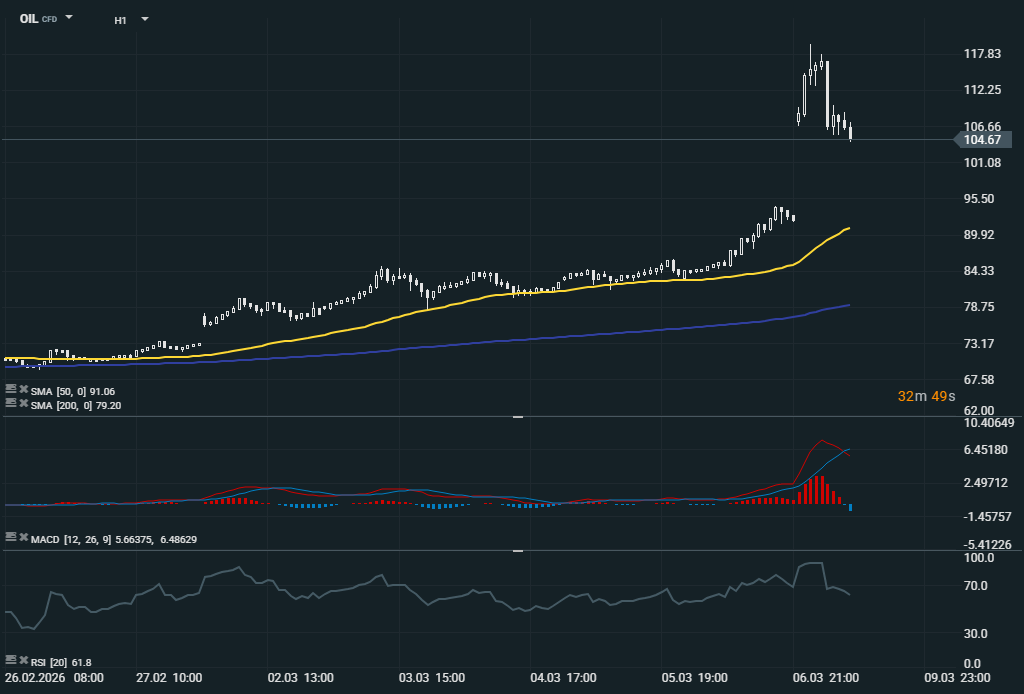
Oil prices pulled back slightly following reports that G7 countries and the International Energy Agency (IEA) are considering a coordinated release of emergency oil reserves. G7 finance ministers are preparing an emergency meeting to discuss the economic consequences and the possibility of a joint release of strategic oil reserves coordinated by the IEA. Preliminary information suggests that a release of 300–400 million barrels is being considered, equivalent to about 25–30% of global strategic reserves totaling roughly 1.2 billion barrels. For comparison, the coordinated reserve release during the Russia–Ukraine crisis in 2022 amounted to about 240 million barrels, roughly half of which was supplied by the United States. Historically, such interventions mainly act as a temporary buffer that lowers prices by around 10–20 USD rather than permanently changing the supply balance.
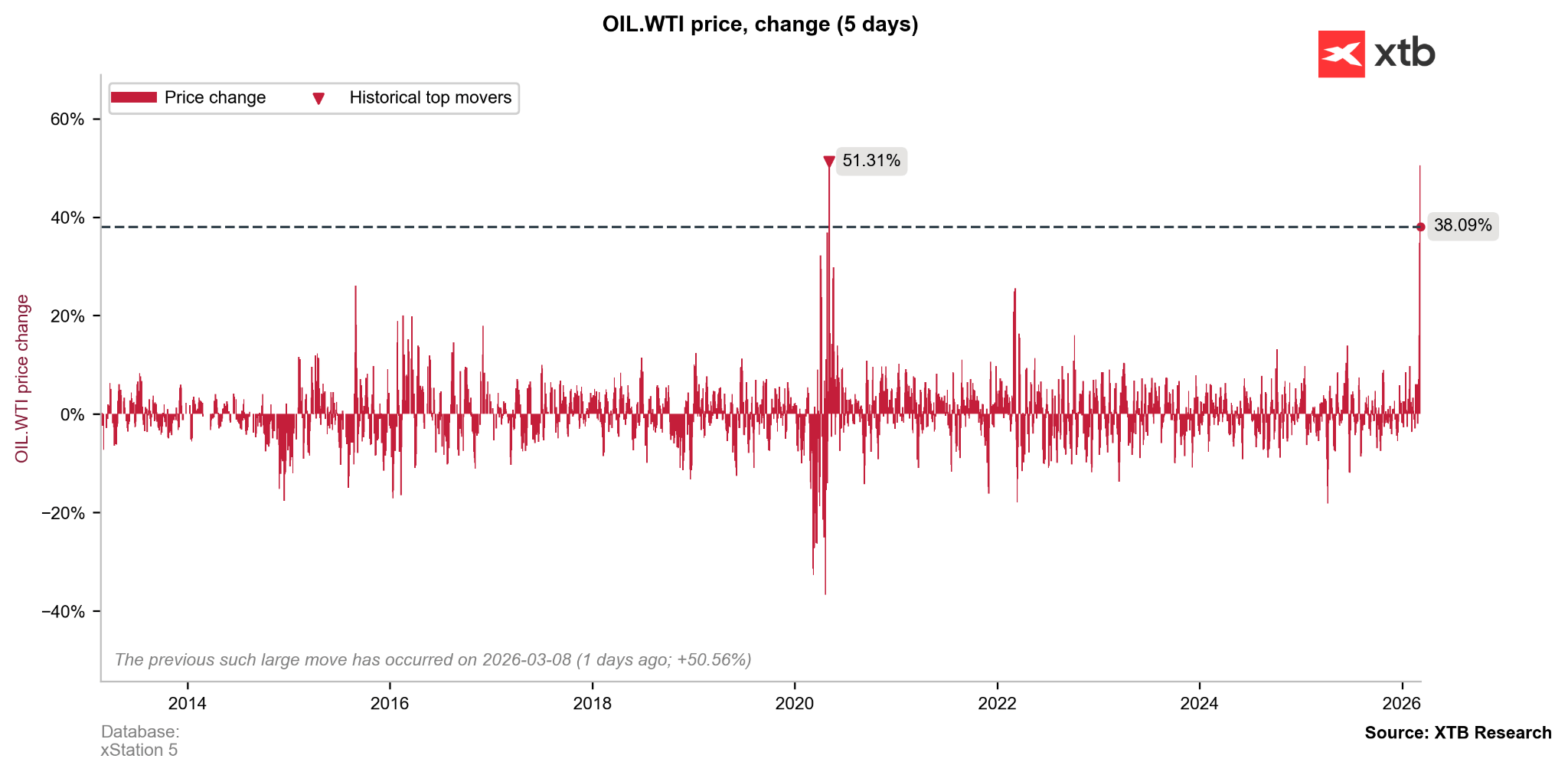
Oil is recording a weekly increase comparable to that seen during the COVID pandemic. However, it should be remembered that the levels in 2020 from which the increases began were significantly lower, allowing for more pronounced relative changes.
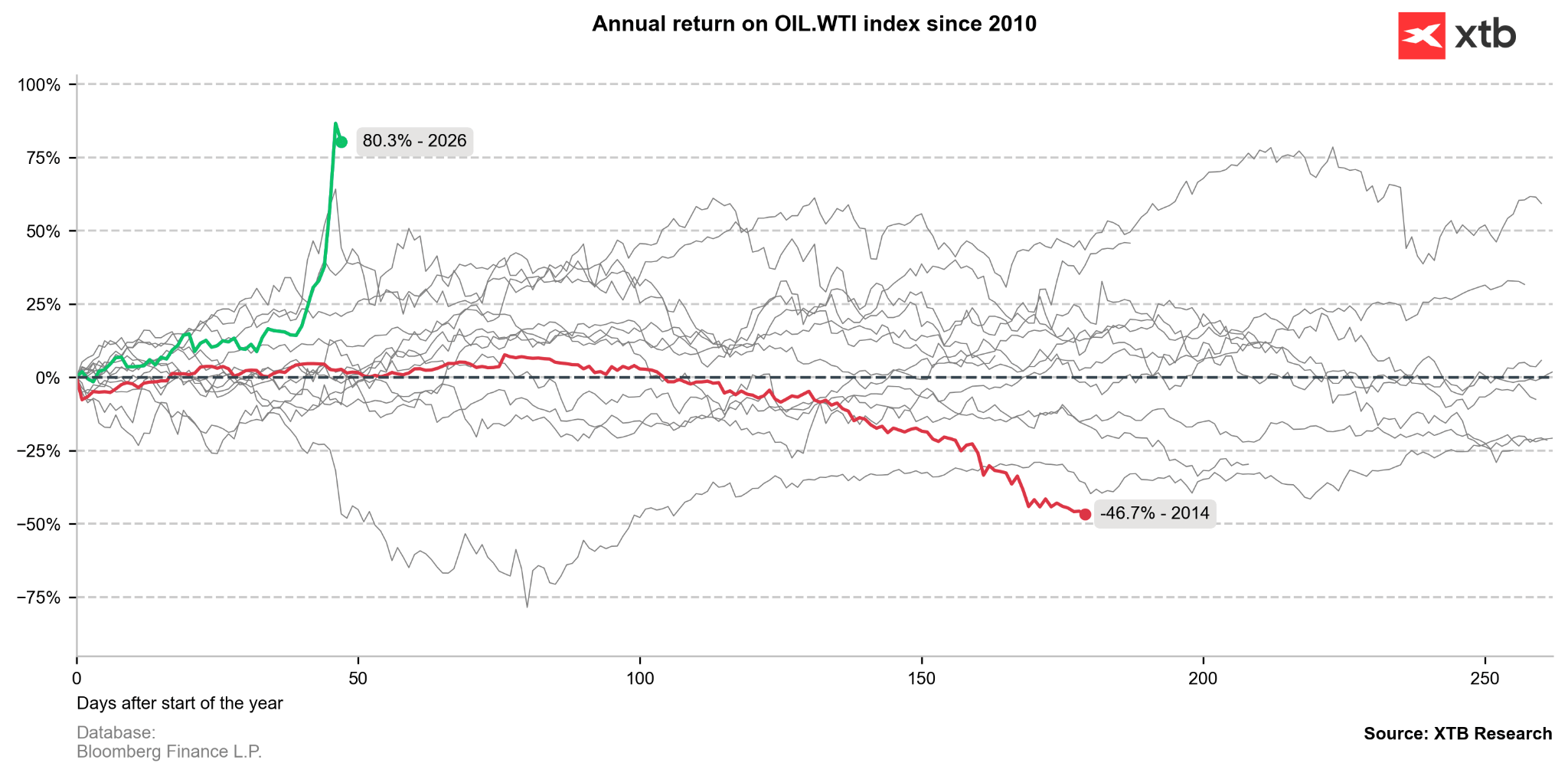
WTI crude has already gained more than 80% since the beginning of the year, representing the largest price shock in the analyzed period.
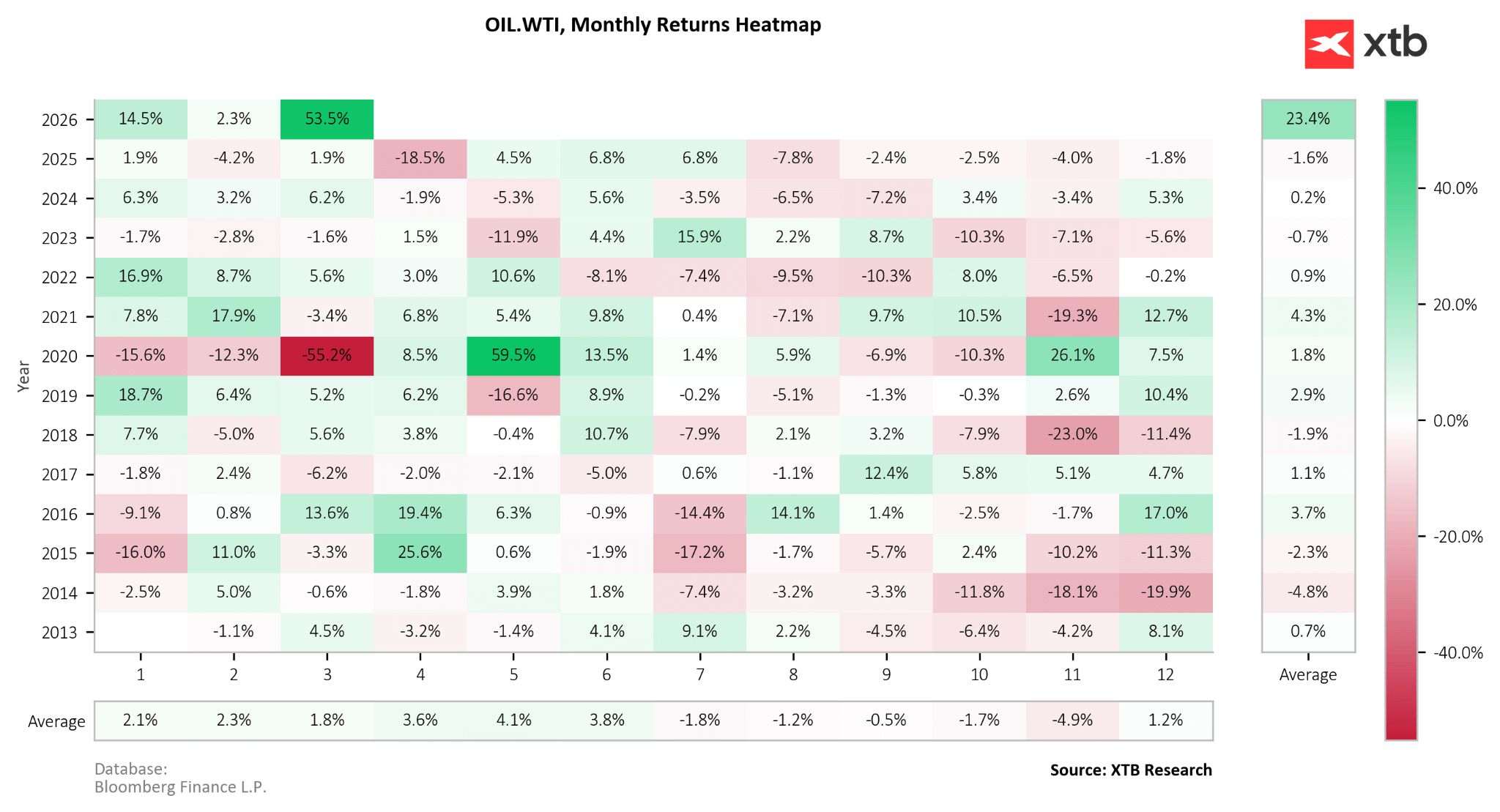
On a monthly basis, oil is now up more than 53%. It is worth noting that the entire price surge related to the escalation of the conflict has already occurred in March. For this reason, the CPI inflation report to be published on Wednesday will not yet reflect the effects of this shock.



Daily Summary: Oil at five-month highs, indices under pressure (23.10.2026)


US Open: Further declines on Wall Street, Brent above 111 USD, AI correction continues (14.10.2026)


Chart of the Day: Is USDJPY running out of road? Inflation forces the BoJ to act, but the Fed could spoil the Yen’s rally



Macro Calendar: Preliminary PMI Readings and Earnings Ahead